McConnell stays silent as reporter presses him over defense posts and health questions
Sen. Mitch McConnell gave no answer when a reporter asked about a burst of defense spending posts on his official account, and critics are again raising fitness concerns.
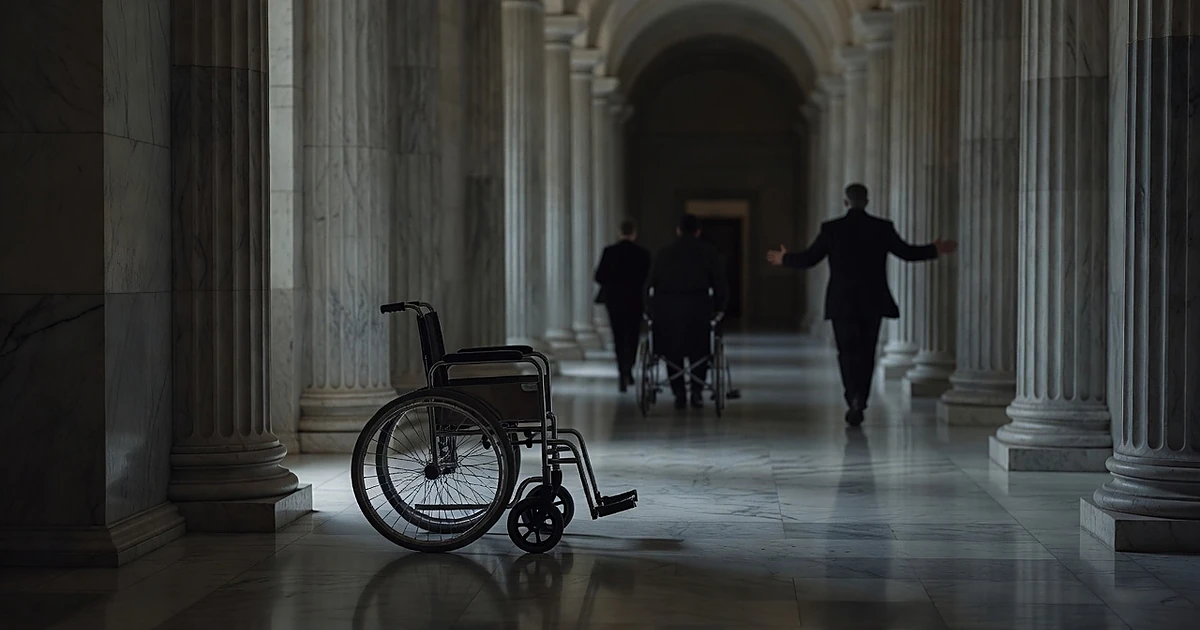
On Capitol Hill this week, Kentucky Sen. Mitch McConnell offered no spoken reply when reporter Desirée Townsend asked about eight posts that appeared Monday on his official X account. The posts pressed for sustained long-term defense spending. An aide, Terry Carmack, pushed McConnell in a wheelchair as the exchange unfolded.
Newsweek reported the encounter and the fresh round of questions it triggered about the 84-year-old Republican’s health, his recovery, and who is steering his public messaging in the final stretch of a four-decade Senate career.
Townsend posted video of the moment and described the senator’s silence in plain terms.
Desirée Townsend wrote on X:
"I asked Senator Mitch McConnell about his eight tweets yesterday. The Senator was unusually quiet. Not a word today!"
One of the Monday posts from the official account laid out a hard-power case familiar to defense hawks. It argued that deterring aligned adversaries will require steady investment, not one-off spending spikes.
The official McConnell account posted:
"The nature of war is changing. Deterring aligned adversaries (with a shipbuilding revival, expanded critical munitions production, and cutting-edge drone/space tech) will take year-on-year commitments, not just one-time surges of cash,"
Commenters quickly questioned whether McConnell himself wrote the string of posts. His office did not provide a public answer in the coverage, and Newsweek said it emailed the office for comment.
Recovery after a June fall still defines the scene
The silence lands against a long recovery clock. In June 2026, McConnell fell at his Washington home, was hospitalized, and spent roughly three months away from the Senate while undergoing rehabilitation. He returned in September in a wheelchair.
When he came back, he did not claim a full recovery. He told colleagues and the public he was still short of full strength, a line that has followed him through every subsequent fitness debate.
McConnell said on his return:
"I’m still not quite back to 100 percent."
Breitbart reported that his speech was noticeably slower after the absence and that he tied lingering trouble in part to childhood polio as well as the fall. He said the recovery had been long and frustrating and that he planned to resume voting while continuing physical therapy.
Those details matter because the senator is not a backbencher on leave. Official Senate roll calls show he voted yes Monday to advance legislation on the tax treatment of damages tied to sexual abuse or contact. He voted yes Tuesday to confirm Anna St. John as a U.S. Circuit Judge for the Fifth Circuit.
Even so, the visual of a wheelchair, a non-answer on camera, and a heavy posting burst the day before has kept health coverage alive. A prior stretch of missed votes after a brief Capitol return already put his attendance under a microscope.
Reporters keep pressing; left-wing accounts go further
The Townsend video was not the only press scrum. Fox News described McConnell remaining silent while reporters asked about his health and about whether he was upset that his wife, Elaine Chao, did not promptly return from China during his hospitalization. One reporter asked for a thumbs-up. Another pressed the Chao question directly. Security kept the cluster moving.
Online reaction split between policy and personal attack. The official account for The Tennessee Holler framed the posts as something darker than staff messaging.
The Tennessee Holler account wrote:
"Kentucky is being defrauded by this elder abuse conspiracy."
That charge is a political slogan, not a finding. What the record does show is simpler and more serious: an elderly senator still casting floor votes, still listed on an official account pushing major defense arguments, and still declining to answer basic questions on camera about those posts.
Allies have tried to separate physical recovery from mental sharpness. Sen. Thom Tillis has publicly argued that McConnell’s mind remains sharp after the months-long absence, a defense aimed at voters and colleagues watching every freeze, every slow reply, and every staff-assisted walk through the Capitol.
Succession is already settled in Kentucky
McConnell has represented Kentucky in the Senate since January 1985. He is one of the longest-serving members of Congress. He stepped down as Senate Republican leader at the beginning of 2025, announced he would not seek another term, and is due to remain in office until January 3, 2027.
Kentucky voters have already chosen the next name. Republican Rep. Andy Barr won the November 2026 Senate race and is set to succeed him. The handoff is baked into the calendar. The fitness fight is about the months still left on the clock.
That timeline has not stopped calls for broader rules. Kentucky Gov. Andy Beshear has been vocal about McConnell’s health and absence. Republican Rep. John Block of New Mexico is among those who have called for term and age limits for members of Congress. A poll cited in coverage from earlier this year found 83 percent of Americans favored term limits for Congress.
The Constitution does not set a maximum age or a cap on the number of terms. Senators serve six-year terms. House members face voters every two years. In 1995, the Supreme Court held in U.S. Term Limits, Inc. v. Thornton that states cannot add their own qualifications or term limits on members of Congress beyond those in the Constitution. Changing that framework would require a constitutional amendment.
Floor work continues while the questions pile up
McConnell’s recent pattern is a mix of presence and limits. He has returned to the floor for key votes after the long rehab gap. Coverage of other recent floor fights has shown him still making his own calls, including when leadership pressure ran the other way on a major farm measure, as when he broke with a colleague’s guidance and voted his own way.
A separate November 7 video, shared on X, captured another non-response moment when he was asked for reaction to Republican midterm losses. Together with this week’s defense-post exchange, it feeds the same open question: how much of the public-facing job he can still do without staff running interference.
National security is the substance of the posts that triggered Tuesday’s confrontation. Shipbuilding, munitions stockpiles, drones, and space systems are not fringe topics. They sit at the center of debates over China, Iran, and Russia. If the official account is going to argue for year-on-year commitments, voters and colleagues are entitled to hear the senator defend that case in his own voice.
Senate business around him has not frozen. Confirmation fights and cabinet votes continue in a chamber already preparing for the next majority map, including moves described in coverage of how Republican leaders have mapped floor strategy for major agenda bills. McConnell’s final year is part of that larger transition, not a side show.
What remains unresolved is basic accountability. An elected senator can recover in public. He can use a wheelchair. He can lean on aides. He can post through staff. He cannot expect the country to treat a pattern of on-camera silence as normal while his name still carries the vote and the official account still carries his brand.
Kentucky already hired the successor. Until January 2027, the job is still McConnell’s, and so is the duty to answer for the words sent out under his name.