Schumer cries foul over SPLC indictment, but the fraud charges tell a different story
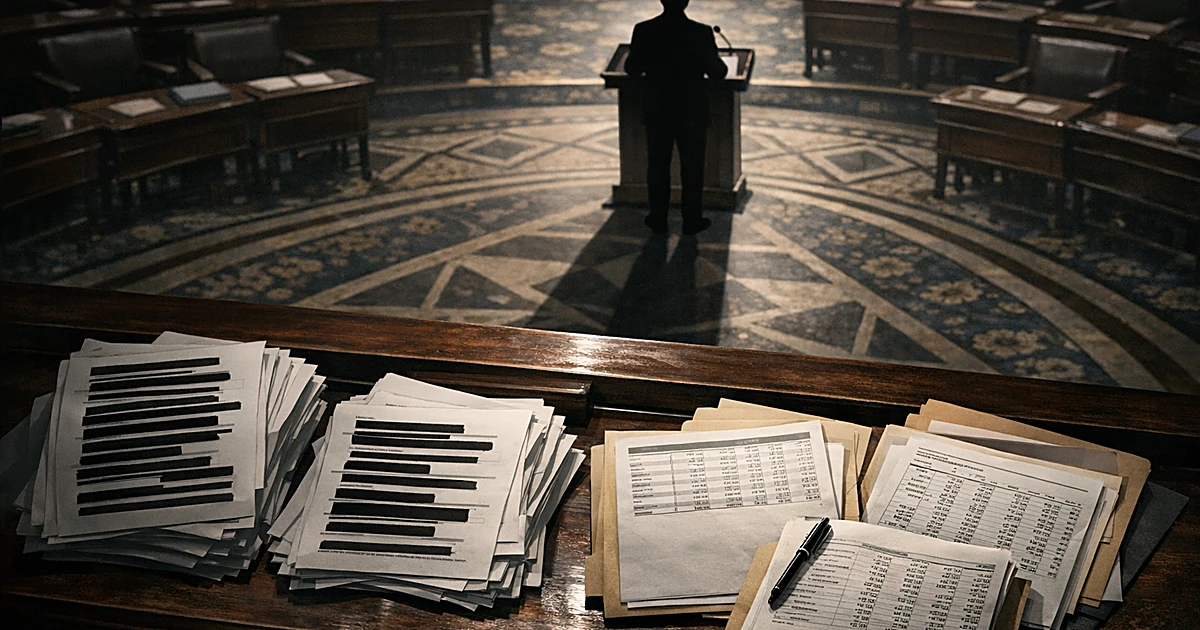
Senate Minority Leader Chuck Schumer took to the Senate floor Wednesday to denounce the Justice Department's 11-count indictment of the Southern Poverty Law Center, calling the prosecution an act of political revenge. The charges, announced Tuesday, include bank and wire fraud tied to a now-defunct SPLC program that used paid informants to monitor extremist groups. Schumer wants Americans to see a free-speech crisis. Acting Attorney General Todd Blanche wants them to see a nonprofit that allegedly created fake organizations and funneled money to fuel the very hatred it claimed to fight.
The clash lays bare a fault line that runs deeper than one indictment. Democrats are framing the case as proof that President Trump has weaponized federal law enforcement. The Justice Department is framing it as a straightforward fraud prosecution. The facts in the indictment, fictitious bank accounts, shell entities, payments to informants who allegedly stoked racial hatred, deserve scrutiny on their own terms, not dismissal as political theater.
What the indictment actually alleges
The Justice Department's indictment lays out 11 counts against the SPLC, centered on bank and wire fraud. The charges stem from a program in which the organization employed paid informants to monitor extremist groups. Some of those informants, The Hill reported, tracked the planning of the 2017 Unite the Right rally in Charlottesville, as well as activity by a neo-Nazi group, the Ku Klux Klan, and other white supremacist and antisemitic organizations.
But monitoring is one thing. What the government describes goes further.
Acting Attorney General Todd Blanche said the SPLC paid "sources to stoke racial hatred." He went on to describe a scheme in which the organization set up bank accounts under the names of fabricated entities:
"To carry out this scheme, SPLC created bank accounts in the name of at least five completely fictitious organizations that had no bona fide employees or legitimate business purpose."
Blanche also drew a sharp line between the SPLC's public mission and its alleged conduct. He said the organization "was doing the exact opposite of what it's told its donors. It was not dismantling extremism, but funding it." If the government's allegations hold up, the SPLC was not simply gathering intelligence on hate groups, it was allegedly bankrolling the very forces it raised money to oppose.
That is a serious accusation. It deserves a serious trial, not a political brushoff.
Schumer's 'Department of Vengeance' speech
Schumer did not engage with the substance of the fraud charges. Instead, he went straight to the political frame. On the Senate floor, the New York Democrat delivered a speech designed to cast the prosecution as a First Amendment crisis and an abuse of federal power. He told colleagues:
"I just want to say a quick word about the deeply disturbing charges the Justice Department has brought against the Southern Poverty Law Center. These charges should send a chill down the spine of every American who cares about free expression and the rule of law in the Justice Department. It should send a chill down the spine of every American who cares about civil liberties and the fight against violent extremism."
He then dismissed the core allegations outright. Schumer said the case "has nothing to do with alleged wire fraud or with the Southern Poverty Law Center somehow working in coordination with the KKK." He called that idea "ridiculous on its face" and said it "doesn't pass the laugh test." His conclusion was blunt: "It's about Donald Trump turning the Department of Justice into the Department of Vengeance, his own attack dog."
The minority leader's framing is politically convenient. But it requires the listener to accept, without examination, that an 11-count federal indictment alleging fictitious bank accounts and wire fraud is nothing more than a presidential grudge. That is a large ask, especially from a party that spent years insisting that no one is above the law.
Schumer's standing within his own caucus has itself become a subject of quiet debate. Questions about his future as Democratic leader have surfaced repeatedly in recent months, and his willingness to rush to the SPLC's defense may say as much about his political positioning as about his legal analysis.
The SPLC's long record of controversy
The Southern Poverty Law Center has for decades presented itself as the nation's premier watchdog against hate groups. It built a formidable fundraising operation on that reputation. But the organization's credibility has eroded over time, particularly among conservatives and even some on the left who have questioned its methods and its expanding definition of "extremism."
The indictment notes that the SPLC's monitoring work extended to right-wing groups like Turning Point USA, the organization founded by the late Charlie Kirk. Lumping mainstream conservative activism alongside the Klan and neo-Nazis has long been a hallmark of the SPLC's approach, and a source of deep skepticism about whether the group operates as a civil rights organization or as a partisan weapon.
Now, federal prosecutors are alleging something worse than bias. They are alleging fraud, that the SPLC created shell organizations, opened bank accounts in their names, and used the apparatus to move money in ways that deceived donors and financial institutions alike. If true, the SPLC was not merely stretching the definition of a hate group. It was allegedly manufacturing the conditions it claimed to combat.
The Hill reached out to the Justice Department for comment on Schumer's remarks but did not report receiving a response.
A pattern of deflection
Schumer's instinct, to treat any federal action against a left-leaning institution as inherently political, is not new. It is, in fact, the default Democratic response to a growing list of uncomfortable developments. When the facts are inconvenient, change the subject to process. When the charges are specific, make the argument about motive.
But the specifics here are hard to wave away. Five fictitious organizations. Bank accounts with no legitimate business purpose. Payments to informants who allegedly stoked the very racial hatred the SPLC told donors it was fighting. These are not abstract process complaints. They are concrete allegations of financial fraud.
The broader pattern of Democrats acknowledging institutional failures only when forced to do so makes Schumer's reflexive defense of the SPLC all the more telling. The party's leadership has shown little appetite for holding its own allied organizations accountable, even when the evidence warrants hard questions.
Meanwhile, fractures within the Democratic caucus continue to widen. Some Senate Democrats have broken with party leadership on issue after issue, suggesting that the instinct to circle the wagons around every progressive institution is not universally shared even within the caucus.
Schumer's role in recent high-stakes congressional negotiations has already drawn scrutiny from members of his own party. Adding the SPLC to his list of causes may not strengthen his hand.
What comes next
The indictment will proceed through the courts. The SPLC will have every opportunity to mount a defense. If the charges are baseless, a jury will say so. That is how the system is supposed to work, and it is precisely the system that Democrats claimed to revere when the targets of federal prosecution were on the other side of the aisle.
The open questions are significant. The specific counts beyond bank and wire fraud have not been fully detailed in public reporting. The names of the informants discussed in the indictment remain unclear. And Schumer's political standing, already under pressure from multiple directions, may depend on whether voters see his defense of the SPLC as principled or reflexive.
Calling the Justice Department the "Department of Vengeance" is a memorable line. But memorable lines do not make fictitious bank accounts disappear. If the SPLC defrauded its donors and funded the hatred it promised to fight, no amount of Senate floor rhetoric changes what that is: a betrayal of the people who trusted it most.