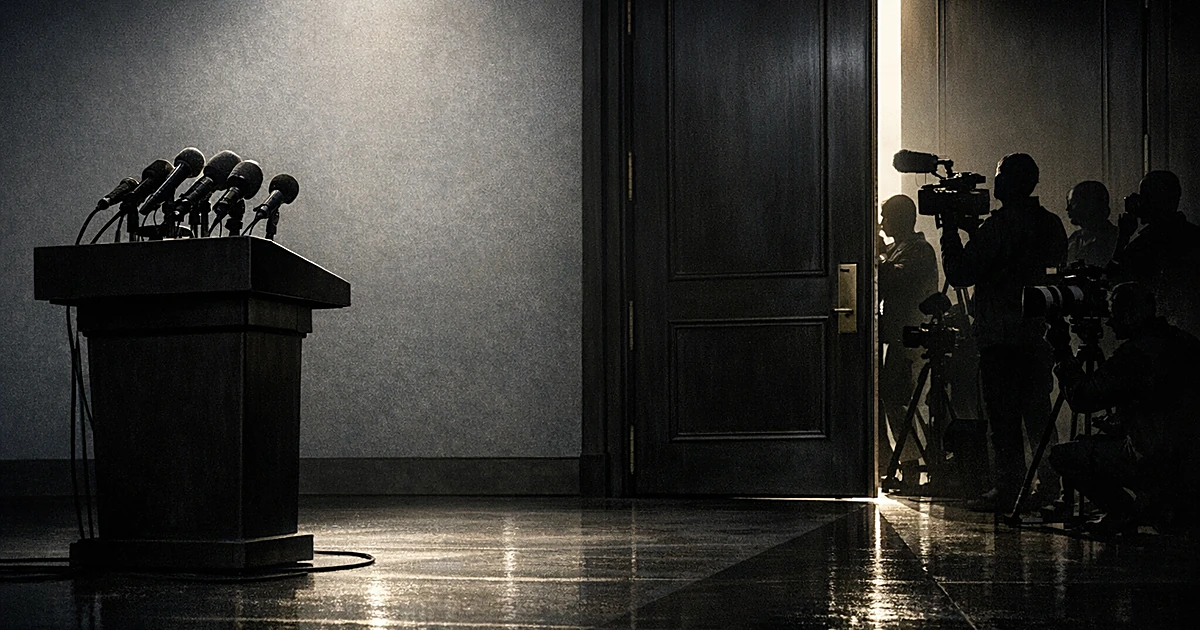
Vance calls White House media ban 'totally appropriate' as press access fight escalates
Vice President JD Vance defended the White House's decision to bar certain media outlets from press access, calling the move "totally appropriate", a stance that deepens the administration's confrontation with Washington's press corps.
Vance made the remarks in a video segment reported by USA Today, directly addressing the controversy over restricted access for outlets including CNN, MSNBC, and Politico. The vice president framed the restrictions not as an attack on the press but as a reasonable response to what the administration views as persistently hostile and inaccurate coverage.
"It's totally appropriate," Vance said, defending the policy without hedging.
Vance frames restricted access as accountability, not censorship
The White House media ban has drawn loud objections from the affected outlets and from press freedom organizations, but the administration has shown no sign of reversing course. Vance's public defense signals that the policy carries backing at the highest levels of the executive branch, not just from communications staff, but from the vice president himself.
For readers following Vance's tenure, his willingness to take a hard public line fits a pattern. The vice president has maintained a packed schedule and shown little appetite for avoiding political friction.
The outlets named in the ban, CNN, MSNBC, and Politico, are among the most prominent in Washington's political press ecosystem. Restricting their access to White House briefings and events removes some of the loudest critical voices from the room, a move the administration's supporters see as long overdue and its critics call dangerous.
Press corps protests meet a White House unbothered by the backlash
Washington's press establishment has treated the ban as a first-order threat to transparency. But the administration's calculation appears straightforward: the outlets in question have spent years producing coverage the White House considers adversarial and often misleading. Cutting off their preferred access, in this view, is not suppression, it is a refusal to subsidize opposition research disguised as journalism.
Vance's political standing has drawn scrutiny from multiple directions during his time in office. Polling has shown him struggling with favorability among certain voter groups, and he has faced criticism from within his own party on foreign policy questions. But on the media ban, he aligned squarely with the administration's base, which has long viewed legacy media outlets as institutional opponents rather than neutral referees.
The vice presidency can be an isolating role. Usha Vance has described life in the office as a "fishbowl" and acknowledged that her husband can feel the weight of the position. That context makes his decision to step into the media-ban debate publicly, rather than leaving it to press aides, more notable.
A broader pattern of confrontation with legacy media
Vance has not shied away from cultural and political fights that put him at odds with establishment institutions. His stance on Iran and Israel policy opened a rift with some GOP donors earlier this year, and his public statements on religion and national identity have drawn pushback from figures across the political spectrum.
Defending the media ban fits that mold. Vance is not a vice president content to manage ceremonial duties and stay out of the news. He has consistently chosen the more confrontational path, and on press access, the confrontation is with an industry that most conservative voters already distrust.
The affected outlets will continue to cover the White House from outside the briefing room. They have reporters, cameras, and audiences. What they will not have, for now, is the institutional access that Washington's press corps has long treated as a birthright.
Whether the ban holds, expands, or eventually softens will depend on the political winds. But Vance's defense of it tells voters something clear: this administration sees legacy media access not as a constitutional entitlement but as a privilege, and one it is willing to revoke.
When the press demands a seat at the table while spending years trying to flip it over, the host is under no obligation to keep sending invitations.