Supreme Court takes up challenge to Reconstruction-era ban on home distilling
The Supreme Court will review a 150-year-old ban criminalizing home whiskey distilling, as challengers argue Congress overstepped its constitutional taxing power.
The high court agreed on Monday to consider whether Congress had the authority to outlaw distilling spirits in private homes under an 1868 law that still carries criminal penalties. The justices will review a Fifth Circuit decision that sided with hobby distillers and held the location ban outside Congress’s taxing power under the Constitution.
Associated Press reporting describes a clean circuit split. A Sixth Circuit panel upheld the same federal ban in a separate case, and the conflicting rulings landed only 11 days apart in April. The Justice Department preferred that the Court take the Fifth Circuit case, and the justices did so.
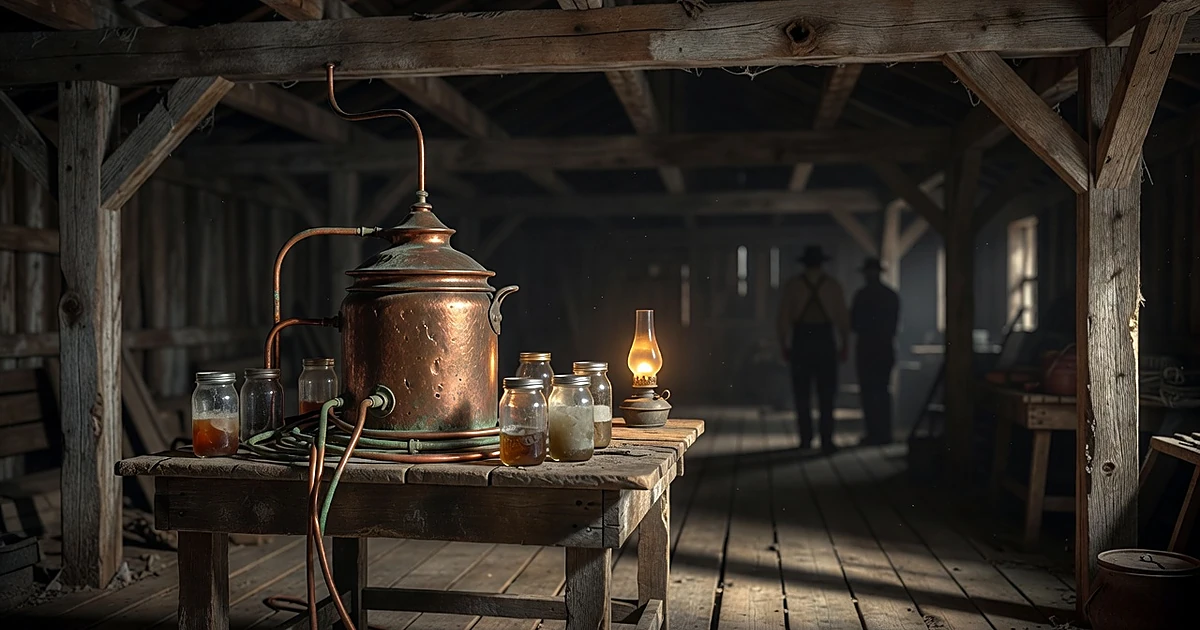
At stake is a statute that treats home distilling as a federal crime punishable by up to five years in prison and a $10,000 fine. Plaintiffs call it an antiquated Reconstruction-era relic. The government calls it a long-tested tool against excise-tax evasion.
That clash lands in a term already thick with high-court fights over federal power, including cases where Democratic cities asked the justices to preserve a deportation freeze and other disputes over the reach of national rules into daily life.
Two circuits, two outcomes, one ban
John Ream, a brewpub owner from Newark, Ohio, wants to distill whisky at home for personal use. A three-judge panel of the Sixth U.S. Circuit Court of Appeals upheld the federal prohibition in his case.
Members of the Texas-based Hobby Distillers Association brought the parallel challenge that won at the Fifth Circuit. That panel concluded the statutory bans on in-home distilling fall outside the scope of Congress’s taxing power.
The New York Post noted the same core facts: the Court will weigh the constitutionality of the 1868 ban after the Fifth Circuit rejected it and the Sixth Circuit sustained it, with home distilling still carrying the five-year, $10,000 maximum penalty.
Washington Examiner coverage identified the matter the justices listed for argument later in the term as Department of Justice v. Scott McNutt, describing a possible path to striking down what it called a roughly 160-year-old federal bar on home alcohol distilling.
The Washington Examiner reported the high court said in a Monday orders list that it will take up that case for oral arguments later this term.
Founders distilled. Federal law still forbids it at home.
Plaintiffs’ attorney Robert Alt said challengers were “thrilled” the Supreme Court agreed to hear the case. He tied the practice to the founding generation and to ordinary American life.
Alt put the point in blunt historical terms:
"Our country’s founders would be rolling over in their graves to learn that a pastime in which even George Washington partook, which is as American as apple pie and certainly a lot older, has quite absurdly been turned into a federal crime,"
Breitbart carried the same Alt statement and the broader claim that the case tests how far federal power may reach into private homes.
Plaintiffs’ lawyers pressed the structural stakes in filings summarized across the coverage:
"The importance of this case and the questions it presents could hardly be overstated,"
They added:
"It presents fundamental questions of the extent of federal power and the powers reserved to the states and the people."
Those arguments track a familiar conservative concern: once Congress may criminalize a peaceful household craft under the tax power, the limiting principle gets harder to find. Challengers have warned that the government’s reading could stretch toward bans on other ordinary home activities such as cooking, gardening, or remote work. The government rejects that slippery-slope claim.
Readers watching the Court this term have already seen the justices clear major administration actions, including a decision that allowed expansion of the SAVE database for voter citizenship checks.
Tax enforcement, or open-ended federal control?
Congress imposed the home-distilling ban more than 150 years ago as part of a tax-reform measure aimed at fraud by commercial distillers. The government says the location rule exists to stop excise-tax evasion and to keep production where inspectors can reach it.
Justice Department attorneys argue Congress properly restricted where spirits may be distilled after lengthy experience with tax cheating. They warn that lifting the ban would clash with Supreme Court precedent and erode congressional power over the revenue system.
Government lawyers wrote:
"And because the location restrictions were enacted only after lengthy experience with tax evasion, upholding those restrictions would not open the door to hypothetical laws restricting other conduct lacking that history,"
That is the core official defense: history of evasion justifies a bright-line location ban, and the ban does not license freestanding lifestyle regulation.
The government also said Ream asked the Court to resolve an added question, whether the location limits exceed Congress’s power to regulate interstate commerce. Justice Department attorneys urged the justices to avoid that Commerce Clause issue, calling it outside Ream’s case and outside the government’s current arguments in either dispute. The Court agreed to review the Fifth Circuit decision the department preferred.
Separate from this tax-power fight, the Court has also stepped into election-administration disputes, including when it cleared a mail-in voting executive order in a 6-3 ruling ahead of the midterms.
What the 1868 rule still means on the ground
Federal law does not treat home distilling as a minor licensing gap. It is a crime. The maximum sentence is five years in prison and a $10,000 fine. That penalty frame is what converts a hobby dispute into a constitutional case about liberty, property, and enumerated powers.
Ream’s stated goal is personal whisky, not a bootleg network. The Hobby Distillers Association plaintiffs likewise framed their challenge around private production shut down by a nationwide location ban. The Sixth Circuit still sustained the statute in Ream’s case. The Fifth Circuit did not.
That split forced the issue upward. When two federal appellate courts disagree this sharply on Congress’s taxing power, only the Supreme Court can set a single national rule. The justices’ Monday order puts the Reconstruction-era prohibition on the argument calendar and keeps the tax-power question at center stage.
Process fights around the Court remain part of the broader backdrop, including criticism aimed at how the justices handle urgent matters after Justice Jackson attacked the emergency docket as a threat to public trust.
Federal power meets a household craft
Strip away the briefing jargon and the case is simple. May Congress make it a felony to run a still inside a private home, more than a century and a half after a tax-fraud crackdown, even when the product is for personal use?
Plaintiffs say no: the taxing power is not a blank check to criminalize a domestic pastime older than the republic’s first president’s whiskey ventures. The government says yes: location limits followed real evasion, protect the excise system, and do not authorize free-range bans on unrelated home life.
Both sides claim history. One side points to founders who distilled. The other points to decades of commercial fraud that produced the 1868 restrictions. The Fifth Circuit credited the constitutional limit on tax power. The Sixth Circuit credited the ban. The Supreme Court will now choose.
Other recent orders show how quickly Court action can freeze or free state political plans, as when the justices again blocked Missouri Republicans from using a new House map for 2026, another reminder that a single grant of review can reset the rules nationwide.
A nation that trusts adults with home kitchens, home workshops, and home brewing should not need a federal felony statute to police a basement still used for personal spirits. If the taxing power reaches that far, voters should demand Congress defend the limit, or watch the Court draw it.