Vandals hit Susan Collins’ Maine office with red paint and ‘blood on her hands’ message before Election Day
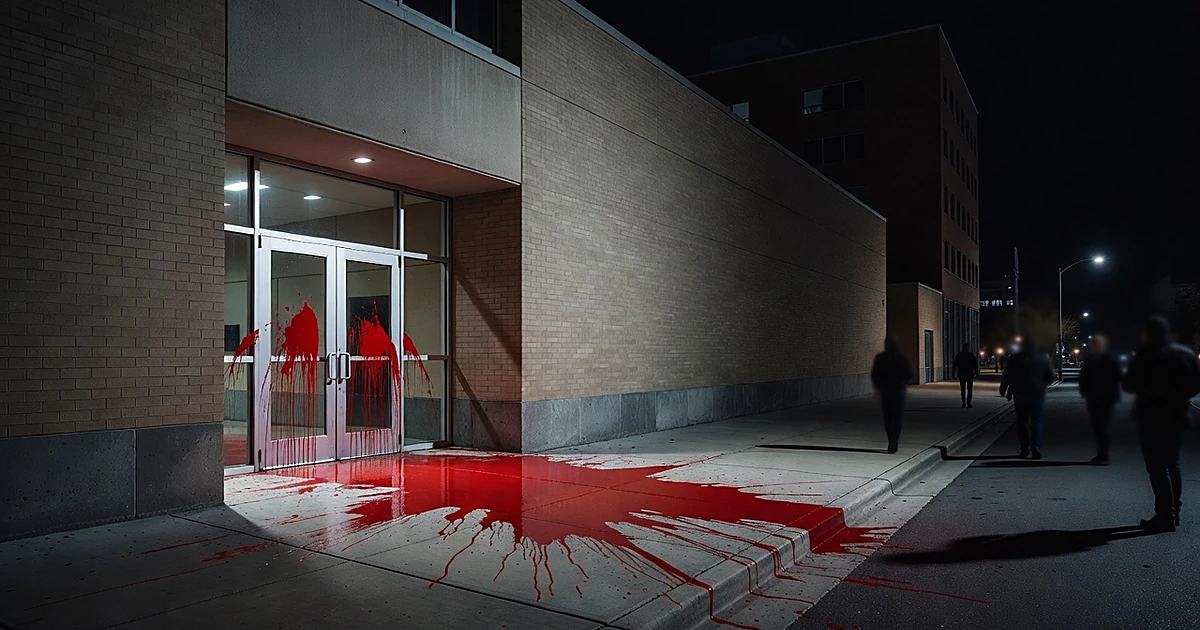
Saboteurs dumped red paint and scrawled “blood on her hands” outside Sen. Susan Collins’ Biddeford office the night before Election Day, the second attack on her staff in a month.
Unidentified vandals struck the Republican senator’s constituent office in Biddeford, Maine, overnight, dumping a bucket of red paint in front of the building and writing the crimson message on the sidewalk. Paint also hit glass doors at the site, which handles casework for Mainers rather than campaign work.
Fox News reported the attack as the second try at the Biddeford office in a month, with Biddeford police investigating. Collins’ team called the pattern intimidation aimed at the senator and the people who staff her federal offices.
The timing was not subtle. The vandalism landed on the eve of Election Day as voters weighed Collins’ reelection bid against former Democratic state Sen. Troy Jackson, and it followed months of pressure around the same location.
Staff kept the doors open after the paint hit
Collins made clear the Biddeford site is a working constituent office, not a campaign shop, and said the attack landed hardest on the caseworkers who serve the public there.
Breitbart reported her direct response to the overnight damage.
"This is so unacceptable, and it’s unfair to my caseworkers who are working there. Fortunately, they refuse to be intimidated by this, and the office is open and doing business today."
Chief of staff Katie Brown struck the same note, describing a series of attempts rather than a one-off prank and stressing that staff would not fold.
"This is another incident in a series and the second attempt at our Biddeford office to intimidate the Senator and her staff. These tactics are disturbing, but not effective. Our staff is undeterred and on the job."
That stance matters in a state where federal offices are thin on the ground. The Biddeford location is one of six Collins maintains across Maine, and keeping it open after paint and graffiti is a practical signal that constituent service does not stop because someone brought a bucket overnight.
September’s door graffiti set a uglier marker
Earlier this fall, vandals spray-painted the building’s door with a crude anti-Trump epithet. The Washington Examiner detailed that September hit, which left “Trump wh***” in red on the office glass and doors.
Brown said then that Collins and her staff would not be intimidated. The Monday night paint job made the same point from the other side of the ledger: the prior warning did not end the targeting.
Just The News noted a parallel insult at home. Collins’ Bangor residence was egged in September, stacking private harassment onto the office attacks in the same stretch of the campaign.
None of this is normal political argument. Dumping paint, scrawling blood rhetoric on a public sidewalk, and tagging a federal office door are crimes under investigation, not debate tactics. Collins’ campaign said Biddeford police are on the case; no arrests were named in the immediate reporting.
Protests at the same office followed a July ICE shooting
The Biddeford office sits near the scene of a July ICE officer-involved shooting that killed 26-year-old Colombian national Johan Sebastián Guerrero. Days after that shooting, protesters pushed into the office’s front door chanting “vote her out.”
That entry did not produce a policy hearing. It produced a physical breach of a constituent workplace, followed later by spray paint and then by the election-eve red paint and “blood on her hands” message. The sequence ties street anger over immigration enforcement to repeated pressure on the same Senate office.
Voters can judge Collins’ record on borders and law enforcement at the ballot box. Breaking into an office or defacing it does not sharpen that choice; it tries to scare the people who answer phones and process casework for Mainers who need help with federal agencies.
Partisan heat in Washington is familiar terrain, including Democrats’ impeachment threats against Republican officials as power shifts loom. Maine’s version this fall included paint on concrete.
Jackson condemned the vandalism while chasing the seat
Troy Jackson, the Democrat challenging Collins, issued a flat rejection of the attack and shared it with Fox News Digital. His campaign did not immediately offer further comment when asked.
"There’s no place for this in Maine. Vandalism and intimidation are wrong, full stop. Senator Collins and her staff should be able to do their jobs without anyone defacing their office, and I condemn whoever did this."
Jackson had used similar language after the September door graffiti. Condemnation is the minimum standard in a Senate race; it does not erase the pattern of hits on the incumbent’s workplace during the same contest.
Collins and Jackson also met on the debate stage at Husson University in Bangor, where the senator directed a question to her challenger in a scheduled forum. That is the proper venue for a fight over Maine’s next six years in the Senate.
Jackson has faced separate Republican scrutiny on old personal conduct, including a resurfaced 1988 assault report that put him under mounting pressure. Whatever voters make of that record, office vandalism still sits outside legitimate campaigning.
Cross-aisle Senate drama elsewhere shows how quickly lines harden, from Fetterman’s break with Democrats on high-stakes national security votes to polling that finds some Democrats closer to Republican voters than to their own party. Maine’s race did not need red paint to clarify the stakes.
Caseworkers, not campaign aides, took the hit
Collins stressed a distinction the vandals ignored. The Biddeford office does constituent service, Social Security snafus, veterans’ claims, agency runarounds, for people who may never attend a rally. Painting “blood on her hands” across that sidewalk treats civil servants as fair game for a political grievance.
Brown’s statement framed the Monday attack as the second attempt at that specific office and part of a longer series. Staff stayed on the job anyway. The office opened for business the next day.
That is the practical answer to intimidation: keep the lights on, keep the files moving, and let police handle the crime scene. It is also a reminder that senators maintain local offices so citizens can reach the federal government without flying to Washington.
Republican senators routinely draw partisan fire in tight cycles, whether the fight is a confirmation fight or a document demand in a messy dispute. Paint and epithets are a different category, one that collapses argument into vandalism.
No suspect names, charges, or damage-dollar figures appeared in the initial accounts. What did appear is a clear timeline: July shooting nearby, protesters inside the office days later, September door graffiti and an egged home, then Monday night’s bucket of red paint and blood message on the sidewalk before votes were cast.
Lawful protest is protected. Forcing entry, defacing federal property, and trying to rattle caseworkers are not. Maine’s election can settle policy fights without a fresh coat of crimson on a constituent sidewalk.
Intimidation aimed at a Senate office is a test of whether politics still runs on ballots and arguments, and Maine’s answer should stay with voters, not vandals.