AOC stumbles through Taiwan defense question at Munich Security Conference
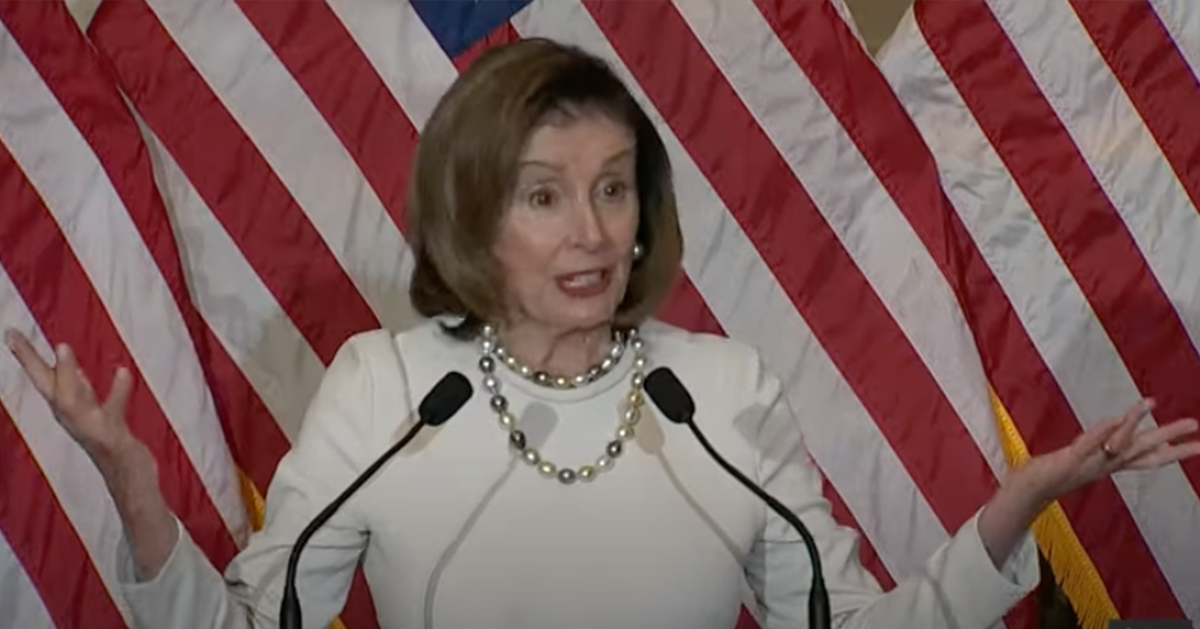
Asked directly whether the United States should commit troops to defend Taiwan from a Chinese invasion, Rep. Alexandria Ocasio-Cortez delivered an answer that wandered through a thicket of filler words before arriving at something resembling a position — sort of.
Here's what the congresswoman said Friday at the Munich Security Conference, in full:
"Um, you know, I think that I, uh, this is such a, you know, I think that this is a, um, this is of course, a, uh, very longstanding, um, policy of the United States. And I think what we are hoping for is that we make sure we never get to that point and we want to make sure that we are moving all of our economic, research and our global positions to avoid any such confrontation and for that question to even arise."
That's not a sound bite taken out of context. That's the whole answer. The question was simple: Would and should the US actually commit troops to defend Taiwan if China were to move? What came back was a masterclass in saying nothing while sounding like you're trying very hard to say something.
The contrast on stage
The Hill reported that Ocasio-Cortez wasn't the only American fielding Taiwan questions in Munich. U.S. Ambassador to NATO Matthew Whitaker offered his own take on the same stage:
"Well, I mean obviously that would be the president's prerogative as to how to deploy our military. I would just say that we have to deter and defend like we do here on the European continent."
Two sentences. Clear chain of authority. A principle — deterrence — applied to a specific theater. You don't have to parse it. You don't have to reread it. It communicates.
Michigan Governor Gretchen Whitmer, also on the panel, gave a brief response equating defending Taiwan's independence with defending Ukraine from Russia's ongoing invasion. Even that, however incomplete, at least committed to a framework.
Ocasio-Cortez's answer committed to nothing except hoping the question goes away.
Audition tape for what, exactly?
The 36-year-old congresswoman from the Bronx and Queens participated in two panels at the Munich Security Conference — the kind of high-profile international stage that signals ambition beyond the House.
She met the Constitution's minimum age requirement for the presidency last year. In December, she celebrated a poll showing her beating Vice President JD Vance 51 percent to 49 percent. There's also speculation about a potential primary challenge to Senate Minority Leader Chuck Schumer.
Munich was supposed to be the venue where foreign policy credentials get burnished. Vice President Vance appeared at the same conference last February, where he demanded European countries spend more of their own budgets on national defense. Whatever you thought of his message, it was a message — delivered with clarity and purpose.
Ocasio-Cortez's performance Friday suggests the gap between progressive domestic popularity and the demands of a global stage remains wide. She is popular among progressives, but foreign policy requires more than enthusiasm and talking points about inequality. It requires knowing what you think about hard questions before someone asks them in front of an international audience.
Where she found her footing — and where it crumbled
To be fair to the congresswoman, not every answer Friday was a train wreck. On income inequality and authoritarianism, she landed a clear thesis:
"Extreme levels of income inequality lead to social instability."
She argued that democracies must get their economic houses in order and deliver material gains for the working class, "or else we will fall to a more isolated world governed by authoritarians." It's a debatable claim — conservatives would note that the greatest generator of working-class prosperity in history has been free markets, not wealth redistribution — but at least it was coherent.
On Iran, she called the regime's actions against protesters "a horrific slaughter of, some estimates have it at tens of thousands of people," while dismissing potential strikes on Iranian nuclear facilities as "a dramatic escalation no one wants to see."
Her instinct, as always, was to find "runway" — more time, more diplomacy, more avoidance of the hard call. When a regime is slaughtering tens of thousands of its own people and pursuing nuclear weapons, suggesting there's "still so much we can do" without specifying what that is doesn't sound like strategy. It sounds like stalling.
On Israel, she went further:
"The idea of completely unconditional aid no matter what one does, does not make sense. I think it enabled a genocide in Gaza, and I think that we have thousands of women and children dead that was completely avoidable."
She invoked the Leahy Laws — statutes prohibiting the Departments of State and Defense from funding or training foreign militaries that commit gross violations of human rights. The word "genocide" does a lot of heavy lifting in progressive circles, and Ocasio-Cortez deployed it without hesitation. Notice the pattern: on every hard foreign policy question, her answer amounts to "do less." Less military commitment to Taiwan. Fewer strikes on Iran. Less aid to Israel. The progressive foreign policy vision isn't isolationism — they'd bristle at the word — but it functionally arrives at the same destination.
New York Times reporter Katrin Bennhold, moderating one of Ocasio-Cortez's panels, asked whether she would impose a wealth tax or billionaire's tax if she became president. The congresswoman laughed and shook her head — the classic non-denial denial of someone who wants the question asked but doesn't want to answer it.
"I don't think...we have to wait for any one president to impose a wealth tax. I think it needs to be done expeditiously."
Translation: she wants a wealth tax, she just doesn't want to own the presidential ambition part yet.
The real problem
The Taiwan stumble matters because Taiwan is not an abstraction. It is the single most consequential flashpoint in great-power competition today. The semiconductor supply chain, the balance of power in the Pacific, the credibility of American security commitments — all of it runs through that 14,000-square-mile island.
If you want to sit on a stage in Munich alongside ambassadors and governors and be taken seriously as a voice on American foreign policy, you need an answer to the Taiwan question.
Not a perfect answer. Not a classified-briefing-level answer. Just a clear one. Do you support strategic ambiguity? Say so and explain why. Do you think the US should commit to Taiwan's defense? Say that. Do you think we shouldn't? Own it.
What you can't do is stand at the podium of the most important security conference in the Western world and um-and-ah your way through the defining geopolitical question of the decade.
Ocasio-Cortez is hugely popular among progressives. She has real political talent — the kind that fills arenas and drives engagement. But talent without preparation is just performance, and on Friday in Munich, the performance fell apart the moment the script did.