Hegseth consolidates Pentagon authority after ousting Navy secretary who challenged him
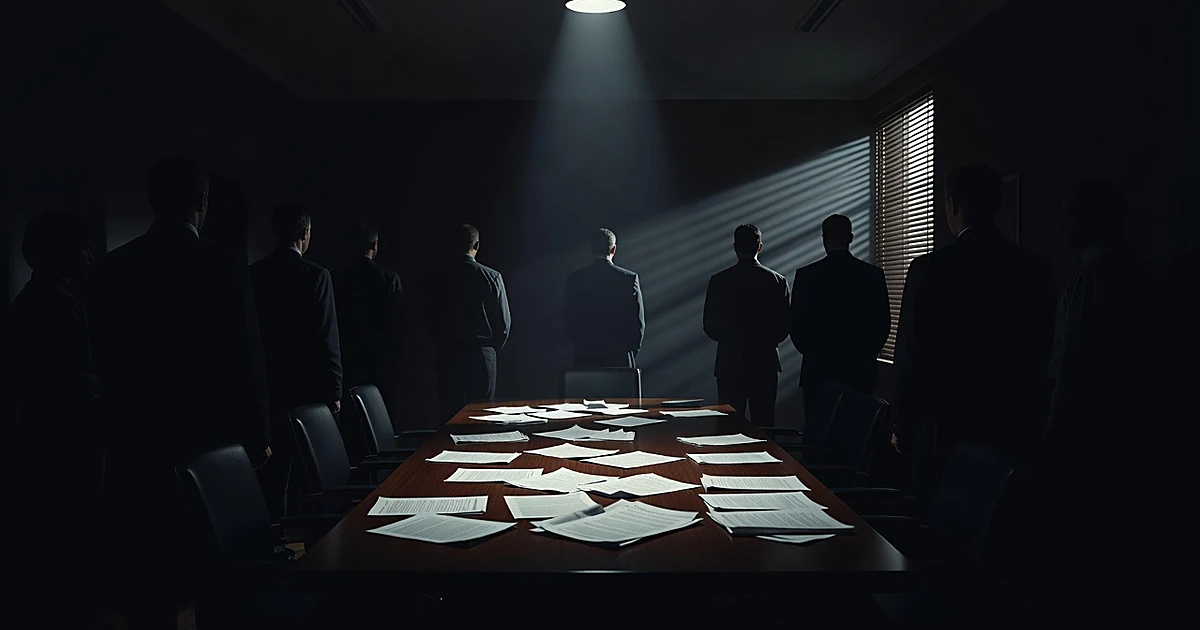
Defense Secretary Pete Hegseth forced out Navy Secretary John Phelan after Phelan took his complaints about Pentagon leadership directly to lawmakers on Capitol Hill, a move that ended a simmering power struggle over who controls the Navy's submarine and shipbuilding programs.
Phelan, a friend of President Donald Trump, had spent the days before his abrupt dismissal lobbying members of Congress. His grievance: Hegseth and Deputy Defense Secretary Steve Feinberg, the Pentagon's No. 2 political appointee, had seized what Phelan described as rigid control over submarine and shipbuilding decisions, authority the Navy secretary viewed as his own.
People familiar with the matter told The Washington Post that Phelan saw the arrangement as a "land grab," with Hegseth and Feinberg effectively usurping the Navy's traditional role in those programs. Rather than accept the new chain of command, Phelan went around it, and paid for it with his job.
A pattern of personnel moves at the Pentagon
Phelan's departure did not happen in a vacuum. Pentagon spokesman Sean Parnell announced that the Navy secretary was leaving effective immediately, with Undersecretary Hung Cao stepping in temporarily, the Washington Examiner reported. The Examiner described the firing as part of Hegseth's broader push to transform the Defense Department, a campaign that has already included the removal of multiple top military leaders who did not fit his vision.
The friction between Phelan and Hegseth had been building. There were times, the Examiner noted, when Phelan "would take matters directly to Trump due to their relationship." Hegseth had previously ousted Phelan's first chief of staff, an early signal that the defense secretary intended to maintain tight control over the Navy's civilian leadership, not just its uniformed ranks.
For anyone tracking Hegseth's tenure, the pattern is unmistakable. He has moved methodically to centralize decision-making authority in the Office of the Secretary of Defense, clearing out officials who resisted or freelanced. Whether one views that as overreach or overdue reform depends largely on how one reads the Pentagon's institutional culture, and whether one believes the civilian chain of command should run through the defense secretary or around him.
The submarine question
The specific flashpoint, submarine and shipbuilding decisions, is not a trivial bureaucratic turf war. The Navy's Columbia-class ballistic missile submarine program and the Virginia-class attack submarine line represent two of the most expensive and strategically important defense programs in existence. Delays and cost overruns have plagued both for years, long before Hegseth arrived at the Pentagon.
Hegseth's decision to impose direct oversight on these programs suggests he and Feinberg concluded that the Navy's traditional management structure was not delivering results fast enough. Phelan, by contrast, saw the intervention as a power grab that stripped the Navy secretary of authority Congress had historically expected him to exercise.
That disagreement might have remained an internal bureaucratic dispute. It became a firing offense when Phelan took it to Capitol Hill. Going over the defense secretary's head to lobby lawmakers, especially while still serving, is the kind of move that forces a resolution. Hegseth resolved it.
Hegseth has made a series of high-profile leadership decisions since taking office, from personnel moves to public-facing gestures that signal his priorities. The Phelan ouster fits that pattern: act decisively, tolerate no end-runs, and accept the political turbulence that follows.
Phelan's Trump connection didn't save him
One detail makes the firing especially notable. Phelan was not some holdover or reluctant appointee. He was a personal friend of the president. That relationship gave him a direct line to the Oval Office, and he used it, sometimes bypassing Hegseth entirely.
In most administrations, that kind of access would insulate a Cabinet-level official from removal by a peer. Not here. Hegseth moved forward with the dismissal anyway, a fact that speaks to the defense secretary's standing with the White House and his willingness to enforce institutional discipline even when it means crossing someone in the president's orbit.
Hegseth's critics in Washington have spent months questioning whether he has the heft to run the Pentagon. He has polled as the least popular member of the Cabinet in some surveys, and speculation about his future has been a Beltway parlor game since his confirmation. The Phelan episode suggests Hegseth is not operating like a man worried about his job security.
What remains unanswered
Several questions hang over the episode. Which lawmakers did Phelan approach, and what did they tell him? Did any members of Congress raise Phelan's concerns with the White House before the firing? And what, specifically, were the submarine and shipbuilding decisions that triggered the dispute?
Neither Hegseth nor Feinberg has publicly addressed Phelan's characterization of their actions as a "land grab." Whether that phrase was Phelan's own or a characterization relayed by intermediaries is itself unclear from available reporting.
What is clear is that Hegseth has chosen a confrontational model of civilian control. He is not delegating authority to service secretaries and waiting for results. He is pulling decisions upward, holding them tightly, and removing officials who object. That approach will continue to generate friction, and firings.
The defense secretary's posture on national security matters has extended well beyond internal personnel fights. He has been publicly forward-leaning on Iran and has drawn both praise and criticism for his willingness to speak bluntly about threats and priorities.
Meanwhile, the broader national-security environment around the Pentagon remains charged. The administration has been navigating constitutional debates over war powers and Iran policy, adding another layer of complexity to Hegseth's already turbulent tenure.
The real question for the Pentagon
The Washington establishment's preferred reading of this episode is predictable: chaos, dysfunction, a secretary in over his head. But there is another way to read it. For decades, the Pentagon's sprawling bureaucracy has resisted centralized civilian control, diffusing authority across service branches and entrenched fiefdoms that outlast any single appointee. Secretaries of defense who tried to impose discipline, Donald Rumsfeld, Robert Gates, faced the same institutional pushback.
Hegseth is not the first defense secretary to discover that the building fights back. He may be one of the few willing to fire people over it.
The taxpayers who fund $800 billion defense budgets deserve a Pentagon where the civilian leadership appointed by the president actually controls the programs that matter most. If that means a Navy secretary who goes behind his boss's back gets shown the door, most Americans outside the Beltway will find that arrangement perfectly reasonable.