Judge blocks Fani Willis from fighting Trump's $16.8 million legal fee lawsuit
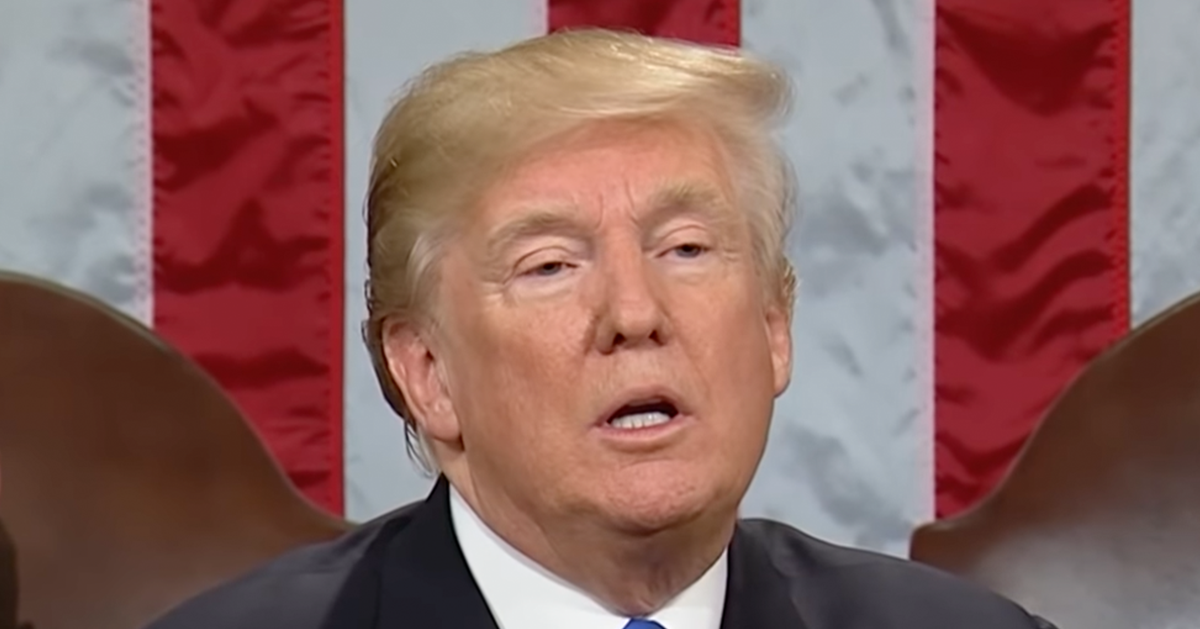
Fani Willis just lost another round in the case she never should have brought. A Fulton County Superior Court judge ruled this week that the disgraced district attorney cannot intervene in a lawsuit brought by President Donald Trump and his co-defendants seeking nearly $17 million in legal fees stemming from her collapsed election racketeering prosecution.
Judge Scott McAfee denied Willis's office the ability to participate in the compensation fight, finding that Fulton County as a corporate entity could represent the relevant interests. Willis, McAfee noted, had already been "wholly disqualified" from the case. Her office's interests, the judge determined, were "adequately represented" without her involvement.
Willis's office objected, arguing that any fee award taken from her budget without her input would violate due process:
Without intervention by the District Attorney, any award would violate basic fundamental notions of due process by denying her an opportunity to be heard or even challenge the reasonableness of the claimed attorney fees before it is taken from her budget.
The irony of Fani Willis invoking "due process" and "fundamental notions" of fairness should not be lost on anyone who watched her office spend years dragging a former president and more than a dozen others through a prosecution that ultimately went nowhere.
How the case fell apart
According to Breitbart News, Trump and 13 others were indicted in 2023 over alleged interference in the 2020 presidential election in Georgia. Willis's racketeering prosecution alleged a criminal enterprise aimed at overturning the results. It was an extraordinary legal gambit from a county prosecutor, and it unraveled in extraordinary fashion.
The state court of appeals disqualified Willis for a conflict of interest resulting from a romantic relationship she had with her special prosecutor, Nathan Wade. The entanglement between Willis and the man she hired to run the biggest case of her career destroyed the prosecution's credibility. Special prosecutor Peter Skandalakis, who inherited the wreckage, declined to prosecute after Trump started his second term.
As Fox 5 reported, the prosecution "collapsed on Nov. 26, 2025, after a series of disqualifications, appeals, and shifting jurisdictional boundaries following Trump's reelection."
That single sentence contains enough institutional failure to fill a textbook.
The bill comes due
Georgia law allows former defendants to seek legal costs after a prosecutor is disqualified. Trump and 14 other former defendants are now doing exactly that, seeking $16.8 million from Fulton County under that statute.
This is what accountability looks like when the legal system corrects itself. Willis brought a case built on political ambition and personal entanglement. The courts stripped her of authority. The replacement prosecutor walked away. And now the people she hauled into court want to be made whole.
Willis's office wants to challenge the "reasonableness" of those fees. But reasonableness cuts both directions. Was it reasonable to pursue an unprecedented racketeering case against a former president while carrying on a relationship with the lead prosecutor? Was it reasonable to force defendants to spend millions defending against charges that would never see a verdict?
Judge McAfee apparently decided Willis had forfeited her seat at the table.
The shadow of the White House
The timeline of this prosecution has always raised questions that Willis's defenders prefer to ignore. Breitbart News reported in 2024 that Willis had a five-hour meeting at the White House with Vice President Kamala Harris months before the Georgia indictment against Trump.
No one has adequately explained what a county district attorney was doing in a five-hour sit-down with the vice president shortly before bringing the most politically consequential prosecution in the country. The meeting's existence alone invites the kind of scrutiny that Willis's allies spent years dismissing as conspiracy. But the facts keep stacking up in one direction.
This was the case that many in conservative circles described as "lawfare," the weaponization of prosecutorial power for political ends. Willis's prosecution didn't just fail on the merits. It failed on ethics. It failed on integrity. It failed on the most basic expectation the public holds for officers of the court: that personal interests don't contaminate the pursuit of justice.
What comes next
Fulton County, as a corporate entity, will now navigate the legal fee dispute on its own. The taxpayers of Fulton County may ultimately bear the cost of Willis's prosecutorial overreach, a fact that should concentrate the minds of voters who put her in office.
Willis wanted one more chance to shape the outcome of a case she was removed from for cause. The court told her no. She built this prosecution, she compromised it, and now she doesn't even get to argue about the price tag.
Fulton County is left holding the bill because its district attorney couldn't keep her judgment separate from her personal life. That's not a conservative talking point. That's the finding of a Georgia appellate court.