Cornell trustees hire Sally Yates to review campus sex assault complaint process
Cornell University's board has retained former Obama deputy attorney general Sally Yates to review how the school handles sexual misconduct claims after a fraternity assault case triggered protests and a special prosecutor.
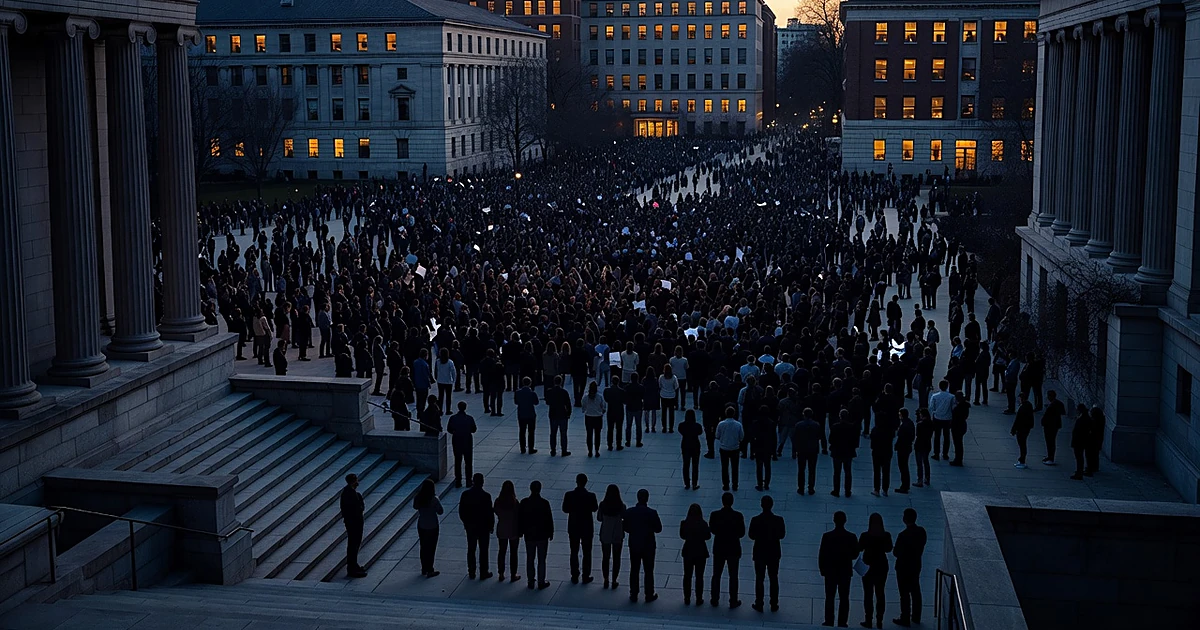
The Board of Trustees said Yates will examine how Cornell investigates reports of sexual assault and sexual harassment, what support students receive, how the disciplinary process works, how campus police respond, and how the school oversees fraternities, sororities, and other student groups. Local reporting placed the announcement in Ithaca, New York, one day after hundreds of students flooded Ho Plaza and the area outside Day Hall.
Those students held a "Justice for Survivors" rally organized by Students for a Democratic Cornell and other campus and advocacy groups. They chanted and carried signs, many of them calling for the resignation of Cornell President Michael Kotlikoff. Faculty have also pressed for a no-confidence effort aimed at administrators.
The pressure did not appear in a vacuum. It followed an alleged rape of a student at the Chi Phi fraternity by seven of its members in October 2024, a months-long university investigation, a civil lawsuit, a reopened local criminal case, and a governor-level intervention that replaced the county prosecutor.
Campus discipline moved faster than the criminal case
Cornell ran its own investigation for months. That process produced expulsions and suspensions. The school also suspended Chi Phi and barred the fraternity from campus. No criminal charges were filed in the matter at that stage.
In September, a student identified as Jane Doe filed a civil lawsuit that brought the allegations back into public view. Tompkins County District Attorney Matthew Van Houten then reopened the case in late September. In 2024 he had declined to pursue charges. He said he had only a six-page statement from Jane Doe and that it did not contain enough evidence.
Governor Kathy Hochul later appointed New York Attorney General Letitia James as special prosecutor and removed Van Houten from the lead role. Hochul said the case needed a fresh, clean slate because of new evidence and growing scrutiny of Cornell that drew national media attention. James said her investigation could take months. As of Tuesday, no criminal charges had been filed against the seven fraternity members.
That sequence left a familiar gap: university sanctions on one track, a stalled or reshuffled criminal track on the other, and a campus already in open revolt over transparency and accountability. Similar misconduct fights have followed Democratic officials elsewhere, including a former Democratic mayor held liable for sexually assaulting seven women.
Hochul's prosecutor swap raises the political temperature
Hochul's decision to sideline the local district attorney and install James turned a campus case into a statewide political event. James now controls the criminal inquiry while Cornell's board runs a parallel process review under Yates. The dual tracks may look like action. They also create room for delay, message control, and institutional self-protection.
Voters have watched this pattern before when Hochul moved James into the Cornell assault probe and displaced the county prosecutor. Local accountability gives way to Albany's preferred hands. The victim still waits. The public still waits. The officials keep announcing process.
James has already signaled a long timeline. Months of investigation, with no charges yet filed against the seven men named in the fraternity allegations, means the criminal question remains open while the university manages optics, discipline records, and trustee-level review.
Yates arrives as an Obama-era legal figure, not a neutral outsider
Sally Yates is not a blank-slate auditor. She served as deputy attorney general in the Obama administration. Cornell's board chose her to judge the school's own systems for sexual misconduct complaints, student support, discipline, campus policing, and Greek-life oversight. That choice puts a high-profile Democratic legal figure inside a crisis at an elite Ivy League campus already under fire from students and faculty.
Boards facing protests often reach for a big name to signal seriousness. The test is whether the review produces clear findings, enforceable changes, and honest timelines, or another glossy report that leaves the same incentives in place. Public trust erodes when prominent Democratic-aligned figures face misconduct storms of their own, from an Obama-honored anti-violence advocate charged in a violent domestic case to other party-linked scandals that end in court, not press releases.
Cornell's stated scope is broad. Investigations, victim support, discipline, police response, and oversight of student organizations all sit on the table. Broad scope can mean thorough work. It can also mean a slow, diffuse process that never pins down who failed, when they failed, and what rule changes follow.
Students demanded Kotlikoff's exit while the board hired a reviewer
The Justice for Survivors protest filled Ho Plaza and the grounds outside Day Hall, the administration building. It lasted hours. Organizers and allied groups framed the rally around transparency and accountability. Signs targeted President Michael Kotlikoff directly.
One day later, the trustees answered with Yates. That is a classic institutional move: meet street pressure with a process hire. It does not, by itself, resolve the criminal case, restore a suspended fraternity's status, reverse or explain individual expulsions and suspensions, or tell parents what changed in campus safety rules.
Jane Doe's civil suit already forced the allegations back into the open after the first prosecutorial pass went nowhere. The university's internal case produced discipline. The county case stalled, then reopened, then got taken over. Now an attorney general's office and a former federal official both hold pieces of the aftermath. Layers multiply. Clarity does not.
Misconduct stories keep ending the same way when institutions protect process over results. A Wisconsin Democrat even exited a governor's race after allegations surfaced, proving again that the political class moves fastest when its own power is at risk, not when ordinary students are left waiting on answers.
What remains unanswered
The public still lacks basic particulars that any serious review should surface in plain language. What exact new evidence drove the reopen and Hochul's appointment? How many students were expelled versus suspended? What precise policies governed Chi Phi oversight before the alleged October 2024 assault? How long will Yates take, and will her findings be released in full?
James has said her work could take months. The trustees have described Yates's portfolio. Neither track has yet produced public criminal charges against the seven fraternity members. Campus police response and Greek oversight sit inside the review mandate for a reason: those systems either worked or they did not. Families deserve the record, not another closed-door cycle.
Elite universities sell safety, fairness, and rigorous process. Cornell's last year shows expulsions and a fraternity ban beside a criminal case that required a governor, a special prosecutor, a civil lawsuit, and mass protest to stay alive. That is not a success story. It is a failure of first response, evidence handling, and public candor, the same failure mode that appears whenever powerful institutions treat accountability as a branding exercise.
When campus bureaucrats and Albany politicians stack reviews on top of reviews, victims get speeches. Taxpayers and tuition-payers should demand names, dates, rule changes, and results.