Mayday audio released after Learjet crash kills nine near Mar-a-Lago
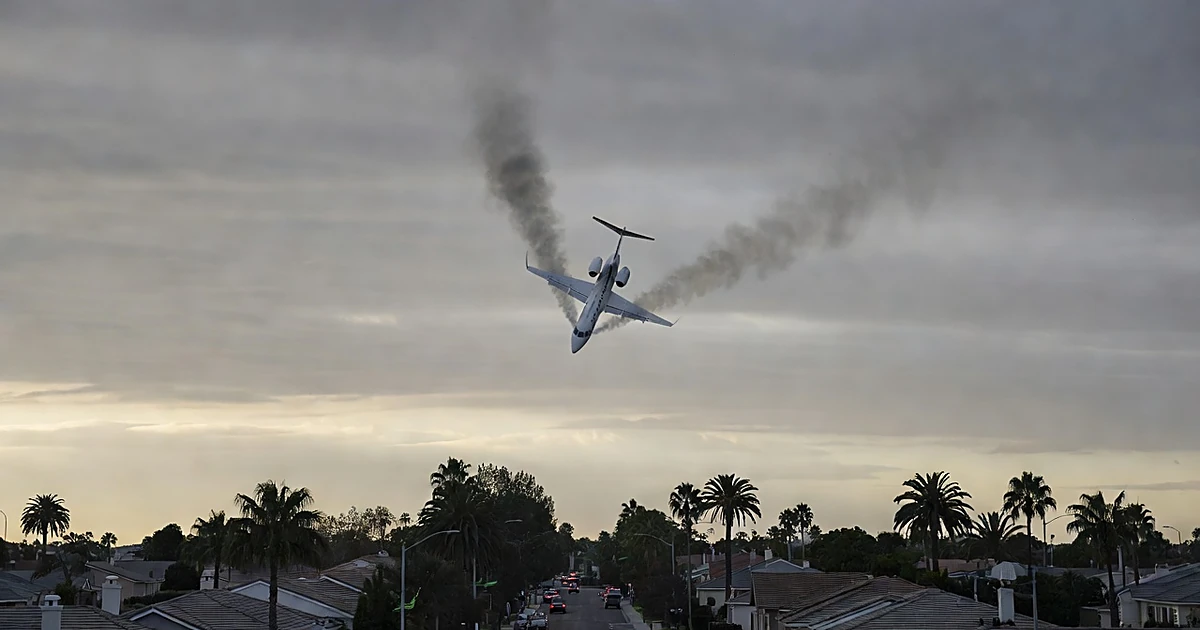
A Learjet 60 nose-dived into a Palm Beach County neighborhood near Mar-a-Lago after the pilot’s frantic mayday calls, killing all nine people on board Sunday afternoon.
The business jet struck the ground around 12:50 p.m. local time on Nov. 1 in a residential area near Cresthaven, Florida, roughly six miles from Mar-a-Lago. All nine aboard died. The aircraft had left Austin-Bergstrom International Airport in Texas bound for North Eleuthera Airport in the Bahamas when the emergency unfolded.
The Telegraph reported that the pilot, understood to be 20-year-old Nathalia Gadelha Filgueiras, transmitted a series of mayday calls describing a catastrophic descent. She earned her pilot’s license at 17. Flight-tracking data from ADS-B Exchange showed the plane dropped 27,000 feet in a single minute.
U.S. Transportation Secretary Sean Duffy confirmed the deaths and asked the public to pray for the families. The Federal Aviation Administration and National Transportation Safety Board opened a joint investigation, with the NTSB taking the lead on updates. County sheriff’s deputies closed both directions of Military Trail between Cresthaven Boulevard and 10th Avenue North and told drivers to find other routes.
Radio traffic captured the final plunge
Audio released after the crash captured the pilot’s voice as the jet lost control. She reported moderate turbulence, then extreme descent rates, overspeed, and a hard bank.
One transmission stated:
“We’re descending 8,000 mayday, mayday, we’re descending 10,000ft per minute.”
Moments later she declared an emergency under the callsign seven two two bravo delta:
“Declaring emergency seven two two bravo delta we are in an overspeed condition descending 20,000ft per minute.”
Further calls followed: “We’re gonna crash into the ground,” and “We are descending 22,000ft and we are banking 60 degrees.” Her final recorded words included “Holy f---, we’re out of time.” An air traffic controller answered, “I’m here with you, talk to me.”
Just The News reported the same core timeline and Duffy’s confirmation that every person on the Learjet 60 perished. The cause was not immediately clear.
President Trump had left Mar-a-Lago earlier that Sunday morning. He boarded Air Force One at 11:55 a.m. at the recently renamed President Donald J. Trump International Airport, about an hour before the impact. The crash site’s proximity drew immediate national attention to the area long associated with the former president’s Florida residence, much as other high-profile events near the compound have done, including recent debates over sanctions decisions tied to Mar-a-Lago.
Dashcam and debris painted a brutal scene
Video evidence added hard visual confirmation. New York Post footage from a dashcam showed the aircraft going down in the West Palm Beach area near Mar-a-Lago.
Impact left a large crater beside the road and scattered debris across the residential zone near a mobile home park. Emergency crews shut down nearby roads while they worked the scene. No ground fatalities were immediately reported, though officials said it remained unclear whether anyone on the ground had been hurt.
Fox News reported the jet erupted into a fireball on impact about nine miles from Mar-a-Lago and that the FAA was sending a support team to assist the NTSB. Duffy repeated his call for prayer for the families and loved ones of those lost.
Florida Gov. Ron DeSantis described the wreckage in stark terms after viewing the site. He said the crash looked like a missile going down and left a big crater on the side of the road, with a large amount of debris thrown outward. The violence of the scene has drawn the same public focus that follows other deadly transportation disasters, including a recent fatal multi-vehicle crash involving a tour bus.
Expert points to thunderstorm and possible structural failure
Former airline pilot and aviation expert Terry Tozer told The Telegraph the jet appeared to have flown into the top of a thunderstorm. He said icing may have caused a loss of control, and video suggested the tail section separated.
Tozer stated:
“It would appear to have flown into the top of a thunderstorm, and possibly due to icing, lost control and then it looks as if the tail separated from the aircraft.”
He noted the pilot’s audio described overspeeding well beyond structural limits and that the storm developed rapidly enough to catch the crew by surprise. “It’s early days, but there’s some good video of it, and as it’s coming down, it doesn’t appear to have a tail section,” he added. The sequence, he said, began with the thunderstorm encounter and then cascaded.
Breitbart reported the same official casualty count, departure from Austin, Bahamas destination, and DeSantis’s description of a cataclysmic impact that left a crater. The outlet also noted the plane’s reports of turbulence and icing before the steep dive into a busy roadway.
Investigators will examine weather, airframe integrity, pilot actions, and maintenance records. The NTSB controls the release of findings. Similar scrutiny followed other recent aviation losses, including the search for debris after a Boston air ambulance jet dropped thousands of feet off Nantucket.
Names of the dead still withheld
Authorities have not released the identities of the nine people killed. The pilot’s name remains listed as understood rather than fully confirmed in initial accounts. Families wait for formal notification while the crater and road closures mark the crash site.
Duffy’s public statement stayed focused on the human cost:
“Please join me in praying for the families and loved ones of those we lost.”
The sheriff’s office promised additional information as it becomes available. For now the lanes stay closed and the NTSB holds the investigative lead. Readers tracking security and safety issues around the Trump family compound will recognize the intense local attention that also surrounds stories such as heightened protective measures for Barron Trump.
Private aviation operates under different rules than commercial carriers, yet the same physics apply when a jet meets a thunderstorm at high speed. Overspeed, ice, and possible tail separation leave little margin. The recorder and wreckage will show whether weather radar, routing decisions, or airframe limits failed first.
The mayday tape leaves no ambiguity about the final minutes. Extreme descent rates, a 60-degree bank, and the pilot’s last words document a loss of control that ended in a residential crater. Thorough, transparent NTSB work is the only path to answers the families and the flying public can trust.