Pelosi says she and Biden have finally spoken after bitter rift over his 2024 campaign exit
Former House Speaker Nancy Pelosi disclosed this week that she and former President Joe Biden have broken a long silence, speaking for the first time since a feud that began when Biden stepped out of the 2024 presidential race, a decision widely attributed to pressure Pelosi helped orchestrate.
Pelosi made the revelation during an MS NOW interview, confirming the conversation when pressed by interviewer Ali Vitali. Asked directly whether she had spoken with Biden, Pelosi answered simply: "Yes we have." She then deflected on the timing, saying, "I'd rather, it'd be up to him to tell people when we spoke."
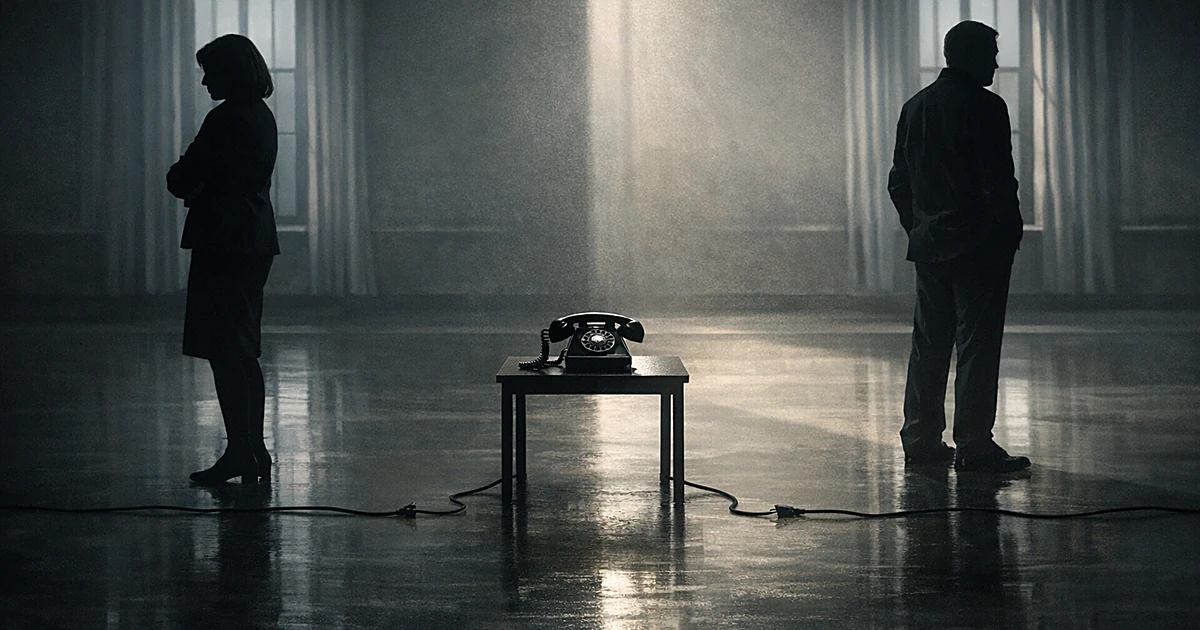
The exchange matters because it caps a rupture that lasted well over a year, a stretch during which two of the Democratic Party's most powerful figures apparently could not bring themselves to pick up the phone. That silence told a story Pelosi's careful words this week could not quite paper over.
How the feud started
The break traces back to July 2024. Biden had publicly stated he intended to stay in the presidential race. Then Pelosi appeared on "Morning Joe" and indicated Biden was still making a decision, contradicting his own declared position on national television. Biden exited the race shortly after and endorsed Vice President Kamala Harris to replace him atop the ticket.
The sequence of events left little doubt about Pelosi's influence. But in her MS NOW interview, she framed her role modestly.
Pelosi told Vitali:
"The Biden administration accomplished great things. People compared him to LBJ in terms of the amount and the quality and quantity of accomplishments. I, the only thing I asked the president to do were two things, I get more credit or blame than I deserve in that."
Those two things, she said, were straightforward. She wanted Biden to consult additional pollsters beyond the one he was relying on. And she wanted him to publicly reassure voters he could serve out another full term.
As the New York Post reported, Pelosi has consistently maintained that Biden's withdrawal was his own call, even as widespread reporting has cast her as a central force behind the pressure campaign that made his exit all but inevitable.
Pelosi put it this way: "They didn't agree with that, and so he then decided to step aside; it was his decision."
A silence that spoke volumes
By December 2025, more than a year after Biden dropped out, Pelosi acknowledged in a separate interview that she and Biden still had not spoken. She said at the time that she understood why. That admission alone revealed how deep the wound ran.
Pelosi is no stranger to managing intra-party friction. She has publicly downplayed tensions with other Democrats even while working behind the scenes to enforce discipline. The Biden situation followed a similar pattern, public praise layered over private maneuvering, except this time the target was a sitting president, and the fallout proved harder to contain.
Vitali pressed Pelosi on whether she factored Biden's exit into her own legacy. The interviewer said directly: "I think that many people credit you, or blame you, for the way that campaign ended."
Pelosi did not push back on that framing. Instead she pivoted to sorrow. "Well, I'm saddened by it because I love him and respect him, but I respect his decision in that regard," she said.
That careful phrasing, "his decision", has become Pelosi's refrain. She has repeated it across multiple interviews. Whether anyone in Washington actually believes it is another question.
Pelosi's defense of Harris
The former Speaker also used the interview to defend Kamala Harris's performance as the replacement nominee. Pelosi described Harris's campaign as "historically short" but argued it prevented a far worse outcome for Democrats down-ballot.
Pelosi's claim was specific. She said Democrats "would have lost probably 14 seats in that election if she had not been the candidate." She added that Harris "turned out so many more people than who would have voted."
It was a notable line of argument. Harris lost the presidential race. Pelosi's spin reframed the loss as a relative success, a familiar move for a politician whose career has been built on counting votes and managing expectations. The logic: things could have been worse, so the person who lost still deserves credit.
That kind of reasoning may satisfy party insiders. It is unlikely to satisfy the tens of millions of voters who watched Democrats swap their incumbent president mid-cycle and then lose anyway. Pelosi herself has remained active in party politics, endorsing Gavin Newsom for 2028 and continuing to shape the Democratic bench from behind the scenes.
The lunch and what it signals
Vitali also reported that Pelosi and Biden recently had lunch together, a detail Pelosi did not elaborate on. No date or location was given. The lunch, if accurate, would represent a further thaw beyond a single phone call or brief exchange.
But a lunch does not erase the record. For more than a year, the most consequential Democratic power broker of her generation and the president she helped push from the ticket did not speak. That gap was not the product of scheduling conflicts. It was the product of a genuine rupture, one rooted in the fact that Pelosi publicly undermined Biden's stated intention to stay in the race, and Biden apparently never forgave her for it.
Pelosi has continued to wield influence across the party, backing candidates in key House races and positioning herself as a kingmaker even after leaving the Speaker's chair. Her willingness to speak publicly about the Biden rift, while carefully controlling the narrative, fits a pattern voters have seen before.
What remains unanswered
Several questions hang over the reconciliation. When exactly did Pelosi and Biden speak? Pelosi would not say. What was discussed? She offered nothing beyond the fact of the conversation. And which single pollster was Biden relying on, the one Pelosi wanted supplemented with additional voices? She never named that person.
Pelosi also never addressed the core tension head-on: if her requests were as modest as she claims, consult more pollsters, reassure the public, why did they produce a rupture so severe that two longtime allies went silent for over a year? The gap between the described ask and the observed fallout suggests the full story remains untold.
It is worth remembering that Biden awarded Pelosi the Presidential Medal of Freedom at the White House on May 3, 2024, just weeks before the chain of events that would end his candidacy and their relationship. The ceremony now reads like a footnote from a different era, a moment of mutual admiration that did not survive the summer.
Pelosi has long been skilled at deflecting uncomfortable questions in public while operating with precision in private. Her handling of the Biden rift follows that template exactly: offer warmth, claim limited involvement, redirect credit and blame, and move on.
Whether Biden sees it the same way, no one outside that lunch table can say. His silence on the matter has been its own kind of statement.
When the people who run your party can push out a sitting president and then take a year to apologize, the rest of the country is entitled to wonder who was really in charge, and what else they decided behind closed doors.