Jackson takes aim at Supreme Court's emergency docket, calls current process a threat to public trust
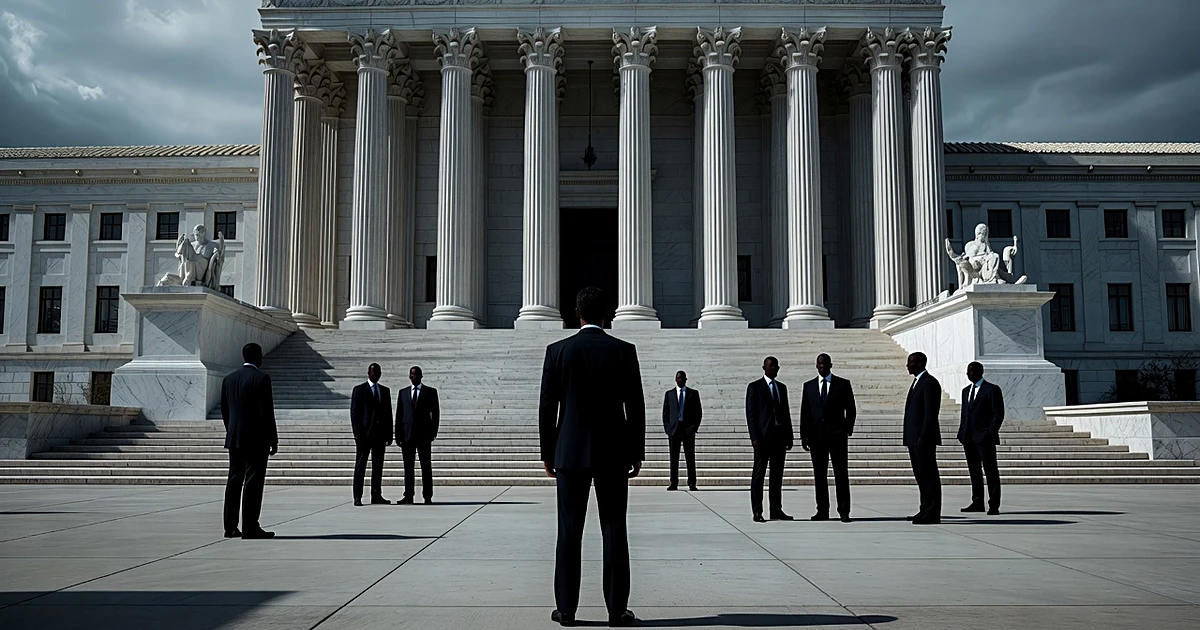
Justice Ketanji Brown Jackson used a rare public speech to condemn how the Supreme Court handles emergency cases, a process she says rewards "privileged litigants" at the expense of fairness and accountability.
Jackson, the Biden appointee who joined the bench in 2022, delivered the address Thursday night at the University of the District of Columbia School of Law, laying out a detailed case that the court's emergency docket has drifted far from its original purpose. She proposed specific procedural reforms and warned that without them, the court risks becoming a fast lane for parties willing to skip the normal appeals process. Courthouse News Service reported the speech, noting Jackson is considered the most outspoken sitting justice on the subject.
The emergency docket, sometimes called the "shadow docket", allows the court to pause lower-court rulings before a case has been fully argued and decided. A stay grant freezes a ruling in place while litigation continues, often without the written opinions, oral arguments, or public reasoning that accompany the court's regular decisions. Jackson argued that this shortcut has expanded well beyond genuine emergencies and now functions as an alternative path to the court's front door.
Forty emergency applications since Trump's second term began
Jackson's complaints did not land in a vacuum. The Trump administration has filed 40 emergency applications with the Supreme Court since the start of the president's second term, Fox News reported, and has won roughly 80 percent of those appeals. Those rulings have cleared the way for mass firings, curtailed nationwide injunctions issued by lower-court judges, and allowed controversial deportation actions to proceed.
Jackson framed her criticism around process, not outcomes. But the timing and targets were unmistakable. She told the law students in attendance that the court must guard against becoming a venue where one side receives preferential treatment.
"If we're not careful, the emergency docket can and will become an end-run around the standard review process, a special avenue that certain privileged litigants can use selectively."
She followed with a pointed question: "Think about that for a moment. Why is it that one party should get a fast pass to the Supreme Court of the United States when so many other parties are queued up, waiting patiently for the court's attention?"
That framing deserves scrutiny. Jackson's concern about procedural shortcuts is not new, justices across the ideological spectrum have raised it over the years. But when a liberal justice publicly targets a process that has favored the current administration's legal strategy, the audience should weigh the substance against the speaker's own record of dissents on these very rulings.
Jackson's reform proposals would shift how stays are granted
The speech was not all complaint. Jackson laid out a three-part framework she said would bring the emergency docket back in line with its original purpose. First, she proposed a "threshold exigency criterion", a neutral gatekeeping test that would require justices to decide whether an emergency actually exists before wading into the substance of a stay request. Under this standard, the party seeking a stay would have to prove an impending harm that could not wait for the lower courts to finish their work.
Second, Jackson argued the court should stop basing stay decisions on whether a lower court might have made a legal error. That merits-based approach, she said, pulls the justices into the substance of a case before it has been fully briefed and argued, exactly the kind of premature intervention the emergency docket was never designed to support.
Third, she proposed placing primary weight on what she called "the equitable balance of the competing harms." In her telling, the court should ask which side faces greater real-world damage from the stay decision, rather than rushing to evaluate who has the stronger legal argument on the merits. Jackson's internal clashes with her colleagues on the court have grown increasingly sharp in recent terms, and this speech extended that pattern beyond the courtroom and into the public square.
"We would set aside the merits and start by evaluating who has the better argument about the intervening harms. Instead of being evaluated only as an afterthought, we would place real and primary weight on the equitable balance of the competing harms."
A sitting justice airing internal disagreements is itself unusual
Jackson acknowledged the weight of what she was doing. A sitting Supreme Court justice publicly criticizing the court's own procedures, and, by implication, the decisions of her colleagues, is unusual for an institution that prizes its image of deliberative calm. Jackson's speech broke from that norm deliberately.
She invoked the late Justice Antonin Scalia as a model of restraint, noting that Scalia was known for opting out of substantive stay decisions because he saw no urgent need for the court to intervene in pending cases. Jackson also referenced her own time clerking for former Justice Stephen Breyer, saying that during that era, the court did not "relish the opportunity to enter a pending case as a de facto superintendent."
The contrast she drew was clear: the court she joined in 2022 operates differently from the one she observed as a young clerk. Whether that shift reflects a breakdown in norms or a reasonable response to an unprecedented volume of emergency litigation depends on where you sit. The court's recent emergency rulings have cut in both directions, siding with the administration on some matters while blocking it on others, including a ruling against National Guard deployment to Chicago and a decision striking down mail-in voting restrictions.
Jackson urged the students to look beyond outcomes and focus on consistency.
"You have to really pay attention not just to what the court ultimately decides, but how it reached that decision and whether the steps and the process it used in reaching a decision in this case looks at all like the steps and the process it used to make a similar decision in other cases."
That standard sounds fair in the abstract. Applied to Jackson's own record, though, it raises a question she did not address: whether her objections track principled procedure or track results she dislikes. Her dissents on emergency docket cases have consistently aligned with the losing side of rulings that benefited the administration's legal positions. Principled procedural reform and strategic opposition can look identical from the outside. Jackson offered no metric for distinguishing the two.
Real-world consequences and the trust question
Jackson's strongest argument centered on consequences. She warned that emergency stays produce real-world effects, layoffs, policy changes, enforcement actions, that proceed without a full judicial determination of whether the underlying government conduct is lawful.
"Significant real-world harms can follow Supreme Court stay rulings, and when the court's orders do not acknowledge that reality, they seem oblivious and ring hollow."
The examples are concrete. The shadow docket has allowed the Trump administration to lay off more than 1,300 Education Department workers, cancel $783 million in NIH grants tied to diversity programs, and carry out sweeping immigration enforcement operations in Los Angeles, the New York Post reported. Those are significant policy outcomes that bypassed the full briefing-and-argument process Jackson described as essential to legitimacy.
She pressed the point further, tying the emergency docket directly to public confidence in the judiciary.
"We cannot expect the public to have faith in our judicial system if, without clear explanation, we are consistently greenlighting harmful acts that do real damage to litigating plaintiffs without a court decision fully and fairly determining the lawfulness of that challenged conduct on the merits."
The word "greenlighting" does heavy work in that sentence. It assumes the stayed conduct is harmful before the merits have been decided, precisely the kind of prejudgment Jackson elsewhere warned against. If the court should not rush to evaluate merits on the emergency docket, it is hard to see how a justice should rush to label the underlying conduct "harmful acts" in a public speech. Questions about judicial conduct and institutional credibility have surfaced repeatedly in recent years, and Jackson's speech adds another chapter to that debate.
Jackson's procedural argument carries a political edge
Jackson cast her critique in institutional terms, warning that the court risks being dragged into political territory it was designed to avoid.
"I think the justices understood that very little good comes from taking an institution that is supposed to be operating outside of the political realm and routinely steering it into the fray."
That concern is worth taking seriously. The Supreme Court's authority depends on public perception that it operates by rules, not preferences. But Jackson's speech itself tested that principle. A sitting justice choosing a law school audience, a public stage, and a politically charged moment to criticize her colleagues' handling of cases that overwhelmingly involve the current administration's agenda is not a neutral act of institutional stewardship. It is a political statement dressed in procedural clothing.
None of this means Jackson's proposals lack merit. A threshold exigency test, a focus on competing harms rather than merits, and greater transparency in emergency orders are ideas worth debating. The emergency docket has expanded under administrations of both parties, and the court's lack of written reasoning on many stay decisions is a legitimate concern. Other justices have spoken publicly about the pressures the court faces in a polarized era.
But Jackson did not simply propose reforms. She framed the current process as a vehicle for unfairness, described its results as "harmful acts," and asked her audience to question whether the court treats all litigants equally, all while the administration winning most of those cases sits across the political aisle from the president who appointed her. A justice who wants the court to stay out of the political fray might start by keeping her own criticisms inside the conference room.
Procedural reform is a conversation worth having. But when the loudest voice for reform is also the most frequent dissenter on the outcomes that reform would change, the public is entitled to ask whether the complaint is about the process, or the scoreboard.