Tiger Woods faces DUI charge in Florida after rollover crash on Jupiter Island
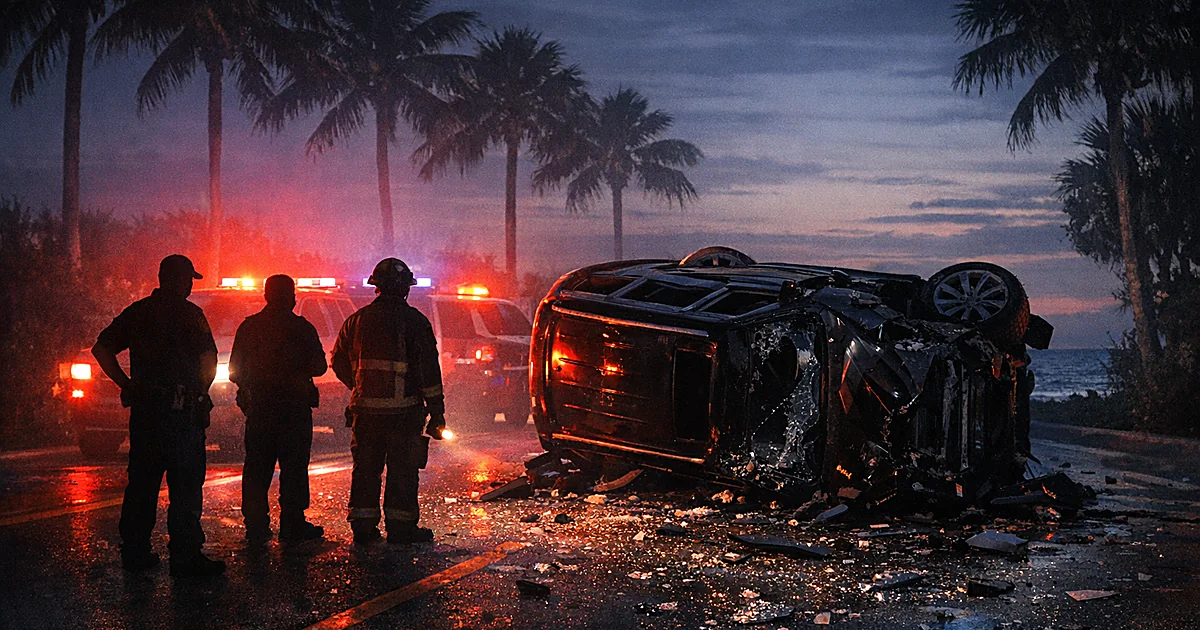
Tiger Woods was arrested Friday on a driving-under-the-influence charge after his vehicle collided with another car at high speed and rolled over on Jupiter Island, Florida, the same stretch of coast where authorities arrested him on a DUI charge nine years ago. Martin County Sheriff John Budensiek said no one was injured but warned the outcome could have been far worse.
Woods, 50, now faces three misdemeanor counts: DUI, property damage, and refusal to submit to a lawful test. The arrest came just days after the 15-time major champion competed in the TGL championship and only one day after President Donald Trump told Fox News' "The Five" that Woods would attend the Masters at Augusta but would not play.
The charges land on a career already battered by injury, diminished results, and a prior DUI arrest in 2017. For anyone who believes the law should apply equally, whether you hold 15 majors or zero, the details released by the Martin County Sheriff's office deserve close attention.
What the sheriff described
Budensiek laid out the sequence in a press conference Friday. Woods was traveling at what the sheriff called "a high rate of speed" when his vehicle struck another car. The collision sent Woods' vehicle rolling onto its driver's side. He was alone in the car and exited by crawling out through the passenger side, Fox News Digital reported.
Authorities said Woods "exemplified signs of impairment." DUI investigators responded to the scene and administered what Budensiek described as "in-depth roadside tests." Woods told investigators about prior injuries and surgeries, and the sheriff said they took that into account.
Budensiek offered a detailed account of how authorities handled the alcohol question:
"We really weren't suspicious of alcohol being involved in this case, and that proved to be true at the jail.... But when it came time for us to ask for a urinalysis test, he refused. And, so, he's been charged with DUI, with property damage and refusal to submit to a lawful test."
Woods blew "triple-zeroes" for alcohol, the sheriff confirmed. That detail mirrors the 2017 arrest, when Woods was found asleep at the wheel and later said prescription medications were to blame. The current refusal to provide a urine sample leaves the specific substance question unanswered, but under Florida law, refusal itself carries consequences.
A pattern that speaks for itself
The 2017 Jupiter Island arrest ended with Woods pleading to a lesser charge and entering a diversion program. He publicly apologized, blamed a reaction to prescription drugs, and the episode faded from the sports pages. Now, nearly a decade later, authorities on the same island are booking him on the same charge, this time with a wrecked car and a second vehicle involved.
Budensiek did not mince words about the stakes. "This could've been a lot worse," the sheriff said. No one was injured. But a high-speed rollover that involves another car is not a fender-bender. Property damage is cited in the charges, and the identity and condition of the other driver remain unclear from the information released so far.
The sheriff's account also raises questions the press conference did not fully resolve. What roadside tests were performed? What specific signs of impairment did investigators observe? What substance, if any, do authorities suspect? And why, after a prior DUI arrest that hinged on substances other than alcohol, would Woods refuse the one test that could have cleared him?
A career in steep decline
Woods' arrest comes during the lowest stretch of competitive results in his legendary career. In 14 majors since his remarkable 2019 Masters victory, he has failed to crack a top-20 finish, his longest such drought since the first six majors of his career in 1995 and 1996. In his last 26 major appearances, he has managed only four top-20 finishes.
The physical toll has been staggering. A 2021 wreck caused serious leg injuries that kept him off the course for an entire year. Last year he ruptured his Achilles ahead of the Masters. In 2024, he entered just five events, the Genesis Invitational and all four majors, withdrawing from the Genesis, finishing last at the Masters, and missing the cut in the remaining three.
Since tying for ninth at the 2020 Farmers Insurance Open, his best result across 18 official events has been a tie for 37th at the 2020 PGA Championship. The five-time Augusta champion, who once seemed capable of chasing down Jack Nicklaus' record of 18 majors, has spent the past several years fighting just to walk 18 holes.
Just days before the arrest, Woods competed in the TGL championship. Vanessa Trump, his girlfriend, and her daughter Kai Trump were in the stands. The scene looked like a man still connected to the sport and to the public figures around it. Within days, that image gave way to photos of an overturned vehicle on a Jupiter Island road.
Accountability should not bend for celebrity
There is a familiar script in cases like this. A famous athlete gets arrested. Lawyers negotiate. The public moves on. The system bends just enough to let the story fade. That script played out in 2017, and it plays out routinely for people with resources and name recognition that ordinary defendants do not have.
Florida's refusal-to-submit statute exists precisely because impaired drivers should not be able to dodge accountability by simply declining a test. Whether Woods was impaired by a prescription drug, an illegal substance, or something else entirely, the public has a right to expect that the Martin County justice system treats this case the way it would treat any other driver who crashed at high speed, rolled a vehicle, showed signs of impairment, and then refused to cooperate with testing. In an era when calls for selective prosecution and politicized legal standards have eroded public trust in equal justice, consistency matters more than ever.
The sheriff deserves credit for a straightforward public accounting. Budensiek named the charges, described the evidence, acknowledged what investigators considered, and did not sugarcoat the outcome. That is how law enforcement should operate, transparently, without regard to the suspect's fame or social connections. The same principle applies whether the defendant is a political figure facing legal scrutiny or a golfer who once seemed untouchable.
What comes next
Woods has not spoken publicly since the arrest. No statement from his representatives appeared in the initial reporting. The misdemeanor charges carry potential penalties including fines, license suspension, and jail time, particularly given the prior DUI on his record. Florida treats a second DUI offense with enhanced penalties, including a mandatory minimum jail sentence if the prior conviction falls within a certain window.
The open questions are significant. The identity and account of the other driver. The specific substance suspected. The results, or lack thereof, of whatever roadside tests were administered. Whether prosecutors will pursue the charges aggressively or allow another quiet resolution. The public should watch closely.
Tiger Woods won 15 majors by holding himself to a standard no one else could match. The law asks for a much simpler standard: don't drive impaired, and cooperate when authorities have reason to test you. He appears to have failed on both counts, again.
Celebrity has never been a defense under Florida statute. It shouldn't start now.