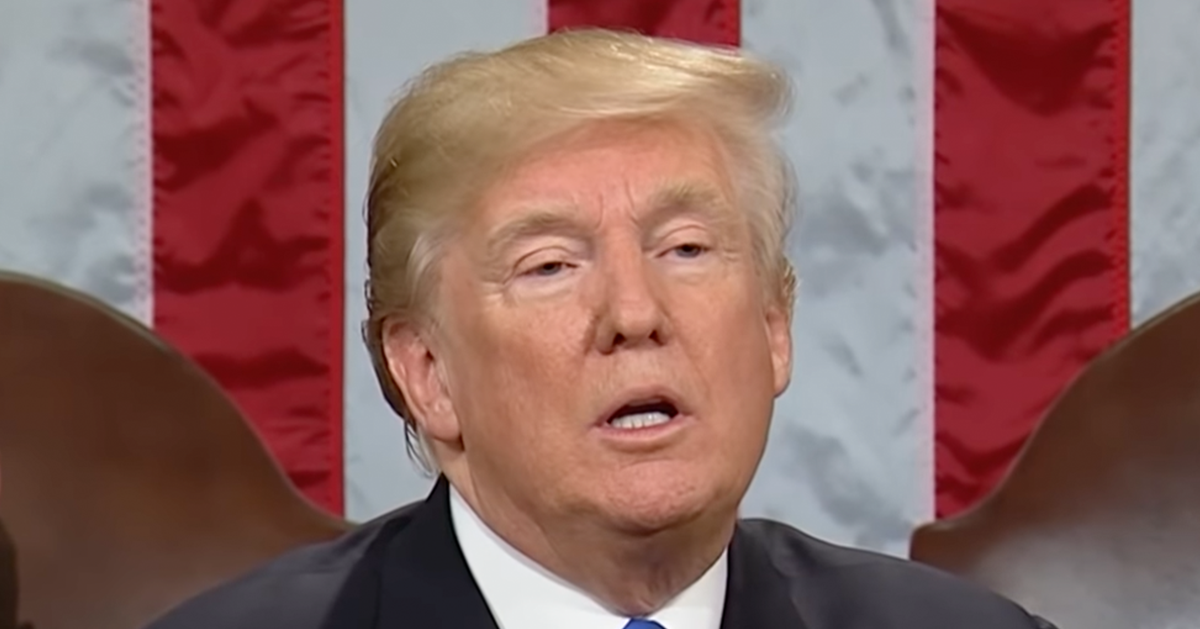
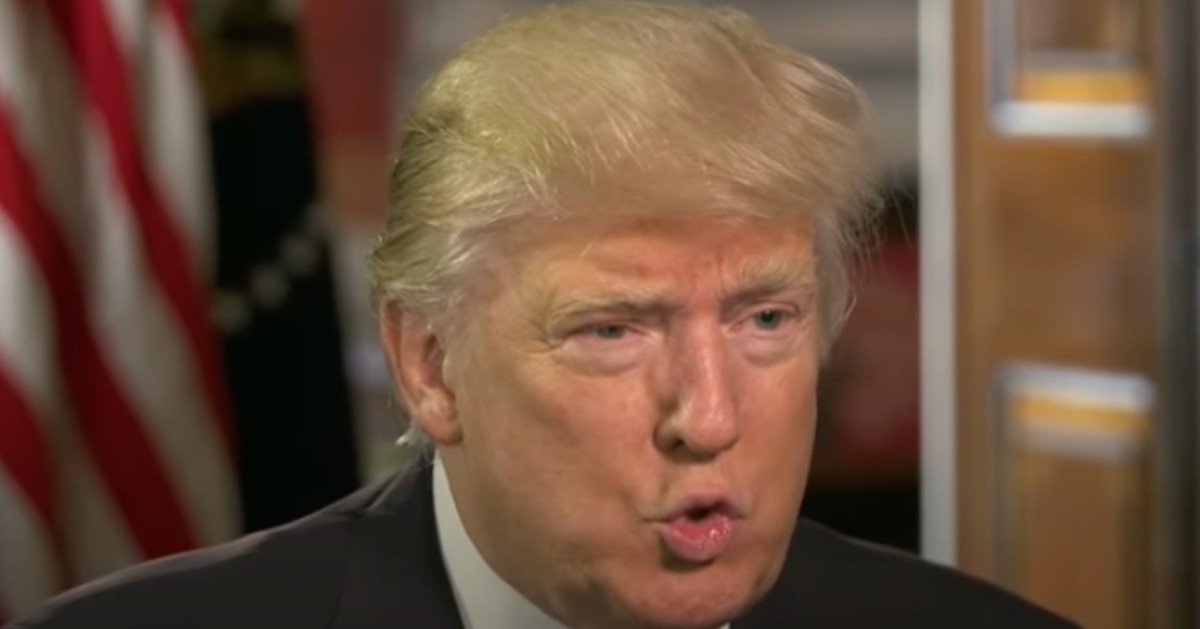
Trump demands Iran open Strait of Hormuz within 48 hours or face strikes on power plants
President Donald Trump issued a blunt ultimatum to Iran on Saturday night: open the Strait of Hormuz or lose your power grid. The message, posted to Truth Social, left no room for diplomatic ambiguity.
"If Iran doesn't FULLY OPEN, WITHOUT THREAT, the Strait of Hormuz, within 48 HOURS from this exact point in time, the United States of America will hit and obliterate their various POWER PLANTS, STARTING WITH THE BIGGEST ONE FIRST!"
The threat landed as the conflict with Iran enters its fourth week, with roughly 50,000 U.S. personnel supporting operations in the region and additional forces on the way, including three more warships and approximately 2,500 Marines.
Iran's largest nuclear power facility, the Bushehr Nuclear Power Plant along the Persian Gulf, sits squarely within range.
A pattern of escalation, then leverage
The Daily Mail reported that the ultimatum arrived just a day after Trump had signaled a possible wind-down of military operations. On Friday, he posted that the U.S. was "getting very close to meeting our objectives" and considering scaling back its presence. Earlier on Saturday evening, he sharpened the tone considerably.
"Their leadership is gone, their navy and air force are dead, they have absolutely no defense, and they want to make a deal. I don't! We are weeks ahead of schedule."
That's not contradiction. That's a negotiating posture built on demonstrated force. When you've already degraded an adversary's military capacity, the threat to target civilian infrastructure like power plants carries a different kind of weight. Iran knows it isn't hypothetical.
Trump also took a swipe at the New York Times' David Sanger, the paper's White House and National Security Correspondent, declaring that "the United States has blown Iran off of the map" and dismissing Sanger's analysis that Trump had failed to meet his own goals.
The media's instinct to frame every military operation as a quagmire before the dust settles is reflexive at this point. Trump's response was characteristically direct: "Yes I have, and weeks ahead of schedule."
Iran's hollow counter-threat
Iran, for its part, rattled the saber it has left. A spokesperson for the Islamic Revolutionary Guard Corps posted a response on Telegram, translated from Farsi.
"If the enemy attacks fuel and energy infrastructure, all energy, information technology, and desalination infrastructure belonging to the US and the regime in the region will be targeted."
This is the rhetoric of a regime whose navy and air force Trump has already described as "dead." The IRGC's threat to strike regional infrastructure is worth taking seriously as an intelligence matter, but as a statement of strategic parity, it falls flat.
Iran has spent weeks disrupting the Strait of Hormuz with missile, drone, and mine attacks, effectively shutting down a shipping lane that carries roughly one-fifth of the world's oil supply. That disruption is the leverage Iran still holds. Trump's ultimatum is designed to break it.
The oil equation
The administration simultaneously made a move that raised eyebrows on both sides of the aisle: easing some sanctions on Iranian oil, allowing previously restricted shipments already at sea to enter global markets. Treasury Secretary Scott Bessent framed the logic on X.
"At present, sanctioned Iranian oil is being hoarded by China on the cheap."
Bessent argued that unlocking the supply would bring approximately 140 million barrels of oil to global markets, though that amounts to only a few days' worth of global demand. The play is clearly aimed at stabilizing energy prices during the conflict. The S&P 500 dropped 1.5 percent on Friday, and markets don't respond well to a closed Hormuz Strait.
Republican Rep. Nancy Mace wasn't buying it. She posted to X with a pointed observation: "Bombing Iran with one hand and buying Iran oil with the other." It's a fair tension to note.
Easing sanctions on a nation you're actively threatening to bomb does create an optical problem, even if the economic logic holds internally. The question is whether the short-term market relief justifies softening the economic pressure that complements the military campaign.
Who guards the strait after?
Trump also signaled something that deserves more attention than it's getting. He declared that the Strait of Hormuz "will have to be guarded and policed, as necessary, by other Nations who use it," adding bluntly that "the United States does not." He suggested it "shouldn't be necessary once Iran's threat is eradicated."
This is the "America First" doctrine applied to the Persian Gulf in real time. The United States has patrolled these waters for decades, subsidizing the energy security of European and Asian economies that benefit far more from the strait's freedom of navigation than American consumers do. Trump is putting those nations on notice: if you need the oil, you secure the lane.
It's a principle conservatives have argued for years. American military power should serve American interests, not function as a free global security service. The nations that import through Hormuz, China chief among them, have enjoyed the protection without bearing the cost. That arrangement is overdue for renegotiation.
The Pentagon is reportedly seeking an additional $200 billion from Congress to fund ongoing operations. Trump has ruled out deploying large numbers of ground troops, though officials have not excluded the possibility of special forces operations.
CENTCOM Commander Adm. Brad Cooper reinforced the operational focus on Saturday evening, sharing a video and stating that U.S. forces "remain centered on very clear military objectives in eliminating Iran's ability to project power against Americans, and against its neighbors."
The 48-hour clock is now ticking. Iran can open the strait, or it can watch the lights go out. The choice belongs to Tehran, and for once, the terms are that simple.