Trump reveals US effort to arm Iranian protesters through Kurdish channels, says regime killed 45,000
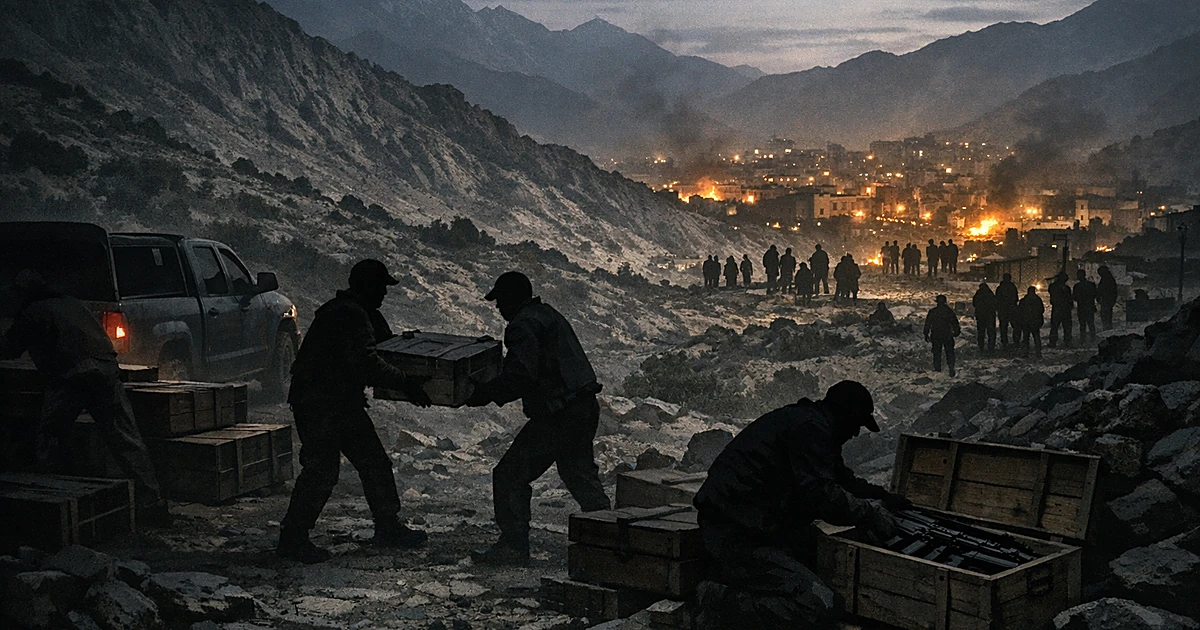
President Trump disclosed in a phone interview with Fox News' Trey Yingst that the United States attempted to funnel weapons to Iranian protesters through Kurdish intermediaries, a covert effort he described in blunt terms even as at least one Kurdish group denied ever receiving arms.
"We sent them a lot of guns, we sent them through the Kurds," Trump told Yingst, referring to the massive anti-regime demonstrations that have rocked Iran since late 2025. The New York Post reported that the weapons were sent to Iranian Kurds but largely do not appear to have made their way to the protesters on the ground.
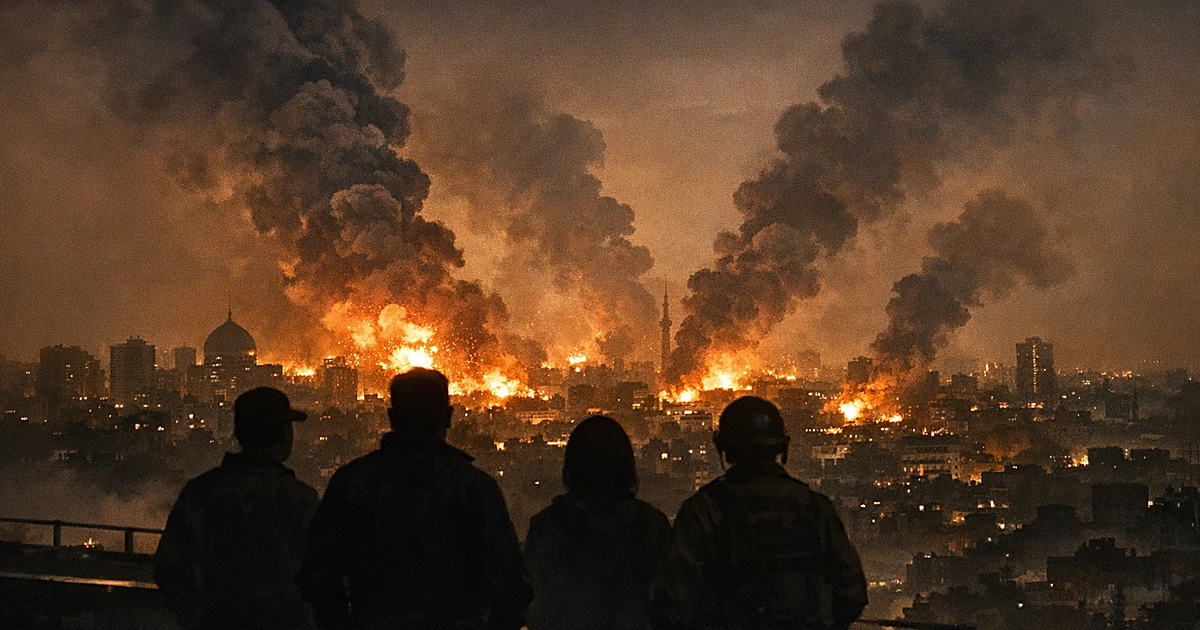
The revelation lands at a volatile moment. The administration is simultaneously threatening to level Iranian infrastructure, negotiating through special envoys Steve Witkoff and Jared Kushner, and confronting casualty estimates that, if even partly accurate, would make Iran's crackdown one of the deadliest government assaults on its own citizens in modern memory.
A disputed pipeline
The Democratic Party of Iranian Kurdistan, known as PDKI, pushed back directly on Trump's account. Hejar Berenji, a PDKI representative, told Fox News plainly:
"We did not receive any weapons during the time of the demonstrations in Iran."
That flat denial raises hard questions. If the weapons were sent "through the Kurds," which Kurdish faction received them? The fact pack names no specific group that confirmed delivery. No US agency or program has been publicly identified as the sender. And neither the quantity nor the timing of the shipment has been specified beyond Trump's own words.
What is clear is the scale of the crisis the arms were meant to address. Anti-government protests erupted across Iran late last year, driven by a cost-of-living crisis, a plunging currency, and widespread discontent with the regime. The Human Rights Activists News Agency, or HRANA, estimated that well over 7,000 Iranian protesters were killed by the regime in response. Local officials in Iran put the figure above 30,000. Trump told Yingst the number was around 45,000.
None of these figures have been independently verified against each other, and the range, from 7,000 to 45,000, is enormous. But even the lowest estimate describes a government turning lethal force against its own people on a staggering scale.
Threats, strikes, and the Strait of Hormuz
Trump's disclosure about the weapons came alongside an escalating series of public threats aimed at Tehran. On January 2, the White House posted on X that if the Iranian regime "kills peaceful protesters, which is their custom, the United States of America will come to their rescue." Nearly two weeks later, Trump posted on Truth Social urging demonstrators to "KEEP PROTESTING, TAKE OVER YOUR INSTITUTIONS," adding: "HELP IS ON ITS WAY."
Those posts now read differently in light of the weapons revelation. What looked like rhetorical encouragement may have been something closer to an operational signal, or at least an attempt at one, given that the guns apparently stalled in Kurdish hands.
The broader confrontation with Iran has only intensified since. Operation Epic Fury began on February 28, and Trump has publicly threatened to destroy Iranian infrastructure over the regime's posture on the Strait of Hormuz, through which over a fifth of the world's seaborne oil supplies flow annually. While Democrats have focused on domestic political fights, the administration has been ratcheting up pressure on one of the world's most dangerous regimes.
On Sunday, Trump posted on Truth Social:
"Tuesday will be Power Plant Day, and Bridge Day, all wrapped up in one, in Iran. There will be nothing like it!!! Open the F, in' Strait, you crazy b, ds, or you'll be living in Hell."
He added: "JUST WATCH! Praise be to Allah."
Negotiations under pressure
Even as the threats mounted, Trump told Axios his team is in "deep negotiations" with Iran and said "there is a good chance" of a deal. He described halting attacks against Iranian energy infrastructure through April 6 and granting Iranian negotiators amnesty from US strikes as Operation Epic Fury continues.
But the president also made clear the pause had limits. He recounted how Iranian negotiators proposed meeting "in five days," prompting his skepticism.
"But then they said they will meet us in five days. So I said, 'Why five days?' I felt they were not being serious. So I attacked the bridge."
Which bridge he was referring to was not specified. The remark, though, captures the administration's approach: negotiate, but hit hard enough to make Tehran believe the alternative to a deal is unbearable. Trump put it more directly in the same interview: "If they don't make a deal and fast, I'm considering blowing everything up and taking the oil." He added: "You're going to see bridges and power plants dropping all over their country."
The combination of covert arms transfers, overt military strikes, public encouragement of regime change from below, and simultaneous diplomatic engagement is an extraordinarily aggressive posture. Whether it produces a deal or a deeper conflict remains the central open question. The administration appears to be betting that maximum pressure, applied across every available channel at once, is the only language Tehran understands.
What remains conspicuously absent from the public debate is any serious Democratic counter-strategy on Iran. While party leaders have busied themselves with internal messaging and domestic positioning, the opposition has offered little in the way of a coherent alternative to a regime that, by every available estimate, has slaughtered thousands of its own citizens in the streets.
The gap between intent and delivery
The most troubling element of Trump's disclosure may be what it reveals about the limits of American covert action. The president said the US sent weapons. A Kurdish political party says it never got them. The protesters, the intended recipients, appear to have received nothing.
That gap matters. If the administration committed to arming a protest movement and the arms never arrived, the question is not just what went wrong logistically. It is whether the promise of American support, broadcast publicly on social media, encouraged Iranians to take risks they might not otherwise have taken, on the assumption that help was coming.
HRANA's estimate of well over 7,000 dead is grim enough. Local officials inside Iran suggesting over 30,000 is almost incomprehensible. Trump's own figure of 45,000 would, if accurate, represent a massacre on a scale that demands far more international attention than it has received. The protests were fueled by economic desperation, a collapsing currency, soaring costs, and the regime's response was lethal force.
The same political class that lectures Americans about human rights at home has had remarkably little to say about tens of thousands of Iranians reportedly killed by their own government. The silence is telling.
What remains unanswered
Several critical questions remain unresolved. Which US agency authorized and executed the weapons transfer? Through which specific Kurdish group or groups were the arms channeled? If not the PDKI, then who? What happened to the weapons after they reached Kurdish hands? And did anyone in the US government assess, before the transfer, whether the Kurdish intermediaries had the capacity or the intent to move the arms to protesters inside Iran?
Trump's willingness to discuss the operation publicly is itself unusual. Covert arms transfers are typically the subject of leaks, not presidential interviews. Whether the disclosure was strategic, meant to signal resolve to Tehran, or to reassure Iranian dissidents, or simply a product of the president's characteristic directness is unclear.
What is not unclear is the broader picture. Iran's regime responded to peaceful protest with mass killing. The United States attempted to help. The help did not arrive. And now, with Democratic leaders auditioning for future campaigns rather than engaging on the most serious foreign policy confrontation of the moment, the administration is left to navigate the crisis largely on its own terms.
When a government kills thousands of its own people and the world barely blinks, the failure is not just Tehran's. It belongs to every institution and every leader who looked away.