Trump says 'many of Iran's military leaders' killed in massive Tehran strike
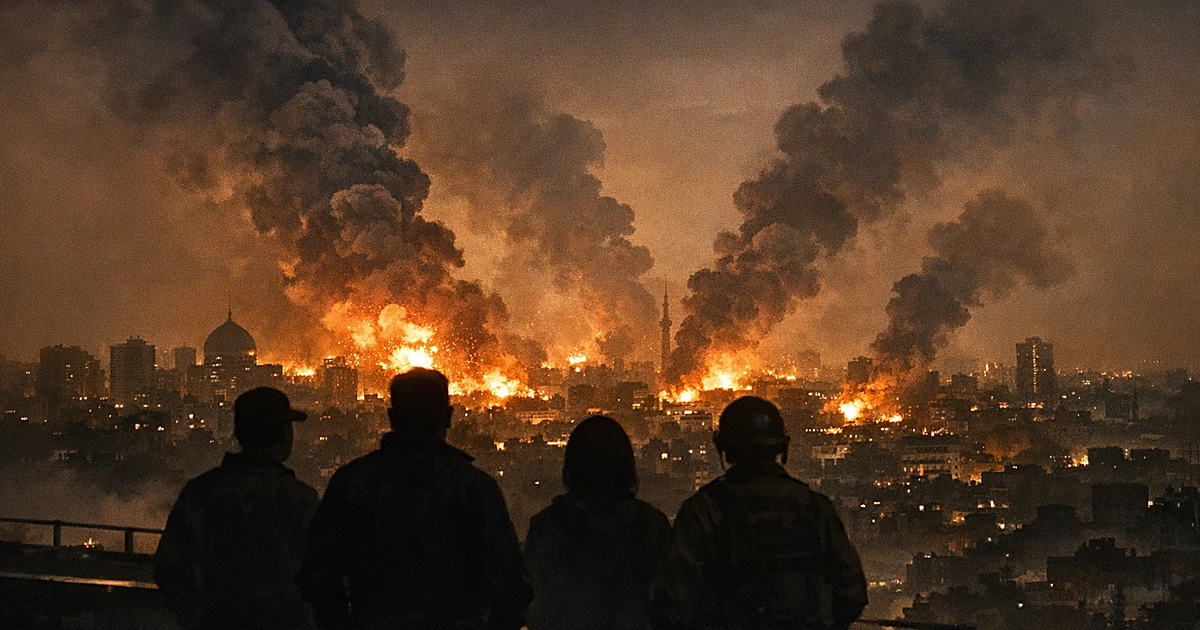
President Donald Trump announced that "many of Iran's Military Leaders" had been killed in a strike on Tehran, posting a video that appeared to show the attack and warning the Iranian regime that its time to negotiate was nearly gone.
Trump made the declaration in a Truth Social post that described the assault as a "massive strike in Tehran." A second post, published earlier in the day, reminded Tehran of a prior ultimatum: open the Strait of Hormuz and come to the table, or face consequences.
The twin posts mark the sharpest public escalation yet from the White House in a confrontation that has moved from economic pressure and diplomatic deadlines to direct military action against senior Iranian military figures in the regime's own capital.
Trump's own words
The president's first post left little room for ambiguity. Trump wrote on Truth Social:
"Many of Iran's Military Leaders, who have led them poorly and unwisely, are terminated, along with much else, with this massive strike in Tehran!"
Included in the post was a video that appeared to show the strike itself. The source and timing of the footage were not specified.
His earlier post revisited the ultimatum he had issued days before, a demand that Tehran either reach a deal or reopen the Strait of Hormuz. Trump's language was blunt:
"Remember when I gave Iran ten days to MAKE A DEAL or OPEN UP THE HORMUZ STRAIT. Time is running out, 48 hours before all Hell will reign down on them."
That warning had not come out of nowhere. Trump had previously demanded Iran open the Strait of Hormuz within 48 hours or face strikes on the country's power infrastructure.
Prior warnings and the road to Tehran
Breitbart News's Joshua Klein reported that Trump's Hormuz post came after the president had already warned the United States could strike major regime infrastructure, including electric generating plants, oil wells, and Kharg Island, Iran's main oil export hub, if Tehran refused to reopen the strait and failed to reach terms.
That threat was not rhetorical posturing. The administration had been signaling for weeks that military options were on the table. Trump had weighed a timeline for potential strikes as the military signaled readiness, and the diplomatic track appeared to be collapsing.
Before Monday's deadline, the administration appeared increasingly skeptical that indirect diplomacy would produce a breakthrough. The regime's public posture only reinforced that skepticism.
Tehran's response: defiance and deflection
Iranian Foreign Minister Abbas Araghchi pushed back Saturday, claiming Tehran's position was being "misrepresented by U.S. media." He insisted the regime had "never refused to go to Islamabad", a reference to proposed indirect talks, and framed the conflict as something imposed on Iran from the outside.
Araghchi said what Iran cared about were the terms of what he called a "conclusive and lasting END to the illegal war that is imposed on us."
That framing, casting the regime as a victim of aggression rather than a sponsor of regional instability, is familiar. And it landed alongside a far less diplomatic message from other Iranian officials. CNN reported that Iranian officials warned the United States and Israel would "face the punishment of 'hell' if the conflict expands."
The contrast is worth noting. Araghchi pleaded for a diplomatic resolution. Other officials threatened escalation. The regime, as usual, tried to play both cards at once.
A broader pattern of force
The Tehran strike fits into a larger posture the administration has adopted toward hostile regimes. National Review reported that joint U.S., Israeli attacks on Iran had already raised a host of questions about retaliation, regime change, and the future of Iran's support for terrorism. The piece noted that U.S. forces had cooperated with Israeli forces that bombed Iranian command centers and killed Ayatollah Ali Khamenei, and compared the Iran operation to Trump's earlier decision to send U.S. special forces to extract Venezuelan dictator Nicolás Maduro and bring him to the United States for trial.
That comparison is instructive. In both cases, the administration chose direct, high-risk action over the kind of drawn-out diplomatic maneuvering that defined the Obama and Biden approaches to hostile states. The results are debatable. The willingness to act is not.
The conflict has already carried real costs. An American F-15E was shot down over Iran during what has been called Operation Epic Fury, the first U.S. aircraft loss of the campaign. That fact alone underscores that this is not a cost-free operation conducted at safe distance. American pilots are in harm's way.
What remains unknown
Trump's post claimed "many" Iranian military leaders were killed. He did not name them. He did not specify how many. The phrase "along with much else" suggested broader damage, but the president offered no details on what infrastructure or facilities were hit beyond the reference to Tehran.
The video included in the post appeared to show the strike, but its origin and timing were not confirmed in the available reporting. Independent verification of the casualties and damage has not been reported.
These are not minor gaps. In a fast-moving military campaign, the difference between a devastating blow to Iran's command structure and a strike with limited strategic effect can reshape the entire trajectory of the conflict. The administration will face pressure to provide specifics, and it should.
Meanwhile, the diplomatic window, if it was ever truly open, appears to be closing fast. The administration's posture has also strained alliances, with Trump signaling a possible NATO withdrawal over allies' refusal to support the Iran campaign.
The stakes ahead
Iran's regime has spent decades funding proxy wars, threatening its neighbors, pursuing nuclear weapons, and destabilizing the Middle East, all while Western diplomats cycled through rounds of talks that produced little beyond delay. The Iran nuclear deal of 2015 was the signature product of that approach: a framework that paused enrichment temporarily while leaving the regime's military ambitions and regional aggression untouched.
Trump has plainly chosen a different path. Whether it leads to a durable settlement or a widening conflict depends on facts still unfolding, facts the administration owes the public in full. The president's willingness to act where predecessors hesitated is clear. What matters now is whether the strategy behind the strikes is as decisive as the strikes themselves.
For years, the foreign-policy establishment insisted that patience and process would tame Tehran. Tehran responded by building missiles, arming proxies, and closing shipping lanes. At some point, the people who kept writing checks the regime never cashed have to answer for the bill.