Trump signs executive order hitting imported brand-name drugs with 100 percent tariff
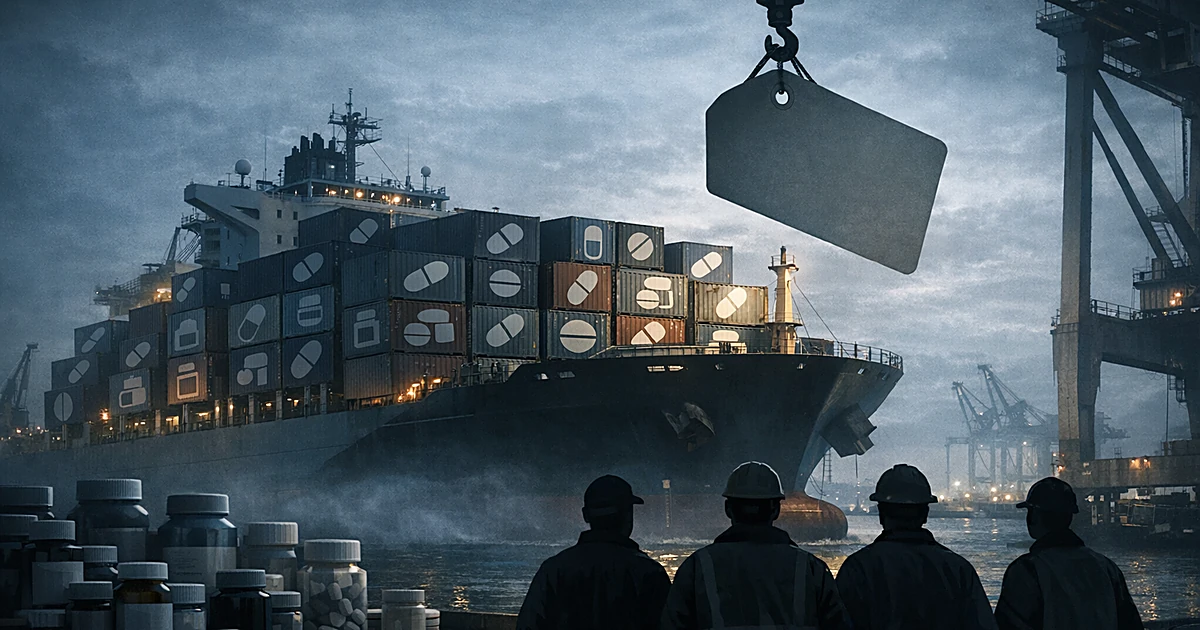
President Trump signed an executive order Thursday imposing a 100 percent tariff on imported brand-name pharmaceuticals and their active ingredients, the most aggressive move yet in a year-long campaign to force drugmakers to cut American prices and bring manufacturing home. The order, issued under Section 232 of the Trade Expansion Act, frames the nation's dependence on foreign-made patented medicines as a direct threat to national security.
The tariff structure is not a blunt instrument. It is tiered, with steep penalties for companies that refuse to negotiate and significant relief for those that cooperate. But the headline rate, 100 percent, sends an unmistakable signal: the era of American patients subsidizing the world's drug costs is, in this administration's view, over.
How the tariff tiers work
The executive order's default rate is a 100 percent ad valorem duty on all imported patented pharmaceuticals and associated pharmaceutical ingredients. The Hill reported that the order carves out several exceptions designed to reward companies that move toward domestic production or accept government pricing terms.
Companies with Commerce Department-approved plans to build manufacturing facilities in the United States face a reduced 20 percent tariff during construction. Drugs arriving from the European Union, Japan, South Korea, Switzerland, and Liechtenstein carry a 15 percent rate. The United Kingdom gets an unspecified "lower" rate tied to a bilateral trade agreement.
Generic drugs, orphan drugs, and brand-name drugs made by companies that have signed "Most Favored Nation" pricing agreements with the administration are exempt entirely. The Washington Times reported that 13 pharmaceutical companies, including Pfizer and Eli Lilly, have already struck deals with the White House in exchange for a three-year break from tariffs.
That detail matters. Throughout 2025, the administration pressured major drugmakers like Pfizer and Bristol Myers Squibb into entering MFN deals, with the threat of heavy tariffs as leverage. Thursday's order makes good on that threat for companies that declined to come to the table.
The national security rationale
The Section 232 designation is significant. It roots the tariffs in national security authority rather than standard trade law, a legal pathway that gives the president broader discretion. Trump's proclamation stated that imported pharmaceuticals and key ingredients "are being imported into the United States in such quantities and under such circumstances as to threaten to impair the national security of the United States," as Fox News reported.
The numbers behind that claim are stark. About 53 percent of patented pharmaceutical products distributed in the United States are produced abroad. Only 15 percent of patented active pharmaceutical ingredients by volume are made domestically. For a country that discovered and developed many of the world's most advanced medicines, that manufacturing gap is hard to defend on any grounds, strategic, economic, or moral.
The legal footing matters because the Supreme Court struck down earlier Trump tariff actions that relied on emergency-powers law. The Court ruled in February that reciprocal tariffs, the 10 percent baseline tariff, and anti-fentanyl tariffs on China, Canada, and Mexico were not authorized under the International Emergency Economic Powers Act. That decision narrowed the administration's options and helps explain the shift to Section 232 authority for this order.
The administration adapted. Rather than retreat, it found a different legal pathway and applied it to one of the most consequential sectors in the American economy.
Administration officials frame the stakes
Health and Human Services Secretary Robert F. Kennedy Jr. tied the order to the broader goal of price equity for American patients. Kennedy said in a statement:
"President Trump's agreement with the United Kingdom is another big step toward ending a system that forces Americans to pay more so others can pay less. American patients deserve the same affordable access to the medicines they need as patients in the U.K."
That framing cuts to the heart of a longstanding conservative grievance. For decades, American consumers have effectively subsidized pharmaceutical research and development for the entire world. Foreign governments negotiate rock-bottom prices with drugmakers, who then recoup their investment by charging Americans far more for the same pills. The system persists because no prior administration was willing to use the kind of blunt-force leverage Trump deployed Thursday.
U.S. Trade Representative Jamieson Greer reinforced the point, saying the president is "ensuring our trading partners pay their fair share for innovative pharmaceutical products, so that American patients are not shouldering the burden of funding research and development for the next generation of life-saving medicines."
A White House official offered a blunter summary of the incentive structure, as the Washington Times reported: "You're encouraged to build in America and sell America your drugs at most favored nation pricing, and if you do that, the combination of HHS and the Department of Commerce will protect you and give you a zero tariff."
That is the deal. Build here, price fairly, and the tariff disappears. Refuse, and it doubles the cost of every imported pill.
The industry pushes back
The pharmaceutical industry did not take the order quietly. Stephen J. Ubl, president and CEO of PhRMA, the industry's main trade group, condemned the tariffs in pointed terms:
"Tariffs on cutting-edge medicines will increase costs and could jeopardize billions in U.S. investments announced in the last year. Every dollar spent on tariffs is a dollar that can't be invested in communities across the country."
Ubl also pushed back on the national security framing, arguing that domestic manufacturing is already substantial. He claimed that "two-thirds of the medicines that are consumed in the U.S. are made in America" and that when innovative medicines or their inputs come from abroad, "these products overwhelmingly come from reliable U.S. allies, like Europe and Japan."
The industry's argument deserves scrutiny. If two-thirds of medicines consumed here are already made here, the tariff's bite falls on the remaining third, and on the active ingredients that go into finished products. The administration's own figure, that only 15 percent of patented active pharmaceutical ingredients are made domestically, suggests the supply chain is more exposed than PhRMA's headline number implies.
There is also a timing dimension. Newsmax reported that large drugmakers have 120 days, and smaller companies 180 days, to announce plans to avoid the tariff. That window gives companies a clear off-ramp, if they choose to take it.
A broader tariff push
The pharmaceutical order did not arrive in isolation. The same day, Trump announced tariffs across multiple sectors. Breitbart reported that the administration ordered new import taxes effective October 1, including 50 percent on kitchen cabinets and bathroom vanities, 30 percent on upholstered furniture, and 25 percent on heavy trucks. Trump framed the entire package as necessary for national security and domestic manufacturing.
The breadth of the action reflects an administration that has consistently escalated its tariff agenda even after legal setbacks. The Supreme Court's February ruling on emergency tariffs forced a course correction, but it did not stop the underlying policy drive. Section 232 authority, rooted in national security, offers a sturdier legal foundation, one the courts have historically been more reluctant to second-guess.
Federal Reserve Chair Jerome Powell has warned that "higher goods prices from tariffs are already contributing to inflation." That concern is real. But the administration's bet is that short-term price pressure is worth the long-term gain of a domestic pharmaceutical manufacturing base that does not depend on foreign supply chains, supply chains that, as the pandemic exposed, can break at the worst possible moment.
What comes next
Several open questions remain. The specific tariff rate for United Kingdom imports has not been disclosed. The list of companies that qualify for reduced rates through approved manufacturing plans is not yet public. And the details of the 13 MFN deals already signed, including what price concessions those companies agreed to, remain largely undisclosed.
The administration's broader legal strategy on tariffs will also face continued scrutiny. Section 232 has survived court challenges before, but applying it to pharmaceuticals at this scale is novel. Legal challenges are virtually certain.
For now, the order creates a clear set of incentives. Drugmakers that build in America and offer Americans the same prices they give foreign governments face no tariff at all. Companies that refuse face a 100 percent levy. The ongoing tension between executive tariff authority and judicial limits will shape how far this policy ultimately reaches.
PhRMA will lobby. Lawyers will file. Economists will argue about inflation. But the core question is simple: should American patients keep paying more than everyone else for the drugs American companies invented? This administration's answer, backed by the full weight of trade law, is no.