U.S. F-15E shot down over Iran as Trump receives briefing on first aircraft loss of Operation Epic Fury
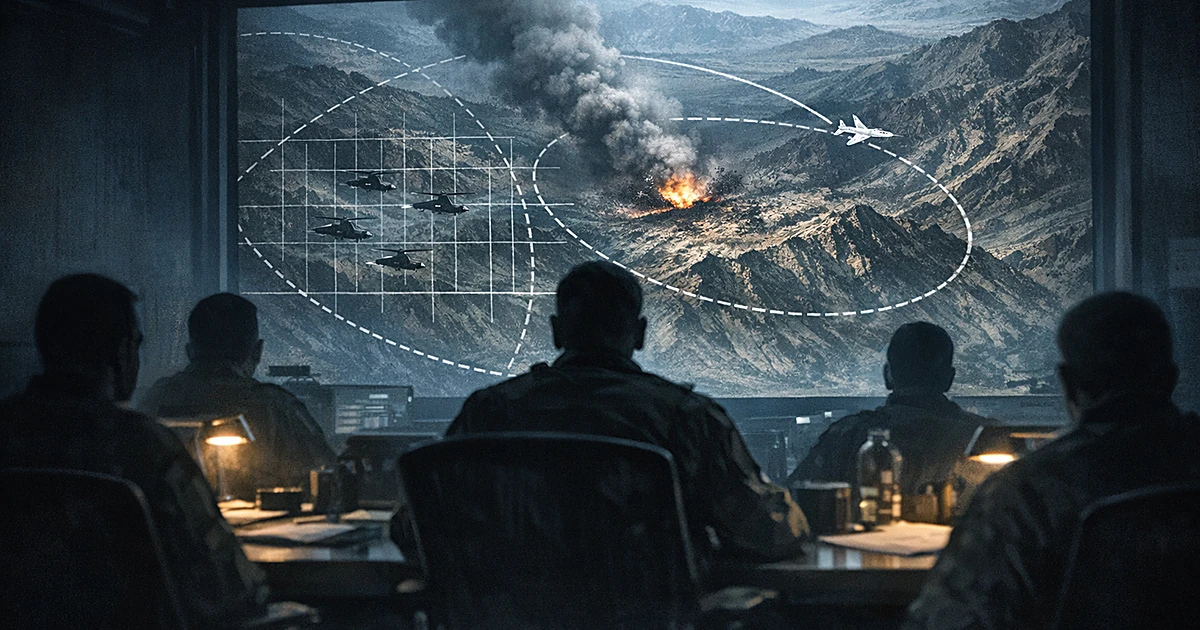
An American F-15E fighter jet was shot down over Iran, prompting a search-and-rescue operation for two crew members and a direct briefing to President Trump, the first confirmed loss of a U.S. aircraft inside the country since the start of Operation Epic Fury.
White House press secretary Karoline Leavitt confirmed the president was informed. One of the two pilots has been recovered. The second crew member remains missing, and U.S. forces are still searching.
The shootdown marks a serious escalation in the ongoing military campaign against Iran. Iranian state television claimed the jet was brought down by Islamic Revolutionary Guard Corps air defenses and broadcast a bounty on the pilots, a brazen move that underscores the regime's willingness to make propaganda out of American losses in real time.
What we know about the shootdown
The New York Post reported that U.S. forces launched the rescue operation after the F-15E went down inside Iran. The exact location within the country has not been disclosed. Neither has the timing of the incident or the identities of the crew members.
A U.S. official told Fox News Digital that the jet was "apparently shot down by Iran," confirming the aircraft loss and describing it as the first known U.S. aircraft downed inside the country since the operation began.
The Wall Street Journal reported that one of the two pilots had been rescued. CBS News, citing U.S. officials, corroborated that account and said the search for the second crew member was ongoing, as Breitbart detailed.
The amount or terms attached to the bounty Iran placed on the pilots have not been made public. That a regime under sustained American military pressure would broadcast a reward for downed airmen tells you everything about the nature of the adversary.
Trump: 'It's war'
When NBC News reporter Garrett Haake pressed Trump on whether the shootdown would affect negotiations with Tehran, the president was blunt. He reportedly said:
"No, not at all. No, it's war. We're in war, Garrett."
Trump declined to discuss details of the search for the missing pilot. That restraint is worth noting. In the middle of an active rescue operation, loose talk from the top risks putting American lives in greater danger. The president's refusal to elaborate was the right call.
Leavitt's statement was equally terse. As she told reporters:
"The president has been briefed."
No additional White House details followed. A White House official separately confirmed the briefing to the Washington Examiner, telling the outlet that "President Donald Trump has been briefed on the reported incident."
The broader campaign against Iran
The F-15E loss comes as the United States has steadily increased military pressure on Iran. The administration has been weighing a timeline for potential strikes as the military signaled readiness for expanded operations.
War Secretary Pete Hegseth framed the conflict in characteristically direct terms. He told reporters that the coming days would prove decisive and that Iran's military options were narrowing fast.
"The upcoming days will be decisive; Iran knows that and there's almost nothing they can militarily do about it. Yes, they will still shoot some missiles, but we will shoot them down."
Hegseth's confidence reflects the administration's posture throughout the campaign. But the shootdown complicates the narrative that Iran's defenses are spent. An F-15E is not a drone. It is a twin-seat, twin-engine strike fighter, one of the most capable platforms in the American inventory. Losing one to IRGC air defenses is a reminder that even a degraded adversary can land a punch.
Trump has also demanded that Iran reopen the Strait of Hormuz, threatening strikes on power plants if Tehran refused, a move that signaled the administration's willingness to expand target sets well beyond conventional military infrastructure.
The diplomatic track has not been abandoned. Trump's remark that the shootdown would "not at all" affect negotiations suggests the White House views military losses as part of the cost of the campaign, not a reason to change course. That is a defensible position, but one that will face sharper scrutiny if the missing crew member is not recovered safely.
Iran's propaganda play
Tehran wasted no time exploiting the incident. Iranian state TV claimed credit for the shootdown and attributed it to IRGC air defenses. The regime then broadcast a bounty on the American pilots, a move designed to rally domestic support and project strength to an international audience.
The bounty is a calculated provocation. Whether it represents a genuine operational threat to the rescued pilot or the missing crew member, or is simply theater for Iranian consumption, remains unclear. But it adds a layer of urgency to the ongoing search.
The broader question is whether Iran's air defenses are more capable than the Pentagon has publicly acknowledged. The administration has gained Republican support for conducting strikes without explicit congressional approval, a debate that will only intensify if American losses mount.
What remains unknown
Several important details are still missing. The specific location inside Iran where the jet went down has not been released. The identities of both crew members remain undisclosed. The exact date and time of the incident are not public. And the nature of Operation Epic Fury itself, its scope, objectives, and rules of engagement, has received only limited official description.
The status of the second crew member is the most pressing unknown. With Iranian forces aware of the crash site and a bounty in play, the rescue window narrows with every hour. U.S. forces have demonstrated the ability to extract personnel from hostile territory before, but Iran's interior is not a permissive environment.
The administration's coordination with allies on the broader Iran campaign has been a recurring theme. Trump and British Prime Minister Starmer have aligned on reopening the Strait of Hormuz, and the question of allied support for search-and-rescue operations inside Iran could test that partnership in concrete terms.
The cost of the campaign
Operation Epic Fury, whatever its full contours, has now produced its first known aircraft loss inside Iran. That fact changes the political calculus at home, even if it does not change the military strategy. Every member of Congress who supported expanded operations will now face questions about risk tolerance. Every critic will cite this loss as evidence that the campaign's costs were underestimated.
Trump's response, calm, direct, unwilling to speculate publicly, was appropriate for a commander in chief with personnel in harm's way. The administration's job now is to bring the missing crew member home and to make sure Iran pays a price for every American aircraft it targets.
Wars have costs. The measure of leadership is not whether those costs are avoided, but whether they are met with resolve and honesty. Right now, an American is missing in Iran. Everything else is commentary.