Usha Vance says she doesn't see eye to eye with her husband on every issue, calls herself a trusted adviser
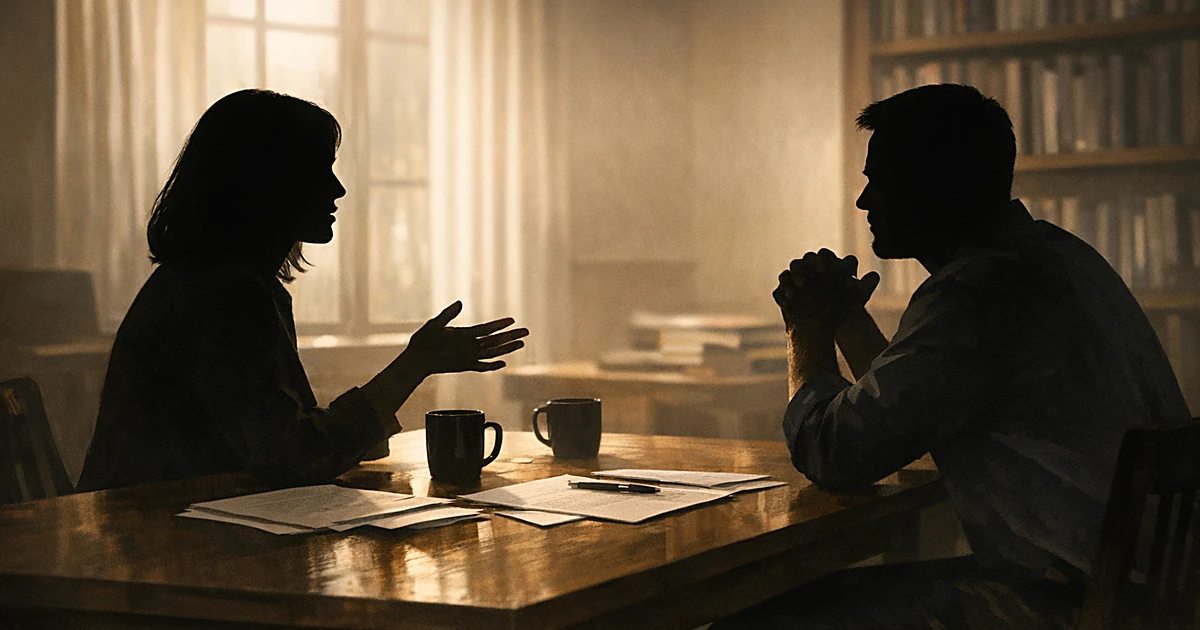
Second Lady Usha Vance told NBC News she considers herself one of Vice President J.D. Vance's most trusted advisers, but made clear she is not a yes-woman, saying the two do not agree on every issue and that no such expectation exists in their marriage.
The remarks, reported by The Hindu, offer a rare window into how the Vance household handles the collision of public office and private life. They also land at a moment when the vice president's political future, and the question of a 2028 presidential run, is drawing intense national attention.
Usha Vance described a relationship in which conversation, not staff memos, drives her involvement in her husband's work. She said the vice president turns to her when a matter weighs on him or when the stakes feel personal.
A marriage, not a staff meeting
In the NBC interview, Usha Vance drew a sharp line between being a spouse and being a political operative. She acknowledged that policy discussions happen regularly at home but framed them as the natural product of a close marriage, not a shadow advisory operation.
"I do really like to understand what's going on in his world, what he's really focused on, what concerns he has, because it's a marriage. I mean, I want to be supportive of him, and if I don't really know what's going on, then I can't do that."
That is a straightforward statement, and a refreshing one. Washington has a long, bipartisan history of spouses who either deny any influence or wield it through back channels. Usha Vance chose a third path: honesty about the dynamic, paired with clear boundaries.
She told NBC News that J.D. Vance comes to her most often "when something is troubling him" or "when he really wants to talk through something that feels more, kind of, intensely personal or important personally." The vice president's rising national profile, including his strong showing in early 2028 straw polls, means those conversations likely carry more weight than ever.
Disagreement without dysfunction
The second lady was blunt about the limits of marital alignment on policy. She said plainly that the two do not see eye to eye on everything, and that neither of them expects otherwise.
"I'm not his staffer. I'm not involved in this in any professional sense...There's no expectation that we are going to see eye to eye on everything."
In a political culture that rewards performative unity and punishes any hint of daylight between allies, that kind of candor stands out. Usha Vance did not identify which issues provoke disagreement. But the fact that she volunteered the point at all suggests a household comfortable with debate, and a vice president willing to hear dissent from the person closest to him.
She went further, describing how even their disagreements produce results. The expectation, she said, is open-mindedness and genuine conversation.
"The expectation is that we are going to be open-minded and have a conversation, and that I'll provide meaningful input from, you know, the perspective of someone who loves him and wants him to succeed. So even if we don't agree, it's, I think it's always very productive."
That framing, input from love, not from ideology, is worth noting. It positions Usha Vance not as a policy architect but as a sounding board whose loyalty is personal, not partisan. In Washington, that kind of adviser is rarer than it should be.
The vice president has faced his share of public scrutiny, including media coverage that has not always matched the reality of his public appearances. Having a private adviser whose first loyalty is to the man rather than to the office is no small thing.
2028 talk put on hold, for now
The interview inevitably turned to the question that shadows every ambitious vice president: What about the next race? Usha Vance was measured in her response. She said the 2028 presidential campaign is not a priority in their household conversations right now.
Her explanation was practical, not evasive. J.D. Vance, she said, is focused on the midterm elections due in November, and rightly so.
"JD is very focused on the midterm elections right now, on all the things that are happening right this moment, which are obviously exceedingly important."
The vice president has been active on multiple fronts beyond the midterms. His office has waded into politically charged territory, including a public confrontation over alleged immigration fraud that drew national headlines. That kind of engagement suggests a vice president building a record, not coasting toward the next campaign.
Usha Vance added that she would likely have a better sense of her husband's potential presidential campaign by 2027. The timeline is notable. It signals that the Vance household is thinking about 2028, but deliberately keeping that conversation in the future tense.
For a political class addicted to premature campaign speculation, that discipline is worth respecting. The midterms matter. Governing matters. A vice president who treats the job as more than a holding pattern for the next election is doing it right.
The first Indian American second lady
Usha Vance has been described as the first Indian American to serve as second lady of the United States. That distinction has drawn attention from media outlets worldwide, but the NBC interview focused on her role as a spouse and adviser rather than on identity politics.
That itself is a kind of statement. In a media environment that often reduces public figures to demographic categories, Usha Vance talked about marriage, disagreement, trust, and the practical demands of supporting a spouse in high office. She talked about what she does, not what she represents.
The Vance household has navigated controversies large and small since entering the national spotlight, from staff-level communications missteps to the relentless scrutiny that comes with the vice presidency. Through it all, Usha Vance has maintained a relatively low public profile, making her willingness to speak openly in this interview all the more notable.
What she didn't say
The interview left several questions unanswered. Usha Vance did not specify which issues produce disagreement between her and the vice president. She did not describe any particular policy conversation in detail. And she did not tip her hand on whether she personally favors or opposes a 2028 run.
Those silences are strategic, and fair. No spouse of a sitting vice president owes the public a policy-by-policy accounting of private dinner-table debates. What Usha Vance did offer was a portrait of a marriage that runs on honest conversation, not political choreography.
In a city where every word is calculated and every relationship is transactional, a spouse who says "we don't always agree, but we always talk" is saying more than most people in Washington ever will.