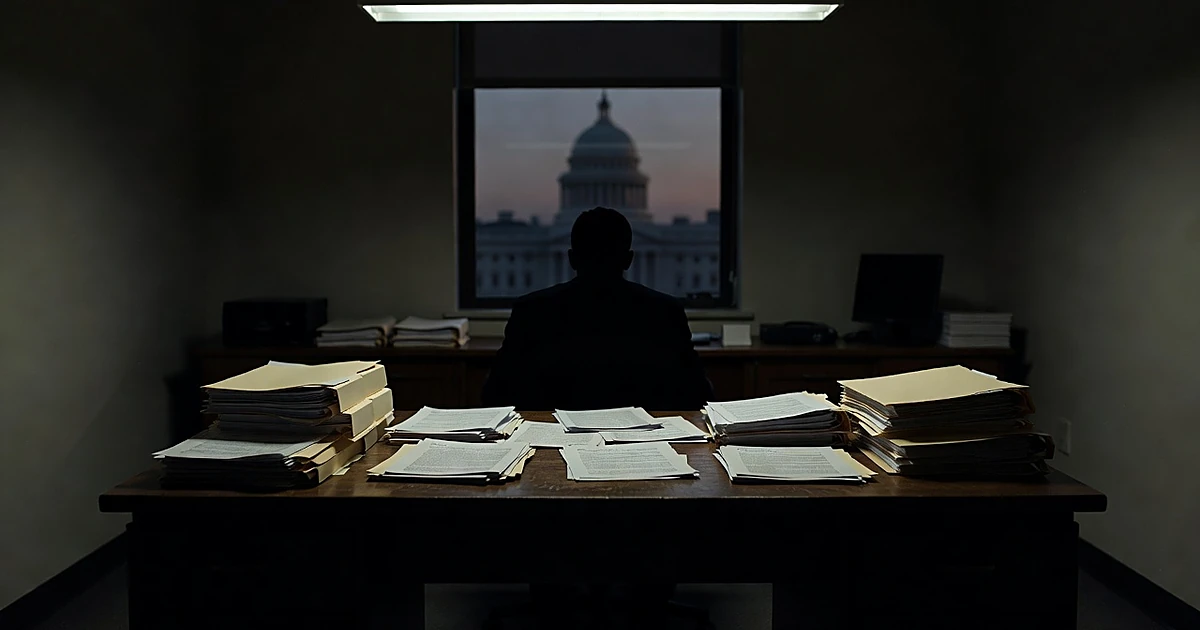
Shapiro moves behind the scenes to block AOC-backed progressive in House race
Pennsylvania Governor Josh Shapiro is working quietly to undercut a progressive candidate for Congress who carries the endorsement of Rep. Alexandria Ocasio-Cortez, according to a report from Axios published May 10, 2026. The maneuvering amounts to a proxy fight between two of the Democratic Party's most prominent figures, one positioning for a presidential run, the other determined to drag the party leftward.
The clash lays bare a fault line that Democrats have papered over for years. On one side stands Shapiro, the ambitious governor who has cultivated a centrist brand in a purple state. On the other stands Ocasio-Cortez, whose endorsement machine has become the most reliable accelerant in progressive primary politics.
That these two would eventually collide was inevitable. The only question was where and when.
A party at war with itself
Details beyond the headline remain limited, but the contours of the fight are clear enough. Shapiro is reportedly intervening in a U.S. House primary to stop a candidate aligned with AOC's progressive wing. The word "quietly" in the original reporting matters. Governors who feel confident about the political mainstream don't need to work in the shadows. Behind-the-scenes interference suggests Shapiro knows the progressive candidate has real momentum, and that openly opposing AOC's pick carries its own risks inside a party where the activist base still holds enormous sway over primaries.
For conservative observers, the spectacle is instructive. Democrats spend enormous energy lecturing Republicans about unity and norms, yet their own internal warfare is intensifying heading into the 2026 midterms. The proxy battle between Shapiro and Ocasio-Cortez is not a policy seminar. It is a raw power struggle over who controls the Democratic bench, and, by extension, who sets the party's direction for 2028.
AOC's endorsement empire
Ocasio-Cortez has spent years building a political brand that extends well beyond her Bronx-Queens district. Her endorsements carry weight in progressive primaries across the country. Earlier this cycle, a Sanders- and AOC-backed progressive won a New Jersey special election, demonstrating that her political network can deliver real results in competitive races.
That track record is precisely what makes Shapiro nervous. Every progressive who wins a House seat on AOC's coattails shifts the Democratic caucus further left and strengthens her hand in any future intra-party fight, including a potential 2028 presidential primary.
Ocasio-Cortez has never been shy about confrontation. She has a long history of refusing to play by the establishment's preferred rules. Back in 2018, when conservative commentator Ben Shapiro publicly invited her to debate and offered a $10,000 campaign donation for the appearance, she dismissed the request entirely. As AP News reported at the time, Ocasio-Cortez tweeted that she did not owe "a response to unsolicited requests from men with bad intentions," comparing the invitation to catcalling.
That combative posture has defined her career. She has urged blue states to gerrymander aggressively in response to court rulings, a position that drew sharp criticism even from some within her own party, as we have previously covered.
Shapiro's calculation
For Shapiro, the calculation is straightforward. He won the Pennsylvania governorship by running as a pragmatist. His path to national office, and every serious political observer in Washington assumes he wants one, runs through the center of the Democratic electorate, not through its progressive flank. Allowing AOC-aligned candidates to fill House seats unchallenged would weaken the centrist coalition he needs.
But the move also carries risk. Progressive voters have long memories, and the activist infrastructure that powers AOC's endorsement network does not forgive easily. If Shapiro's interference becomes a public fight rather than a quiet one, he could find himself on the wrong end of a grassroots backlash in the very primary he would need to win.
The tension between AOC and the Democratic establishment is not new. Former Speaker Nancy Pelosi spent years managing, and occasionally suppressing, the progressive wing's ambitions, even as she publicly denied any friction with Ocasio-Cortez. Shapiro appears to be adopting a similar playbook: oppose the left's candidates, but do it without fingerprints.
What it means for the midterms
The 2026 midterms are shaping up as a test of whether Democrats can hold together a coalition that spans from democratic socialists to moderate governors. Every contested House primary is a skirmish in that larger fight. When a sitting governor quietly moves against a candidate backed by one of the party's biggest national names, it tells you the coalition is under real strain.
For Republicans, the lesson is simple: pay attention. Democratic infighting over candidate selection, ideology, and institutional control creates openings in general elections. Progressive candidates who survive bruising primaries often emerge weakened and further left than the median voter in their district. Centrist candidates who win with establishment backing sometimes face depressed turnout from a base that feels ignored.
Either outcome benefits the GOP, if Republicans are disciplined enough to exploit it.
Ocasio-Cortez herself has faced her own share of scrutiny beyond the endorsement game. A federal campaign finance complaint alleged she spent $19,000 in campaign funds on a psychiatrist and disguised the payments as "leadership training." Whether or not that complaint leads anywhere, it illustrates the kind of accountability questions that follow high-profile politicians who operate outside traditional party structures.
The bigger picture
What makes the Shapiro-AOC proxy fight worth watching is not just the House seat at stake. It is the preview it offers of 2028. If Shapiro runs for president, he will need to consolidate the party's moderate and center-left voters while fending off a progressive challenger, possibly Ocasio-Cortez herself. Every proxy battle now is a rehearsal for that larger confrontation.
And every proxy battle now tells voters something about how Democrats govern when they think no one is looking. Shapiro's decision to work behind the scenes rather than make a public case against the progressive candidate suggests he knows his position is politically awkward. He cannot openly say that the Democratic Party's left wing is too far left for a general electorate, even though that is plainly what he believes.
That kind of evasion is familiar to anyone who has watched Democratic leadership for the past decade. Say one thing publicly, do another privately, and hope the base doesn't notice.
When a party's leaders have to sneak around their own voters to get the candidates they want, the problem isn't the candidates. It's the party.