NYC Mayor Mamdani won't join anti-Netanyahu protests he helped stoke
Mayor Zohran Mamdani, who spent the summer encouraging New Yorkers to protest Israeli Prime Minister Benjamin Netanyahu's visit to the United Nations, now plans to sit out the very demonstrations he helped ignite, a retreat that tracks with a pattern of loud promises followed by quiet reversals.
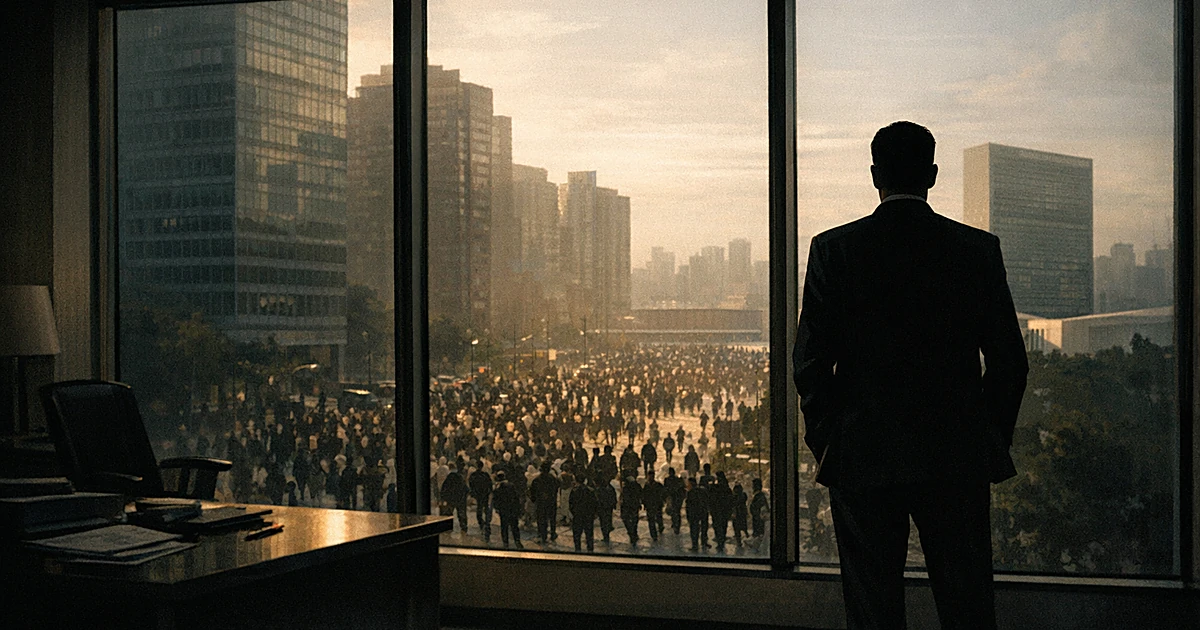
Netanyahu is expected to arrive in New York on Sept. 23 and deliver remarks to the UN General Assembly the following day. A march organized by the Palestinian Youth Movement's NYC chapter will leave Bryant Park at noon on Sept. 24 and head for the gates of the UN building. Mamdani's office declined to comment on his decision not to attend, POLITICO's New York Playbook reported.
The mayor who founded a Students for Justice in Palestine chapter at Bowdoin College, who joined nurses on a picket line in January, and who as recently as July publicly entertained the idea of directing the NYPD to arrest Netanyahu on an International Criminal Court war crimes warrant, that mayor now expects to stay away from the biggest pro-Palestinian demonstration of the year in his own city.
Mamdani conceded the arrest pledge was legally impossible, then kept talking
The backdrop matters. Mamdani rode into office with a promise that electrified his progressive base: he would use the ICC warrant to have Netanyahu taken into custody on New York City soil. Legal experts challenged the pledge before he even took the oath. They were right.
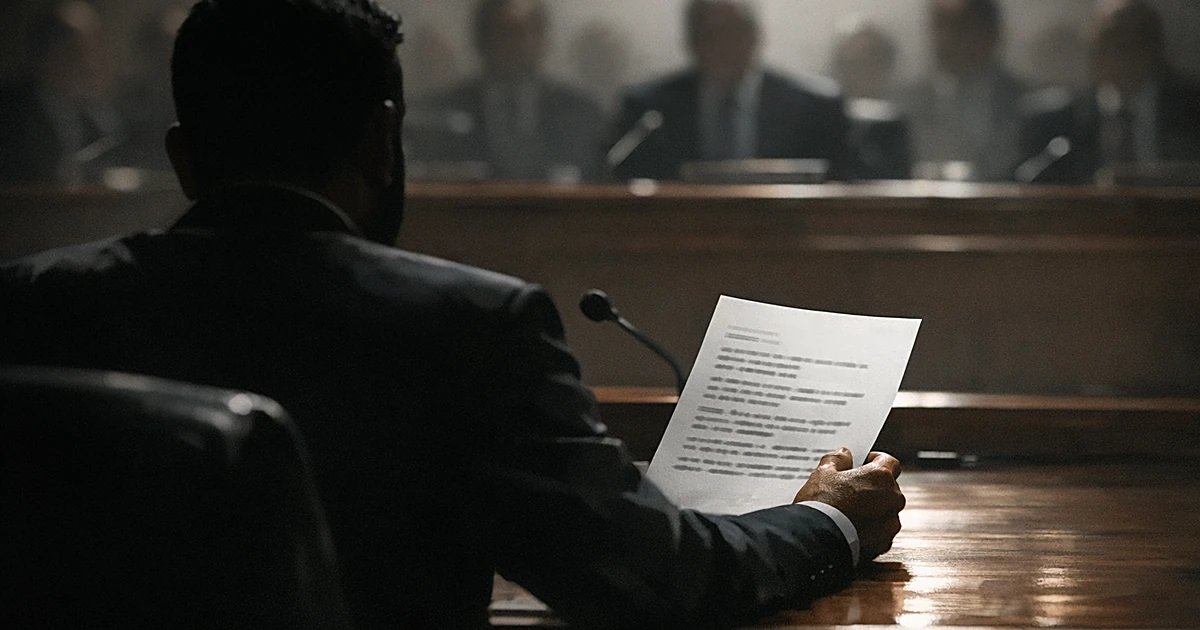
At a City Hall press conference, Mamdani conceded the obvious: "It's clear that the city does not have the authority to execute this warrant." He added that he had asked his administration for a legal review and "they made it clear that this is not possible through applicable law." He refused to say when he first learned the city lacked that power, raising the straightforward question of whether the arrest pledge was ever anything more than a campaign stunt.
Rather than accept the embarrassment quietly, Mamdani shifted responsibility to the federal government and pivoted to encouraging street protests. On July 22, he told reporters:
"If anyone feels a level of frustration or opposition, protest is something that we will always respect. I leave it to New Yorkers themselves to make that decision."
POLITICO reported that Mamdani "appeared to encourage New Yorkers to take to the streets" to protest what he called Netanyahu's "horrific genocide against the Palestinian people." That language drew accusations over the summer that the mayor was stoking antisemitism, accusations his office has not substantively addressed.
Israel's Ambassador to the UN, Danny Danon, responded directly. The New York Post reported Danon's public rebuke of the mayor:
"Instead of uniting the city and maintaining public order and safety, Mamdani chooses to incite and promote chaos."
The NYPD also expressed frustration with the mayor's call for civil disobedience, a notable tension given that Mamdani depends on the department for his own security detail.
Security logistics and political calculation both point toward retreat
Jon Paul Lupo, a political strategist and onetime top aide to former Mayor Bill de Blasio, offered a diplomatic reading of the decision. He told POLITICO the mayor may have had any number of reasons, an NYPD security warning, a scheduling conflict, or a straight political calculation:
"I wouldn't read anything into it in terms of his principles and beliefs. This is consistent with what we've seen from Mamdani throughout his tenure as a politician in the spotlight: He has strong beliefs and he won't waver from those, but he needs to balance that with his responsibilities of being the mayor of New York City."
The security question is real. NYPD Commissioner Jessica Tisch, who is Jewish and has described herself as a "proud Zionist", is expected to hold a briefing with Mamdani later this week on General Assembly security precautions. Tisch has not opined publicly on whether Netanyahu should face criminal accountability for the war in Gaza. Protecting the mayor of New York at a massive, emotionally charged protest march would present obvious logistical headaches for the department.
But security concerns alone do not explain why a mayor who reversed his signature campaign pledge on Netanyahu's arrest would also skip the fallback option he chose for himself, public protest. The pattern is consistent: make the bold promise, discover it cannot be kept, and quietly move on.
Protest organizers aren't waiting for the mayor
The Palestinian Youth Movement's NYC chapter posted on Instagram that the Sept. 24 march would "reject war criminal Benjamin Netanyahu and the genocidal Zionist project," adding that "Zionism and war criminals have no place in our city." The language goes well beyond anything Mamdani himself has used publicly, though the mayor's own rhetoric opened the door.
The broader context is grim. The Oct. 7, 2023 Hamas attack killed about 1,200 Israelis. Israel's subsequent military campaign in Gaza has left more than 73,000 Palestinians dead. Those numbers guarantee that any demonstration near the UN will draw intense emotion and heavy police presence, with or without the mayor.
Mamdani's absence will not go unnoticed by the activist base that helped elect him. He built his political identity on exactly this kind of confrontation. His record at Bowdoin College, his picket-line appearances, his willingness to float the arrest of a sitting foreign head of government, all of it signaled a leader who would show up when it counted.
Instead, his tenure has been marked by a widening gap between rhetoric and results. His administration refused to face the City Council over a botched tax rollout. He was booed off stage at an NYPD event on Staten Island. And questions about transparency have followed an administration that runs a 200-strong influencer network through encrypted Signal chats, raising records-law concerns.
Strained relations with Jewish New Yorkers add political weight
Mamdani's summer-long confrontation over Netanyahu strained his relationship with New York's Jewish community at a moment when the city's mayor cannot afford more fractures. The accusations of stoking antisemitism, fueled by the arrest threat and the protest encouragement, created a political problem that attending a march headlined by groups calling Israel a "genocidal Zionist project" would only deepen.
Lupo's careful framing, that Mamdani "has strong beliefs and he won't waver from those", reads less like a defense and more like an acknowledgment that the mayor's beliefs have collided with the job's demands. A mayor who governs eight million people, including one of the largest Jewish populations outside Israel, cannot spend every week relitigating the Middle East without consequence.
The decision to skip the march may be the most pragmatic thing Mamdani has done since taking office. But pragmatism after months of provocation does not erase the provocation. It just confirms that the rhetoric was never matched by a serious plan, not for an arrest, not for a policy shift, and now not even for a march.
When a leader spends months lighting the fuse and then steps back before the spark catches, the question isn't whether he changed his mind, it's whether he meant any of it in the first place.