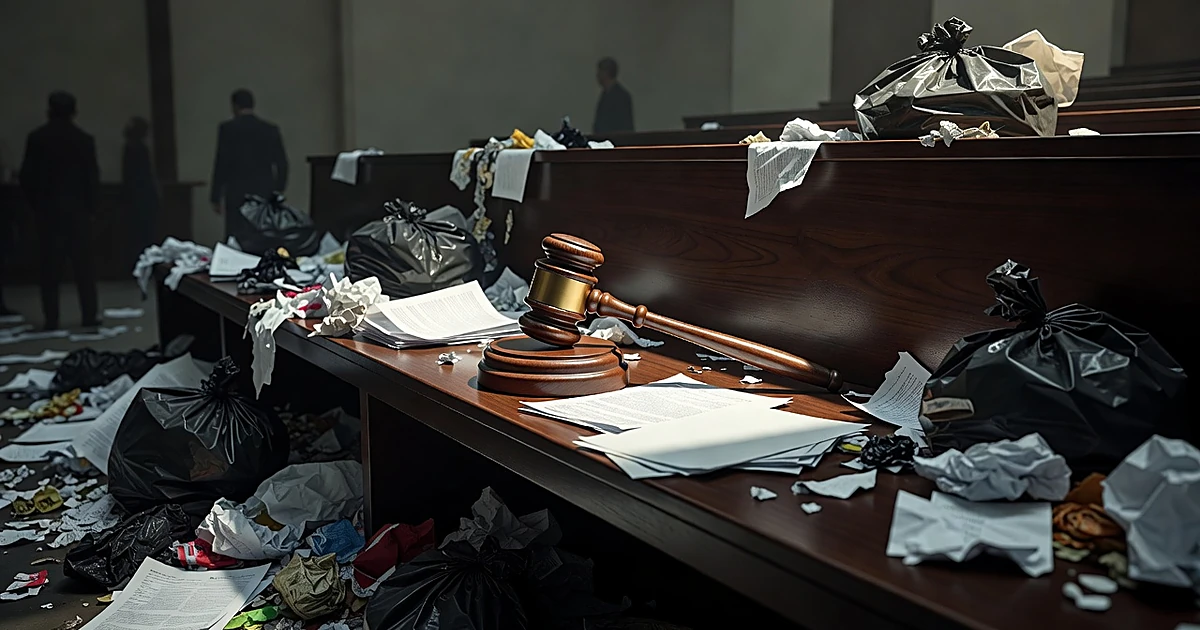
Brooklyn judge admonished after citing court title to fight $150 trash tickets
Brooklyn Judge Katherine Levine spent nearly two years contesting $150 in trash tickets while repeatedly invoking her judicial office, and New York’s judicial watchdog has now formally admonished her for it.
The New York State Commission on Judicial Conduct found that Levine’s repeated references to her status as a Kings County Supreme Court justice created the appearance she was seeking special treatment on minor sanitation violations at her Borough Park home.
The New York Post reported that the commission released its determination after Levine agreed an admonition was appropriate. The fines eventually got paid. The episode still left a clear public record of a longtime judge leaning on her title when ordinary city rules got in the way.
Sanitation workers first flagged the problem in March 2024. They found a large accumulation of napkins, papers, egg cartons, and other trash in the driveway of the home where Levine has lived since 1996. The mail-in fine started at $50.
Ten days later she entered an online not-guilty plea and made her position plain in the submission itself.
She wrote that she was “a supreme Court Justice in Kings County and went to work at 10 am.”
Eight references to the bench, one ballooning bill
The commission found that on at least eight occasions Levine “repeatedly and gratuitously invoked her judicial title” and judicial status while dealing with the city’s Office of Administrative Trials and Hearings, known as OATH. That is the administrative forum that handles these tickets for regular New Yorkers.
OATH found her guilty on the first matter. She failed to pay. The next spring brought two more fines for failing to put lids on trash receptacles. She did not respond to those tickets until the following fall.
In October 2025 she left a voicemail identifying herself as “Judge Katherine Levine.” She argued she had trials every day in Supreme Court and could not sit through a full day at OATH for a hearing. In messages tied to the case she said she could not “come down and sit in OATH for 10 hours” because she was a trial judge.
She also emailed from her official judicial account seeking a settlement on a balance that had climbed to $650 after she missed appearances. In one note she declared, “I am a supreme court justice and I vacate default judgments all the time in the name of equity and justice.” Another message went out in all caps asking how to pay and how much it was.
OATH’s answer was simple. The office does not do settlements. She had to follow the same rules and protocols as everyone else.
Watchdog says the title does not buy a pass
Commission administrator Robert Tembeckjian put the stakes in plain terms after the admonition.
“Invoking judicial office to avoid paying a fine undermines public confidence in the integrity of the judiciary and suggests that judges are exempt from rules that apply to everyone else.”
Tembeckjian also said OATH was right not to give special treatment to a judge, and that Levine accepted responsibility by agreeing the admonition was appropriate. Public trust in the courts is already under strain in other high-profile fights over judicial process, including when Justice Jackson criticized the emergency docket as a threat to that trust.
The commission’s own findings were direct. Unnecessary and repeated references to her judicial office “created the appearance that she was inappropriately seeking special treatment.” The panel added that Levine recognizes the “gratuitous invocation of her judicial title was reasonably perceived at OATH as an attempt for a favorable adjudication of her summonses.”
Levine has sat on the bench since 2008 and had a clean disciplinary record before this matter. That history does not erase the conduct. It only sharpens the contrast. A judge who regularly decides other people’s obligations spent roughly 20 months contesting three minor trash tickets totaling about $150 before the system closed ranks against special treatment.
Accountability fights over judicial behavior are not limited to New York. In a separate case, the Supreme Court left a Pennsylvania judge’s suspension in place over partisan Facebook posts, another reminder that the robe comes with rules.
Remorse after the record was made
The commission said Levine “openly and repeatedly expressed her remorse and embarrassment.” Her lawyer, David Godosky, said she regrets referencing her position while dealing with a frustrating city agency and described her as candid and cooperative.
That regret arrived after the voicemails, the official-email settlement demands, the claims about vacating defaults “in the name of equity and justice,” and the insistence that a trial schedule should excuse her from the same hearing process other residents face. The sequence matters. The apology followed the paper trail.
OATH records show the fines were eventually paid. The commission still issued the admonition. The point was never only the $50 starting ticket or the later lid violations. It was the repeated signal that a Supreme Court justice expected a different track.
Ethics pressure on the bench surfaces in other venues as well, including a case in which a Biden-appointed judge launched a DOJ ethics inquiry amid a separate clash, and episodes in which even senior jurists face hard questions about when to step aside, as when Justice Alito withdrew from a major climate lawsuit after earlier recusal demands.
Levine’s own words left little ambiguity about how she framed the inconvenience. She told the administrative court she was a supreme court justice with trials and could not sit a whole day at OATH. She identified herself by title in the first contact. She kept doing it.
“I have trials every day in Supreme Court.”
Millions of New Yorkers also have jobs. They still pay the ticket, show up, or take the default. They do not email from a government account announcing they reverse defaults for a living and would like a deal on trash.
Same rules, or two sets of rules
City sanitation rules are not deep constitutional theory. Put the lids on. Keep the driveway clear. Pay the fine or contest it without waving a judicial badge. Levine chose a different path for nearly two years, and a state commission finally drew the line.
Readers who follow the courts already know judicial personnel news can shift dockets overnight, as when a New York federal judge assigned to a major trial died at 92 and forced reassignment. Conduct cases cut deeper. They go to whether the people enforcing the law live under it.
Tembeckjian’s second point was as important as the first. OATH refused the special track. The commission backed that refusal. Levine accepted the admonition. The system worked only after the judge’s own messages made the problem impossible to ignore.
The commission summed up her later posture in formal language: she recognized how OATH reasonably read the title-dropping. She expressed embarrassment. She agreed the admonition fit. None of that revises the eight documented invocations or the climb from a $50 mail-in fine to a $650 balance driven by missed deadlines.
For taxpayers who bag their own garbage and pay on time, the episode is straightforward. A Kings County justice treated a small sanitation case like a scheduling conflict the city should rearrange around her courtroom calendar. The city said no. The judicial conduct commission said the no was correct.
Rules that bend for the robe stop being rules. When a judge learns that lesson only after citing the bench again and again over trash tickets, the public is right to take the admonition seriously, and to expect the same standard the next time.