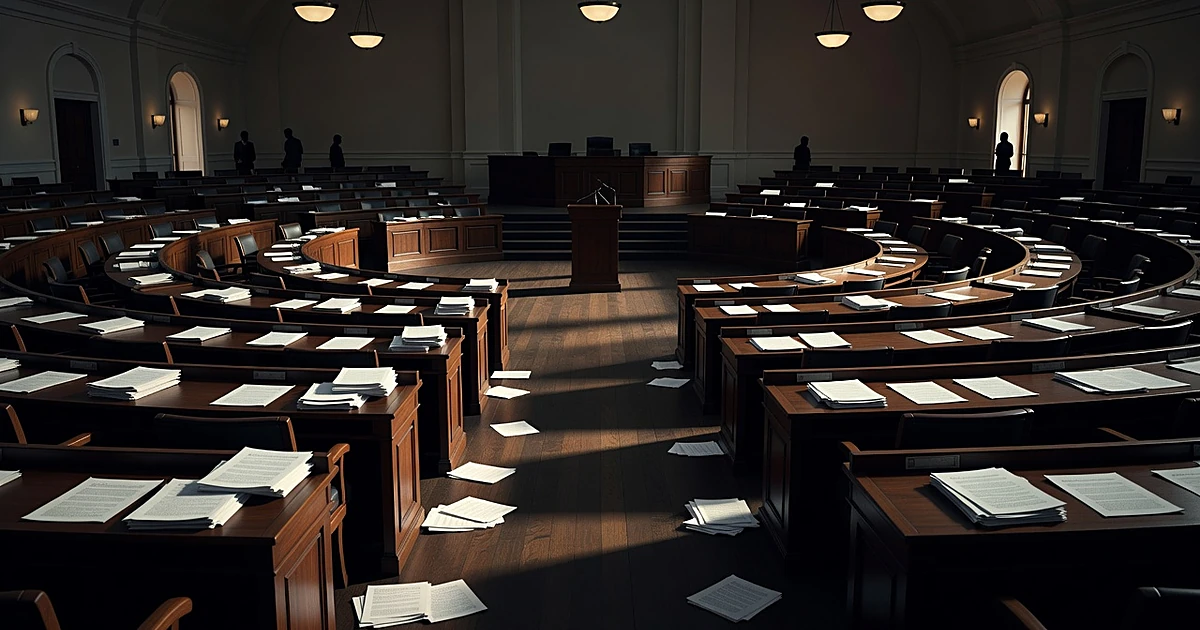
House tees up permitting reform vote as Democrats demand an open amendment process
House Republican leaders plan a next-week floor vote on the Senate-passed permitting reform bill under a simple majority, while Democrats led by Rep. Sean Casten push changes that could stall it.
House GOP leaders intend to bring the Bipartisan American Affordability and Jobs Act to the floor next week under a simple-majority rule, according to four people familiar with the matter. The plan puts a long-sought overhaul of energy and infrastructure permitting within reach of President Donald Trump’s desk, if Republicans can lock down attendance and hold their thin majority.
Politico reported that Punchbowl News first flagged the nature and timing of the vote. Leaders still must adopt the rule on the floor before the bill itself can advance. Some Republicans are already skeptical they will have the bodies present to clear that first hurdle in a lame-duck session.
That procedural reality is driving the fight. A group of House Democrats wants an open amendment process instead of a straight up-or-down vote. Illinois Rep. Sean Casten is leading the charge, circulating a letter that asks Speaker Mike Johnson to let members propose changes.
Casten announced his opposition to the bill on Monday. On Tuesday he framed the open-rule demand as the only way to air concerns many Democrats share about environmental and tribal impacts.
"If you bring this in and we can get an open rule and have amendments, we can have a whole conversation,"
Casten said. He also left little doubt about his fallback if the House moves without those changes.
"We’ll see what he does, but if we can’t get it done, then I don’t think the need for permitting reform is going away. We’ll just take it up in the 120th [Congress]."
An open amendment process would do more than invite debate. House changes could force another Senate vote, which is exactly what the bill’s bipartisan negotiators have warned against.
Senate already cleared the bill 62-33
The Senate passed the measure 62-33 and sent it across the Capitol. Fifteen Democrats and independents joined the majority, including Senate Minority Leader Chuck Schumer, while two Republicans opposed it, the New York Post reported.
The legislation aims to speed reviews for power plants, transmission lines, and other energy infrastructure, limit endless litigation, and answer soaring electricity demand. Trump urged approval and called the package a “BIG WIN for U.S. ENERGY INDEPENDENCE and DOMINANCE.” Sen. Mike Lee, the Utah Republican who helped negotiate the text, put the goal in plain terms: make it easier to build in America again and make life more affordable for families.
Sen. Martin Heinrich of New Mexico served as the Democratic lead and secured statutory protections so large data centers cover their own power and infrastructure costs rather than shifting them onto ratepayers. Fox News reported Heinrich’s case for the deal.
"This process will mean that we develop responsibly. It will mean more jobs. It will mean cheaper energy. It will mean that we actually require big load centers, whether that's a factory or a data center, to not pass those costs on to the American consumer by statute, not a suggestion, an actual law."
Oklahoma Sen. Alan Armstrong noted that much of the Senate text came straight from earlier House work and said he expects some support, if members actually show up in the numbers needed.
Attendance and a razor-thin majority remain the real test
Speaker Johnson and Majority Leader Steve Scalise have already had to urge members, especially those not returning next year, to appear for votes. The House GOP majority is razor-thin. In a lame duck, every absence matters.
That dynamic is familiar. House Republicans have watched close procedural fights turn on a handful of votes, including moments when two Democrats rescued Speaker Johnson’s agenda by crossing party lines. Leaders cannot assume a clean party-line result simply because the Senate already acted.
Emily Domenech, who leads the Trump administration’s Permitting Council, told Breitbart she is confident the House will pass the bill with bipartisan support. She pointed to an expedited path under suspension of the rules, which requires a two-thirds majority of those present and therefore Democratic votes. That is a different procedural track than the simple-majority rule four people described to Politico. Either way, the bill’s backers need bodies on the floor.
Domenech also highlighted core provisions that matter to builders and ratepayers: the window to sue over federal environmental review would drop from six years to 150 days, and challenges under NEPA and related laws would face tighter limits. Those changes are designed to stop activists from parking projects in court for years.
Negotiators warn House revises could unravel the deal
Senate negotiators Mike Lee, Martin Heinrich, Shelley Moore Capito, and Sheldon Whitehouse have cautioned that opening the package in the House could complicate final passage. After the Senate vote, Capito said she “wouldn’t shut the door on any scenario” for changes, but called that “not the preferable route.”
Just the News noted the bill’s central aim: speed construction of energy and infrastructure projects and make it harder to block them through lawsuits or preemptive state and federal action. Whitehouse, a Rhode Island Democrat and one of the negotiators, cast the measure in climate terms once it cleared the Senate, arguing it would deliver a more powerful power-sector effect than the Inflation Reduction Act after later changes to that law.
House Democrats remain split for the same reasons that divided their Senate colleagues. Some backed the Senate text. Others want further guarantees on clean energy and stronger guardrails around data-center impacts and tribal concerns. Casten’s letter is the vehicle for that second camp.
Floor fights over process are nothing new in this Congress. Democrats have cried foul over voting tactics before, including when Republicans cleared a veterans package by voice vote and drew accusations of procedural gamesmanship. The amendment fight here fits the same pattern: the minority wants a longer debate and more leverage; the majority wants a clean shot at final passage.
Party discipline will decide whether the bill reaches Trump
If House Republicans stay united and adopt the rule, they can pass the Senate text and send it to the president. If they fracture on attendance or procedure, the bill stalls. Johnson and Scalise have taken a softer public line on enforcing discipline than Democrats often do, a contrast laid out in coverage of how House GOP leadership handles party discipline compared with the other side.
Democratic pressure works the other direction. Rank-and-file members have described hard internal warnings when leadership priorities are on the line, including accounts of party leaders threatening a “living hell” over high-stakes votes. Casten’s letter tests whether that same machinery will rally against a bipartisan energy deal many Senate Democrats already supported.
The practical stakes are straightforward. Electricity demand is rising. Data centers and factories need power. Transmission lines and generation projects have spent years stuck in review and litigation. The Senate bill shortens timelines, limits lawsuit windows, and create data-center cost responsibility into statute. House Democrats who want to reopen the text are asking colleagues to risk a second Senate round-trip for amendments the original negotiators say could sink the package.
Leaders still have to clear the rule vote first. In a lame duck with a thin majority and members already heading for the exits, showing up is the policy. Johnson and Scalise can draft the perfect rule and still lose if absences pile up, the same attendance problem that has forced them to plead with departing members before.
Casten is candid about his timeline. If the House does not revise the bill on his terms, he is prepared to wait for the next Congress. Supporters of the Senate text are not. They see a rare bipartisan window, a president ready to sign, and a country that needs more power online faster than the old permitting system allows.
Permitting reform that actually builds something will not come from another year of open-ended amendment fights. It will come from members who show up, adopt the rule, and send the Senate bill to the president’s desk.