Vance pins Iowa lead detonation on Obama-era neglect after Army clears toxic stockpile
Vice President JD Vance blamed the Obama administration for leaving Iowa with unstable lead azide that forced a controlled detonation this week, saying the can had been kicked down the road for years.
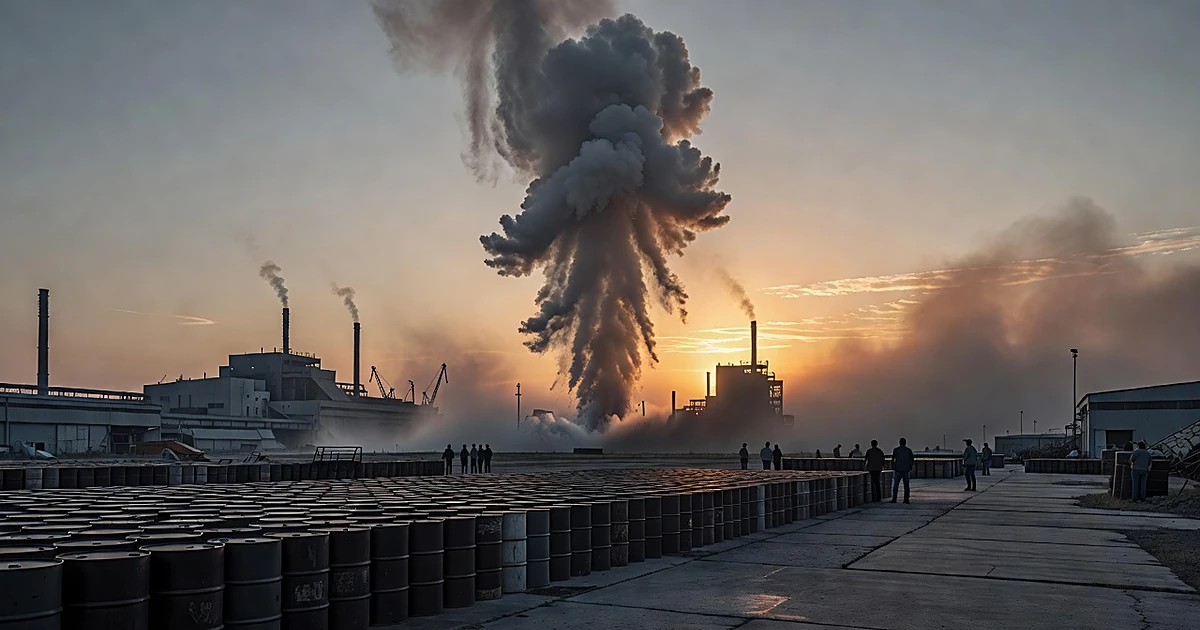
The U.S. Army carried out a controlled explosion of the nation’s entire stockpile of degraded lead azide at the Iowa Army Ammunition Plant on Wednesday, destroying roughly five tons of the highly unstable material packed inside 68 barrels.
Vice President JD Vance told reporters in Ohio that the Trump administration inherited a hazard with no safe way out, and he pointed straight at decisions made in 2009. Early EPA air monitors showed zero detection of airborne lead after the blast, and Army leaders said they cut the risk to surrounding communities as close to zero as humanly possible.
Breitbart News reported that Vance framed the episode as the direct result of years of delayed accountability.
Vance said the dangerous chemicals sat with no workable plan for removal or neutralization until the current administration confronted the problem.
"If you go back to 2009 under the Obama administration, we stored this highly unstable stuff with no real plan for how to move it, with no real plan for how to neutralize it,"
He added that experts warned cold weather could trigger a spontaneous detonation “whether it’s tomorrow, a week from now, a month from now.”
"The can had been kicked down the road."
Cold weather and expert warnings left no safe delay
Maj. Gen. Eric Shirley had already warned that waiting was no longer viable. “Inaction is no longer an option,” he said before the planned detonation.
Vance explained that the Trump team learned about six months earlier that every realistic option carried serious danger. Moving the barrels risked catastrophe. Neutralizing them on site without a controlled blast also threatened nearby towns.
"It was impossible to move it. It was impossible to effectively neutralize it without causing significant danger to the surrounding communities."
Every scientist and expert consulted, Vance said, warned that leaving the material in place through colder weather created a high chance of self-detonation. Residents near Middletown and the extended communities around the plant had lived with that unresolved risk for years while prior leadership deferred the hard choice.
Obama’s post-presidency apparatus still draws attention for its scale and spending, including reports that the Obama Foundation pays six-figure salaries to nearly half its staff. The Iowa stockpile sat far from that spotlight.
Trump required court clearance and the incoming governor’s sign-off
President Donald Trump announced on Monday that he had ordered the military to hold the operation until two conditions were met. The U.S. Court of Appeals for the Eighth Circuit had to lift a temporary pause on the emergency permit authorized by the EPA, and incoming Democratic Gov.-elect Rob Sand had to agree.
Trump stated the proper course was to end the long-term problem, but only after those clearances. The Eighth Circuit ultimately allowed the Army to proceed. The controlled detonation followed on Wednesday.
After the blast, Trump posted that early reports showed the Army’s efforts to mitigate harmful fallout “have far exceeded expectations.” EPA real-time monitors across the region registered zero airborne lead. Shirley said the operation reduced health and safety risk “as close to zero as is absolutely humanly possible.”
Trump also criticized Sand’s role in the run-up. He said the governor-elect “hurt and delayed the process,” offered “absolutely no help,” and then complained about transparency after a successful outcome. White House chief of staff Stephen Miller publicly thanked Sand, outgoing Republican Gov. Kim Reynolds, and other officials.
Obama has remained an active political voice in other fights, recently jumping in when he defended Rep. Ilhan Omar after a federal immigration fraud probe. The Iowa case returned attention to decisions made during his own administration.
Lawsuits and outcry slowed the fix for years
Lawsuits and public outcry had already delayed the detonation. The material had been stored since 2009. Vance made clear the Trump administration did not create the stockpile and only discovered the lack of good options months earlier.
"We became aware, meaning in the Trump administration, we became aware that there really wasn’t a good option here about six months ago."
Once the court cleared the path and the operation went forward, the results matched the safety claims. No injuries or damages were reported. Air monitors stayed clean. Army mitigation measures performed better than expected in the first assessments.
Trump contrasted that outcome with Sand’s public posture, writing that the governor-elect should “rejoice at this great success, not nitpick and issue phony complaints on ‘transparency.’” He added he would remember the episode.
Comparisons of post-presidency influence often note how far Obama’s fundraising and infrastructure outpaced successors, including coverage of how a Biden library foundation raised just $1.5 million in its first year. Legacy questions cut both ways when hazardous leftovers surface years later.
Army finishes what earlier leaders deferred
The Iowa Army Ammunition Plant held the entire national stockpile of this degraded lead azide. Five tons inside 68 barrels is not a small cleanup. Controlled detonation became the only remaining path once experts ruled out safe transport and on-site neutralization without major risk.
Shirley’s post-blast assessment was direct. He said the Army had reduced the danger to Middletown and surrounding Iowa communities as close to zero as people can achieve. EPA monitors backed the claim with continuous zero readings for airborne lead.
Vance’s account put the origin of the crisis in plain terms: storage began in 2009 under the Obama administration without a real plan to move or neutralize the material. Successive delays, lawsuits, and political hesitation stretched the problem across administrations until cold weather and scientific consensus forced action.
Obama has also stayed visible on the campaign trail, including moments when he mocked the Trump White House at an Ohio rally. The Iowa detonation returned the focus to unfinished business left on the books from his time in office.
Trump required both judicial authorization and the incoming governor’s agreement before green-lighting the blast. The Eighth Circuit lifted the pause. The Army executed the plan. Monitoring confirmed the protective measures worked. The long-deferred hazard is now gone.
When unstable explosives sit for more than a decade with no disposal plan, someone eventually has to finish the job the previous crowd avoided. This time the Army did it cleanly, and the monitors stayed at zero.