Bipartisan lawmakers blast Trump waiver on Russia sanctions after energy strikes
President Trump paused sweeping Russia sanctions from Mar-a-Lago, drawing bipartisan fire as Moscow hit Ukraine’s energy grid in a massive overnight assault.
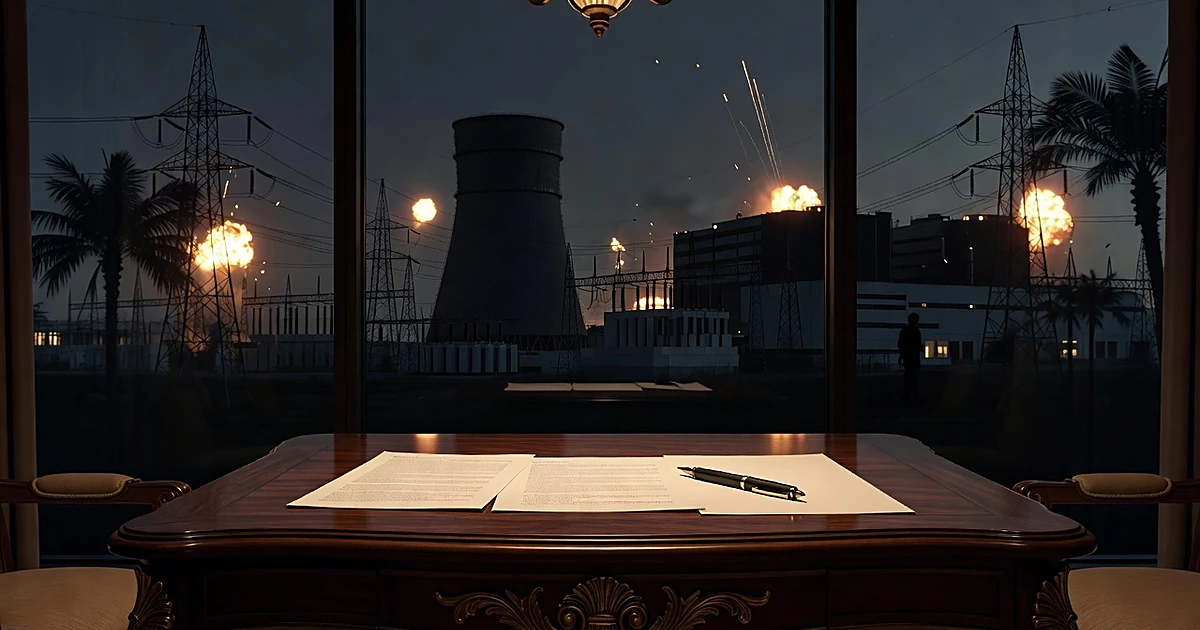
President Trump signed an executive order Friday night from Mar-a-Lago pausing sanctions under the Lindsey O. Graham Sanctioning Russia and Iran Act of 2026, a move he framed as serving the national interest of the United States.
Hours later, Russian forces pounded Ukrainian power plants and transmission sites with drones and missiles. Lawmakers from both parties quickly accused the White House of giving ground to Vladimir Putin, even as the administration pointed to high diesel costs at home and a push to end the grinding war.
The New York Post reported that the waived provisions were set to take effect Sunday and would have imposed tariffs of up to 100% on the largest importers of Russian oil and gas, plus tariffs of up to 500% on all Russian goods. Trump had signed the bill into law only last month after the Senate passed it 86-11.
The statute gives the president authority to hit Russia’s economy and oligarchs with financial sanctions, and also the power to waive them for security reasons. Trump used that authority and said the pause was in the “national interest.”
Farm-state diesel costs and a $7 billion purchase plan
The waiver landed against a backdrop of painful pump prices. Diesel in the United States has topped $6 a gallon, squeezing key farm states and feeding voter anger heading into November elections.
On Oct. 9, Trump reached a deal with Putin to buy 300,000 metric tons of Russian diesel. The Carnegie Russia Eurasia Center put the potential value of that arrangement at up to $7 billion for Moscow. Trump later announced an “energy ceasefire.”
Ukrainian President Volodymyr Zelensky said he learned of that ceasefire from the media and that Russian attacks continued anyway. The White House has argued lower global diesel prices matter for American farmers, food costs, and households already stretched thin.
Republican Rep. Mike Lawler of New York rejected the waiver on Fox News Saturday while acknowledging the price pressure. He said the war needs to end, but not by putting money in Putin’s pocket simply to bring diesel prices down, and added that balance is required yet he does not support the order the president issued.
GOP senators join Democrats in sharp pushback
Retiring Sen. Thom Tillis, R-N.C., unloaded on the decision in a Saturday post on X. He called the pause unconscionable and beyond irresponsible.
"It’s unconscionable that this administration is capitulating to a Russian dictator who illegally invaded Ukraine and butchers innocent civilians every single day."
Tillis also asked what part of enforcing a law passed 86-11 by the Senate the president and his advisors do not understand.
Sen. John Cornyn, R-Texas, posted the same day that Lindsey would be appalled, linking to commentary that demanded a congressional look at the move. The late Sen. Lindsey Graham, the bill’s namesake, died at 71 shortly after visiting Ukraine. Cornyn’s post framed the waiver as a break with that legacy.
Democrats went further. Rep. Don Beyer, D-Va., labeled the pause a “surrender” to Putin that betrays Ukrainian partners and defies clear congressional intent to punish Russia for its illegal war of aggression. Sen. Richard Blumenthal, D-Conn., a co-author of the Graham bill, said the waivers have nothing to do with national security and accused the president of sucking up to Putin.
Those attacks fit a familiar Capitol Hill pattern in which lawmakers demand maximum pressure abroad while voters feel the cost of energy at home, a tension also visible in recent Senate fights over war powers and Trump policy.
Moscow’s strike hit more than 15 critical energy sites
Ukrainian officials said the overnight assault cut power to more than 1 million people, killed eight, and wounded dozens. Zelensky described one of the largest attacks on Ukraine’s energy sector, with more than 15 critical power generation and transmission facilities targeted across different regions.
He said more than 320 jet-powered and gasoline-powered Iranian Shahed drones, along with loitering munitions, cruise missiles, and ballistic missiles, were used against the energy sector, cities, and communities.
"At a time when the Russians have carried out such a massive attack on our energy sector, a decision was unfortunately made in America to completely disregard the Lindsey Graham Act, which was supposed to impose truly effective pressure on Russia to bring this war to an end."
Zelensky called the American decision unfortunate and said undoing the sanctions pressure seems wrong and helps only the Russians. He added that the Act could have helped enormously and still can, but it needs to actually work.
Trump, for his part, has grown openly frustrated with Kyiv’s leadership. He called Zelensky more difficult to deal with than Putin, said Zelensky could have settled the war many times, and argued it is time for Ukraine to get a new president. After Ukraine hit a Russian oil refinery, Trump blasted the strikes as a disgrace and said all Zelensky is doing is making the world price of oil higher.
Congress wrote the waiver power into the law
The political heat obscures a basic fact: Congress itself gave the president the authority to pause these measures for national-interest and security reasons when it passed the Graham Act. Trump signed that law last month, then used the flexibility lawmakers put on the books.
Critics now treat the exercise of that authority as betrayal. Supporters of the pause see a president trying to lower fuel costs for farm states, keep diplomatic lanes open, and force an end to a war that has already consumed years and vast resources since Russia’s 2022 full-scale invasion.
That clash between statutory power and political expectation has become a recurring feature of the Trump years, including in Supreme Court fights over the reach of administration authority and in long-running legal battles tied to Russia narratives from past campaigns.
Zelensky has also accused the administration and SpaceX founder Elon Musk of slowing Starlink service, adding another layer of friction between Kyiv and Washington. Trump’s team has kept the focus on American economic pressure and the search for a settlement rather than open-ended escalation.
Readers tracking the broader Trump-Russia legal and political trail will recognize the same polarized reflexes that surfaced when Trump moved to revive a dismissed Clinton-era Russia lawsuit and when similar petition fights returned to the high court.
Pressure, prices, and who pays for stalemate
Lawler’s Saturday warning captured the core tradeoff. Endless sanctions theater does not automatically end wars, and American drivers and farmers are not abstract pieces on a board. Diesel above $6 is a kitchen-table fact in farm country. A deal that moves hundreds of thousands of metric tons of fuel is an attempt to change that fact.
Whether the pause produces leverage or merely buys Moscow time is the open question Congress now wants to litigate in public. Tillis and Cornyn say the administration walked away from a veto-proof consensus. Blumenthal and Beyer call it surrender. Trump calls it national interest.
The same media and political complex quick to police Trump’s every Russia-related move has been slower to reckon with the domestic cost of keeping the conflict on permanent boil, a double standard familiar to anyone who watched networks bury their own flawed Trump-family stories when the facts turned inconvenient.
Graham’s law was built to pressure Russia and still contains the waiver Trump used. The overnight deaths and blackouts in Ukraine are real. So are the diesel prices hitting American producers. Pretending only one of those realities counts is how Washington stays stuck.
American strength means ending wars on terms that serve the United States first, not outsourcing energy policy to the loudest voices on Capitol Hill.