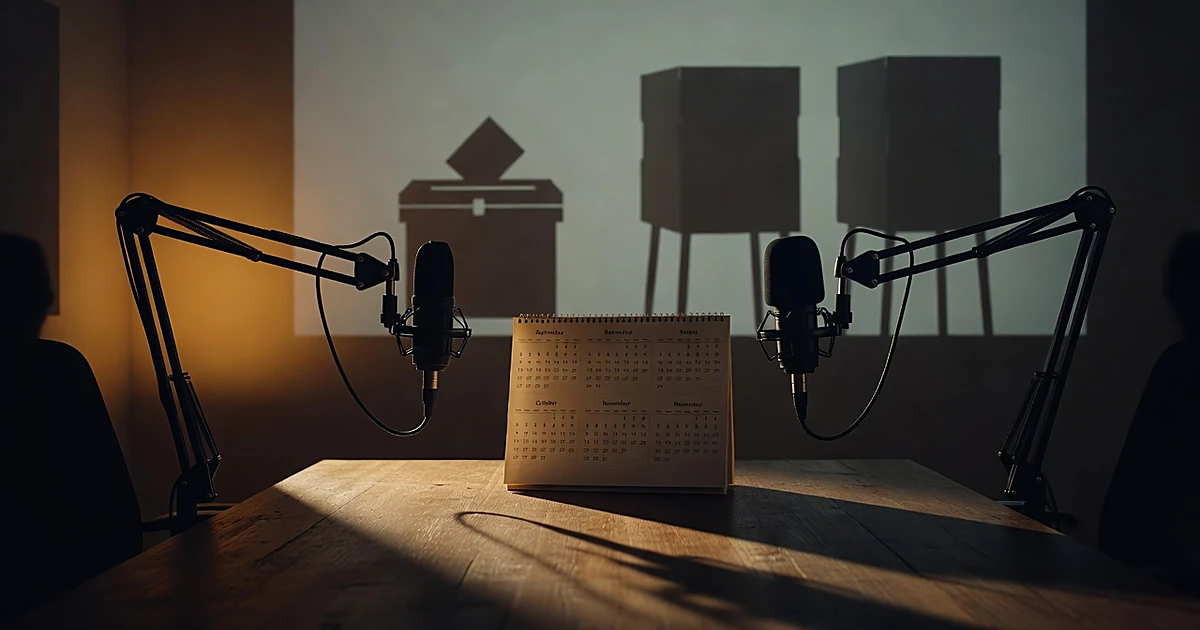
Clinton joins Swisher for midterm podcast push
Hillary Clinton is launching a Vox Media podcast with Kara Swisher ahead of the midterms, framing the races as a high-stakes fight over prices and the Trump administration.
Former Secretary of State Hillary Clinton posted on social media Tuesday that she will co-host a new series titled “High Stakes” with tech journalist and former CNN host Kara Swisher. The show launches Wednesday and is set to run through mid-November as voters head toward the Nov. 3 elections.
The Hill reported that Vox Media is producing the podcast and distributing it through the same feed as Swisher’s “On” program. Clinton said the series could continue past the midterms if the audience is large enough, and she signaled she is willing to read her own ads.
In a launch video, Clinton cast the ballot as a kitchen-table fight and tied her pitch directly to House, Senate, and governors’ races.
"On Nov. 3, every seat in the House is on the ballot, along with 35 Senate seats and 36 governors. What you pay for groceries, rent and healthcare is on the line. So I’m teaming up with Kara Swisher to dig into the issues that matter most before the country heads to the polls."
Swisher closed the clip by saying she “always wanted to say that” after approving the message.
Washington meeting set the collaboration in motion
The project took shape after Clinton and Swisher met at the Washington home of former Atlantic owner David Bradley in the Kalorama neighborhood. They later test-ran the pairing when Clinton filled in on Swisher’s “Pivot” show.
Vox Media CEO Jim Bankoff told the New York Times that podcast equipment had been sent to Clinton’s home in Chappaqua, N.Y. Swisher, speaking to the Times, said the goal is to show a side of Clinton that friends claim exists off-camera.
"There’s a thing about the secretary, where it’s like, ‘Oh, if you knew her in the room, she’s so funny.’ We’re going to try to show you that room."
Swisher also described Clinton’s answers in their sessions as “concise and intelligible.”
The Washington Examiner placed the debut on October 14 as the 2026 midterm cycle heats up, underscoring the timing as Democrats look for messengers who can drive turnout and issue framing.
Clinton’s return to a high-profile media lane arrives while legal fights from the 2016 era still echo, including Trump’s petition to revive a dismissed lawsuit against her.
Clinton uses the launch to attack Trump
Clinton did not soft-pedal the politics. She framed the series as a response to what she called chaos, corruption, and cruelty under the current administration, and she argued the country’s character is at risk if those trends are not reversed.
"I don’t think the stakes for the country and the world could be any higher. If we don’t reverse this chaos and corruption and cruelty that is being visited upon us by this administration, we won’t recognize our country."
She went further on affordability, blaming President Trump’s tariffs and the war in Iran for higher prices and charging that his budget cut healthcare and food aid for children to fund tax cuts for billionaires. Those are Clinton’s claims, offered as campaign-season argument rather than settled fiscal findings.
Just The News noted she has also been asked by some Democrats to help their campaigns and left the door open to continuing the podcast if interest holds after Election Day.
Last week she made her first midterms endorsement, backing Minnesota Lt. Gov. Peggy Flanagan, a Democrat running for Senate. The podcast fits the same pattern: a familiar national brand pressed into service for Democratic messaging in a cycle when every House seat, 35 Senate seats, and 36 governorships are in play.
That history of contested 2016 narratives still shadows her public role, as seen in coverage of Trump’s Supreme Court effort tied to Russia-era claims.
Elite media circuit, familiar playbook
The production choices tell their own story. A former Cabinet secretary records from home gear shipped by a major progressive-leaning digital publisher. The co-host is a longtime tech and media voice with CNN credits. The series shares a feed with an established Swisher show. Development began over a conversation in a Kalorama living room hosted by a former magazine owner.
None of that is illegal. It is how modern political media works. It is also how a party out of power keeps preferred frames in circulation without waiting for debates or paid ads alone.
Clinton’s orbit has long overlapped with Democratic operatives and alumni networks, a pattern that still surfaces in staffing fights such as when a Democrat-connected American operative landed a top foreign post.
Voters already know the cast. They have heard the grocery-and-rent pitch before. They have watched Clinton and allied media figures define stakes in absolute terms for nearly a decade, including during the FBI and Russia controversies that once put figures like James Comey at the center of the national argument.
What is new is the format: short-run audio timed to the final stretch, packaged for the same platforms that already feed partisan news diets, and held open for a longer run if the numbers justify it.
Clinton presents the midterms as a referendum on prices, healthcare, and the character of the country under Trump. Republicans will answer with their own record on growth, borders, and energy. The podcast will not settle that fight. It will amplify one side’s script.
When former first ladies and Cabinet secretaries start weekly shows with friendly interviewers, it is rarely just about conversation. It is about turnout, narrative control, and keeping a brand useful to the party that still needs it.