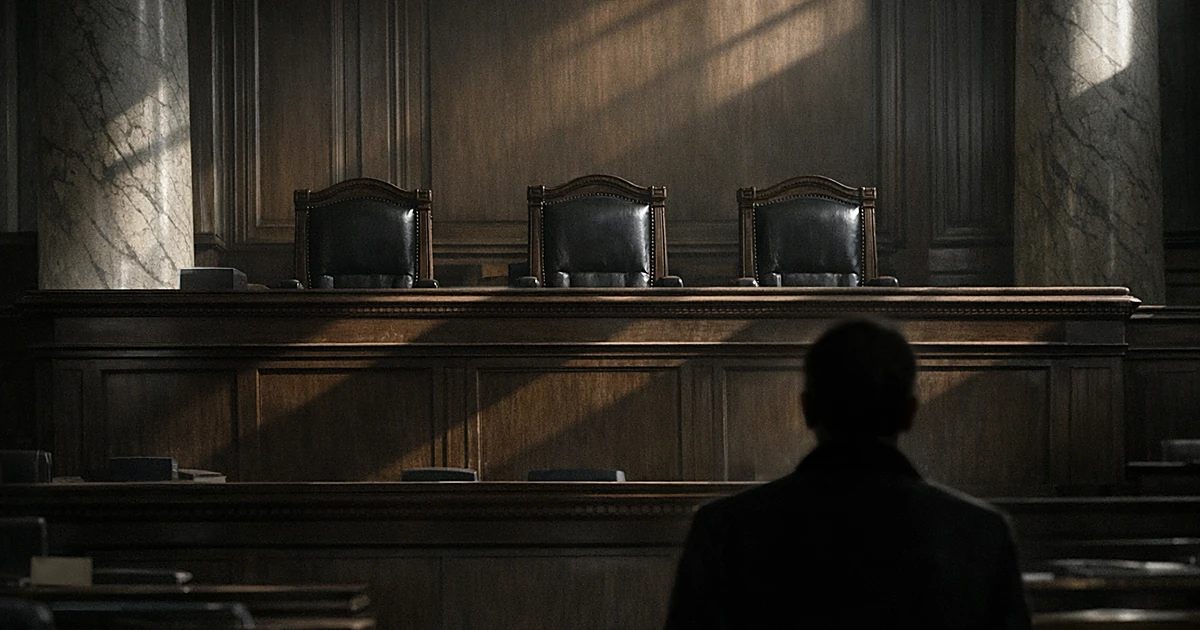
Federal judge blocks Minnesota's first-in-nation prediction market ban days before it takes effect
A federal judge handed Governor Tim Walz a legal defeat by blocking Minnesota's new law criminalizing prediction markets, ruling that federal authority over financial contracts likely trumps the state's attempt to shut down the multibillion-dollar industry.
U.S. District Judge Katherine Menendez issued a preliminary injunction Monday from the federal courthouse in Minneapolis, stopping Minnesota from enforcing a law that would have made it a crime to operate, host, or promote a prediction market in the state. The law was set to take effect Saturday. It never got the chance.
Minnesota had positioned itself as the first state in the nation to outright ban prediction markets like Kalshi and Polymarket, platforms where users wager on the outcomes of elections, economic data, and other real-world events. Walz signed the ban into law in May. Within weeks, the Commodity Futures Trading Commission, Kalshi, and Polymarket all filed suit to stop it.
Biden-appointed judge sides with Trump administration's CFTC
Judge Menendez, appointed by Democratic President Joe Biden, found that federal law likely preempted Minnesota's state statute. Her reasoning centered on the Commodity Exchange Act, the federal law that gives the CFTC authority over derivatives contracts known as "swaps." Menendez identified several examples of event contracts hosted by Kalshi and Polymarket, both CFTC-regulated entities, that fit the legal definition of a swap.
That finding put the contracts squarely inside the CFTC's regulatory lane, and outside Minnesota's.
In her written ruling, Menendez acknowledged the unusual posture of the case but concluded the injunction was warranted. She wrote that the plaintiffs "have met their burden to show they are likely to succeed, at least in part" on their claim that the Commodity Exchange Act preempts the Minnesota law.
"But given the unique nature of Minnesota's prediction market statute, the posture of these cases, and the imminent effective date of Minnesota's statute, a preliminary injunction maintaining the status quo until the merits of this case can be fully resolved is appropriate."
Menendez left herself room to narrow the injunction later. She stressed that at a later stage she might issue a more limited order if she concluded that not every type of event contract listed on Kalshi and Polymarket fits the swap definition. For now, the ban is frozen across the board.
CFTC Chairman: 'States cannot circumvent the clear directive of Congress'
Under the Trump administration, the CFTC has taken the position that event contracts on prediction markets fall exclusively under its federal jurisdiction and that states cannot regulate them. CFTC Chairman Michael Selig put it bluntly.
"States cannot circumvent the clear directive of Congress."
The challenge to Minnesota's law was not a solo effort. The Justice Department joined the CFTC, Kalshi, and Polymarket in arguing that federal law preempts state gambling restrictions applied to these platforms. That coalition, a federal regulator, the DOJ, and two private companies aligned against a state government, reflects how seriously the Trump administration is treating state-level efforts to shut down the prediction market industry.
It is not just Minnesota. The CFTC has filed legal challenges against six other states, Arizona, Connecticut, Illinois, New York, Rhode Island, and Wisconsin, over similar attempts to regulate prediction markets. Four additional states, Massachusetts, Michigan, Nevada, and Washington, have already secured court orders that would restrict Kalshi's activities within their borders.
The legal landscape is fractured. Some states are trying to ban the platforms outright. Others are seeking narrower restrictions. The federal government is pushing back on all of it, arguing that Congress gave the CFTC, and the CFTC alone, the authority to regulate these contracts.
Walz's record of overreach keeps running into federal walls
For Walz, the blocked prediction market ban is the latest instance of his administration pushing policy that collides with federal authority. It is a pattern that extends well beyond financial regulation. Federal officials have clashed with Minnesota over the state's refusal to share fraud data, and the tension between state and federal power has surfaced repeatedly in enforcement disputes.
Minnesota's attorney general did not immediately respond to a request for comment on the ruling. The CFTC also did not respond. Neither side offered a public statement beyond the court filings.
The silence from Minnesota's top legal officer is notable. Walz signed a law that criminalized an entire category of financial activity, platforms regulated by a federal agency, operating under federal oversight, and the state's legal defense could not survive the first courtroom test.
Walz's governance has drawn scrutiny on other fronts as well. His pardon board's decisions have led to federal deportation actions against individuals his administration chose to release, and broader questions about accountability in Minnesota's executive branch have persisted.
The prediction market fight is different in substance but similar in structure: a state government reaching beyond its authority, only to be checked by a federal court.
Prediction markets are a multibillion-dollar industry the feds want to keep
Prediction markets have exploded in popularity and value. The industry is now described as multibillion-dollar, with platforms like Kalshi and Polymarket offering contracts on everything from election results to economic indicators. Both companies are regulated by the CFTC as entities dealing in swap contracts, a classification that places them under the same federal framework governing other derivatives markets.
Minnesota's law treated these platforms as gambling operations, not financial markets. The state's approach was to criminalize the activity entirely, not to regulate it, not to tax it, but to ban it. That distinction matters. A state can argue it has authority to regulate gambling within its borders. But when the federal government has already classified the same activity as a regulated financial product, the state's claim runs headlong into the Supremacy Clause of the Constitution.
Judge Menendez's ruling did not resolve that question permanently. A preliminary injunction is a temporary hold, not a final judgment. The case will continue, and the judge left open the possibility that her eventual ruling could be narrower than the current blanket injunction. But the early signal is clear: Minnesota's sweeping ban is unlikely to survive in its current form.
The broader fight is far from over. With the CFTC challenging laws in seven states and four others already holding court orders against Kalshi, the question of who regulates prediction markets, Washington or state capitals, will likely end up before an appellate court, if not higher. The Supreme Court has shown willingness to weigh in on contested questions of state versus federal authority, and this dispute has all the ingredients for that kind of escalation.
Tensions between Minnesota and federal authorities have extended into law enforcement as well, underscoring a state government that has repeatedly found itself at odds with the agencies and institutions that operate above it.
When a state tries to criminalize a federally regulated industry and loses in court before the law even takes effect, the problem is not the industry. The problem is the law, and the governor who signed it.