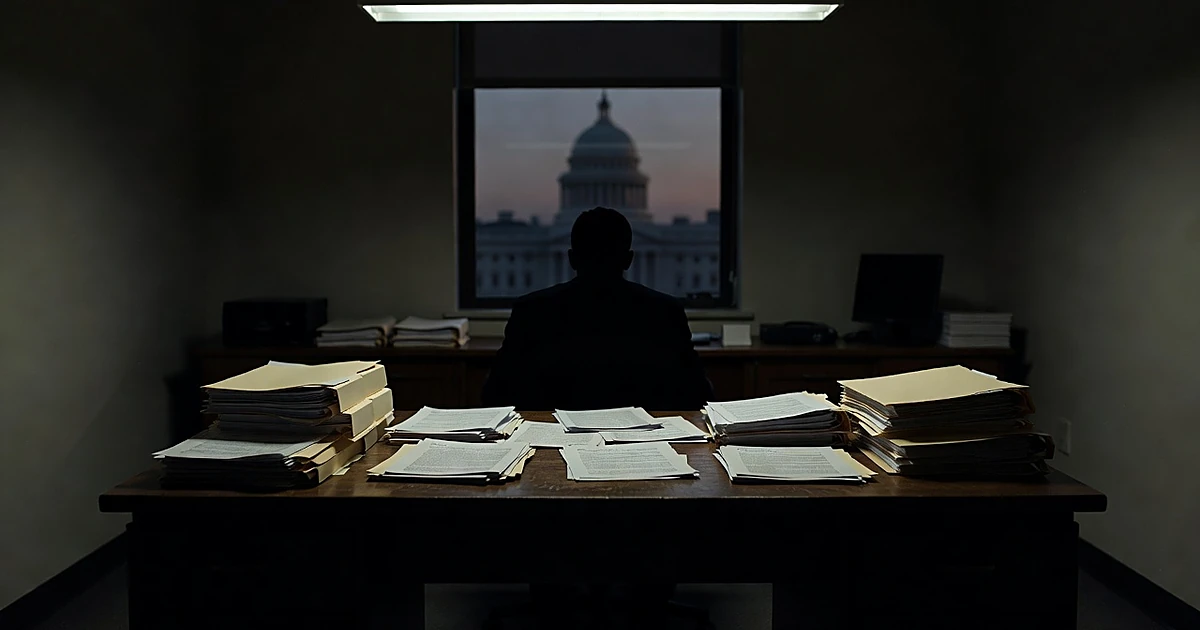
Ford faces mounting Republican pressure over deep business ties to Chinese companies
Transportation Secretary Sean Duffy and congressional Republicans are pressing Ford Motor Company over its entanglements with Chinese firms linked to Beijing's military and intelligence apparatus, even as the White House touted Ford's Michigan investments just days earlier.
Duffy sent a letter to Ford CEO Jim Farley this week expressing what he called "profound concern" about the automaker's manufacturing decisions, supply chain, and reliance on technology from China. The letter zeroed in on three pressure points: Ford's battery technology licensing deal with Chinese giant CATL, a planned joint manufacturing venture with Chinese automaker Geely in Valencia, Spain, and Ford's continued production of the Lincoln Nautilus in China, the New York Post reported.
Duffy also accused Farley of pitching administration officials on a framework that could let Chinese automakers set up U.S. manufacturing operations through American-controlled joint ventures, a charge Ford flatly denied.
Ford fired back with a written response calling Duffy's letter a "wrongheaded attempt to capture headlines." The company insisted its arrangement with CATL is a limited technology-licensing and services agreement, not a joint venture, and that Ford owns the Marshall, Michigan battery plant outright, controls its operations, and employs its workforce. Ford also called the Lincoln Nautilus criticism "misguided" and said it had not proposed the joint-venture framework Duffy described.
But the political walls are closing in from multiple directions. Sen. Rick Scott, a Florida Republican, praised Duffy for "sounding the alarm about Ford's risky ties to [Chinese Communist Party] companies." And the House Select Committee on China posted Ford's own company statements alongside reports about its Chinese business relationships under the pointed heading: "This is what Ford says vs. what it does."
CATL's Pentagon blacklist status raises the stakes for Ford's Michigan plant
At the center of the controversy sits CATL, Contemporary Amperex Technology Co. Limited, the Chinese battery manufacturer whose technology Ford licensed for its BlueOval Battery Park Michigan facility in Marshall. The Pentagon has placed CATL on its Section 1260H list, a federal designation identifying companies accused of ties to China's military.
That designation carries weight. CATL's CEO, Zeng Yuqun, holds a seat on the Chinese People's Political Consultative Conference, a high-ranking advisory body that a 2018 U.S. federal commission report identified as a critical coordinating body for the Chinese Communist Party's "United Front" influence operations. The commission described United Front strategy as using "a range of methods to influence overseas Chinese communities, foreign governments, and other actors to take actions or adopt positions supportive of Beijing's preferred policies," Fox News reported.
Ford maintains it controls the Marshall facility entirely. Yet reporting from Just The News found that CATL's American subsidiary, CATK, posted job listings for positions at the Marshall plant, a detail that sits uneasily beside Ford's repeated assurances of full American ownership and operation.
Former U.S. Ambassador Joseph Cella, who directs the Michigan-China Economic Security Review Group, offered a blunt assessment of the original deal:
"In their haste, unconscionably, parties to this 'deal' performed no strict scrutiny or due diligence, defying the directives given by our national security and intelligence agencies to state and local governments and American corporations when dealing with China-based companies, jeopardizing our national security and taxpayer dollars."
Congressional investigators have previously sought Ford's complete CATL licensing agreement and questioned whether Ford could keep the Marshall plant running if CATL's technical support were cut off. That question remains unanswered, and it is not an academic one. If the technology underpinning the factory depends on continued cooperation from a company the Pentagon considers linked to China's military, Ford's claims of independence deserve scrutiny, not applause.
A $3.5 billion plant that keeps shrinking
Ford originally planned to invest $3.5 billion in the Marshall battery facility. That figure has already been cut significantly. Breitbart reported that Ford slashed 800 jobs and potentially more than $1 billion from the project, a scale-back that raises its own questions about the viability of the venture and the wisdom of the tax breaks Michigan extended to attract it.
Michigan Governor Gretchen Whitmer backed the plant with substantial state incentives despite the CATL connection and local opposition. Virginia Governor Glenn Youngkin, by contrast, rejected the plant for his state, stating that the arrangement would give the CCP "full operational control over the technology." Two governors, two very different reads on the same national security risk.
The White House itself highlighted Ford's roughly $3 billion investment in the Marshall plant and approximately 1,700 jobs on August 31, 2026, framing it as part of a resurgence in Michigan manufacturing. Ford seized on that fact in its response to Duffy, pointing out that the same administration now criticizing the company had praised the investment days earlier. Ford also cited Commerce Secretary Howard Lutnick's reported praise for the reshoring decision.
That mixed messaging, the White House celebrating an investment one week, the Transportation Secretary attacking the company behind it the next, suggests the administration is still sorting out where the line falls between encouraging domestic manufacturing and policing the foreign entanglements that come with it. The tension is real, but it does not excuse the underlying problem. When hidden loyalties surface in high-stakes deals, the public deserves clarity, not contradictions.
Geely, BYD, and a web that keeps expanding
CATL is not Ford's only Chinese entanglement under scrutiny. Duffy's letter also targeted the automaker's planned joint venture with Geely, another Chinese car manufacturer, to build vehicles at a plant in Valencia, Spain. Under the proposed arrangement, Ford would hold a 66% stake and Geely 34%. The plant would produce both Ford and Geely vehicles.
Duffy's concern is straightforward: the venture would help a Chinese competitor expand its footprint in Western auto markets, with an American brand providing the vehicle. Ford's majority stake does not eliminate the fact that a Chinese automaker gains manufacturing capacity and market access it would not otherwise have.
Separately, Ford has reportedly been in discussions with BYD, yet another major Chinese automaker, about a potential battery deal for Ford's hybrid vehicles. No completed agreement has been disclosed. But the pattern, CATL for batteries, Geely for manufacturing, BYD for hybrids, paints a picture of a company whose supply chain and partnerships run through Beijing at nearly every turn.
Duffy also pressed Ford on its continued manufacturing of the Lincoln Nautilus in China. Ford has said it plans to increase U.S. Lincoln production and phase out Chinese imports for the American market, but not until 2030. That is four years away, and a lot of vehicles rolling off Chinese assembly lines in the meantime. In an era when the administration has moved aggressively to secure American institutions from foreign influence, a 2030 timeline looks leisurely.
Ford says one thing; its partnerships say another
Ford's written response to Duffy leaned hard on its formal ownership structure. The company stated plainly:
"The CATL arrangement is a limited technology-licensing and services agreement, not a joint venture or foreign-owned manufacturing operation. Ford owns the plant, controls the operation and employs the workforce."
Ford also denied proposing the joint-venture framework Duffy described. "Ford has not proposed a joint-venture framework as described in the letter," the company wrote.
Those are clear statements. But they do not answer the harder questions. Who controls the intellectual property if the licensing agreement ends? Can the Marshall plant produce batteries without CATL's ongoing technical support? Why is a CATL subsidiary posting job listings for a plant Ford says it runs entirely on its own? And if the CATL deal is as limited and benign as Ford insists, why have congressional investigators had to fight to see the full agreement?
The House Select Committee on China evidently sees a gap between Ford's public assurances and its operational reality. Posting Ford's own statements next to reporting on its Chinese relationships, under the heading "This is what Ford says vs. what it does", is not a subtle message. It is a direct accusation that Ford's words and actions do not match.
Michael Sobolik of the American Foreign Policy Council warned that Ford "should know that it is opening itself up to quiet manipulation and the malign influence of the CCP by partnering with an organization run by a CPPCC member." That assessment tracks with the broader pattern: Ford's formal legal structures may look American on paper, but its dependency on Chinese technology, Chinese partners, and Chinese manufacturing capacity tells a different story.
The political pressure is bipartisan in origin, congressional investigators from the House Energy and Commerce Committee have previously sought the full CATL licensing agreement, but the sharpest criticism now comes from the administration's own ranks. That matters. When private dealings become public, the question is always the same: what was the real arrangement, and who benefits?
Ford can call Duffy's letter a headline grab. It can point to the White House's own praise from days earlier. But ownership on paper means little if the technology, the expertise, and the supply chain all run back to companies the Pentagon has flagged as arms of China's military. At some point, "we own the building" stops being an answer, and starts being an evasion.