House conservatives lift floor blockade after Johnson pairs voter ID bill with State Department funding
House Republicans broke a weeks-long legislative logjam Tuesday when conservative holdouts agreed to end their blockade of the chamber floor, handing Speaker Mike Johnson a narrow but hard-fought procedural victory. The price: Johnson's agreement to attach the SAVE America Act, President Trump's top election integrity priority, to the State Department appropriations bill headed for a floor vote.
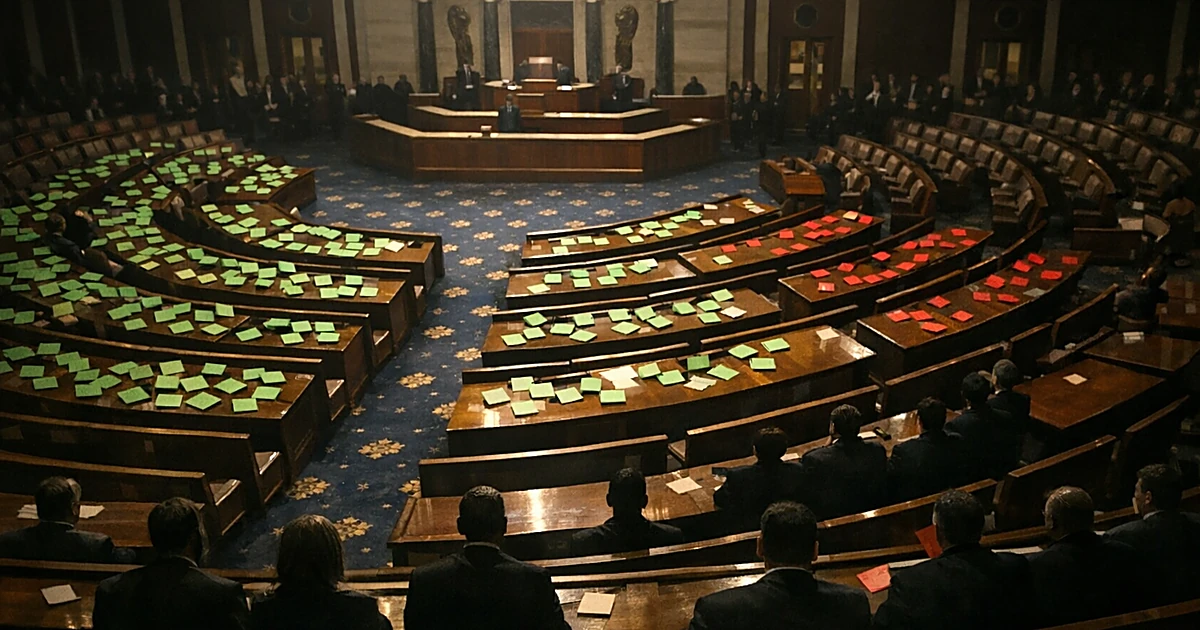
The procedural rule passed 215, 211, with every Democrat voting no and only one Republican, Rep. Randy Fine of Florida, breaking ranks. The razor-thin margin underscored just how little room Johnson has to maneuver, and how much leverage a handful of committed conservatives can wield when they decide the leadership isn't moving fast enough.
A month of gridlock, one deal to break it
Since late June, a bloc of House conservatives had refused to allow any major legislation to reach the floor. Their demand was simple: force votes on the SAVE America Act, a voter identification measure, and on a sweeping border security package known as the Permanent Trump Secure Border Act. Until leadership delivered, they would keep the chamber frozen.
And frozen it was. For nearly a month, no significant bills advanced. Johnson tried an earlier compromise before the July 4 recess, proposing to attach the SAVE America Act to the House's annual defense policy bill. Rep. Anna Paulina Luna of Florida and other rebels rejected that offer and kept the blockade in place.
The dynamic illustrated a familiar tension in the razor-thin Republican majority. Johnson needed virtually every GOP vote to pass even routine procedural motions. The rebels needed only a few defections to shut everything down.
What finally moved them was Johnson's decision to pair the SAVE America Act directly with the State Department funding bill, giving the election integrity measure a vehicle that the Senate could not easily ignore. The pairing tees up floor votes on three items: the State Department appropriations package (now carrying the SAVE America Act), legislation to make daylight saving time permanent, and a measure aimed at improving veterans' benefits.
The rebel case, and the internal pushback
The conservatives who shut down the floor made no apologies for the disruption. Their argument was straightforward: Republican voters sent them to Washington to secure elections and close the border, and leadership was dragging its feet.
Rep. Ralph Norman of South Carolina framed it bluntly on Monday, as Fox News reported:
"We shouldn't vote on anything else unless it has the SAVE [America] Act, period."
Norman went further, calling on the Senate to force daily votes and talking filibusters to push the measure through. But he was candid about his expectations for the upper chamber.
"Ideally, the Senate ought to take it up every day and make them vote on it and do a talking filibuster and keep them up all night. That's the best course of action. I don't think they'll do that."
Rep. Chip Roy of Texas pointed to a broader list of unfinished business, border security, birthright citizenship, and the codification of Trump executive orders targeting illegal immigration through the Permanent Trump Secure Border Act, which would end catch-and-release policies.
"We need to deliver on codifying border security, deal with the birthright citizenship issue. These are all issues people that I represent care about intently and that we've talked about doing, and we need to deliver."
Rep. Keith Self of Texas took a shot at the week's planned agenda on social media Monday, mocking the daylight saving time bill as a misplaced priority: "Making Daylight Saving Time permanent won't matter at all if we don't have election integrity. Priorities."
Not every Republican appreciated the tactic. Rep. Mario Diaz-Balart of Florida told Fox News on Monday that the blockade punished the wrong target. His frustration with the rebels was palpable:
"There's a small group of Republicans who are upset at the Senate, as I think all of us are. But I don't know how... if you're upset at the Senate, why do you take it out on the conservative Republican agenda in the House?"
It was a fair question, and one that recurring GOP defections on key votes have forced leadership to confront repeatedly this Congress. The rebels would counter that the House passing bills the Senate ignores is theater, not governing.
The Senate problem
The real obstacle for the SAVE America Act has always been the upper chamber. Senate Majority Leader John Thune has repeatedly said the votes simply do not exist to pass the measure, citing unified Democratic opposition. Supporters of the bill, which would impose voter identification requirements, see Thune's assessment as defeatism. Critics within the GOP see it as arithmetic.
Luna, one of the most visible members of the rebel bloc, made clear on social media Monday that she views the pairing deal as a way to shift accountability to the Senate.
"If [John Thune] strips it out in the Senate, that will be on him and the entire country should be watching what he does."
That framing is politically shrewd. By attaching the SAVE America Act to a must-pass funding bill, House conservatives force Senate Republicans to either defend the measure or own its removal in full public view, months before November's midterm elections.
President Trump has signaled how seriously he takes the issue. Last week, he refused to sign a bipartisan housing bill designed to boost supply and lower costs, in protest of the SAVE America Act's failure to advance. The veto was a blunt message to both chambers: election integrity comes first.
That kind of presidential pressure has shaped the working relationship between Trump and Johnson throughout this Congress. Johnson needs the White House to help whip votes; the White House needs Johnson to deliver on its legislative priorities. When those interests align, things move. When they don't, the floor shuts down.
What's ahead, and what's at stake
Tuesday's procedural vote was a win for Johnson, but the clock is not his friend. House Republicans are racing to clear government funding bills before the September 30 deadline. Leadership is also working to draft a third reconciliation package, the so-called "big, beautiful bill", and may need to pass a supplemental spending package to cover costs associated with the Iran conflict.
All of this must happen with a majority so slim that a handful of absences or defections can derail any vote. The 215, 211 margin on Tuesday's rule was not a show of strength. It was a reminder of fragility.
House Freedom Caucus members are still pushing for a floor vote on the Permanent Trump Secure Border Act, which would codify several Trump executive orders on illegal immigration. That fight is far from over. And the broader question of whether Republican members will hold ranks on the remaining legislative calendar remains open.
The midterms loom. Every month of gridlock is a month voters can point to and ask what the Republican majority actually accomplished. The rebels who blocked the floor for a month would argue they forced leadership to take election integrity seriously. Their critics would argue the blockade burned time the GOP doesn't have.
Both sides are probably right. And that tension, between the desire to move fast and the insistence on moving right, will define the rest of this Congress.
Democrats, for their part, voted unanimously against the procedural rule. They have no interest in helping Republicans sort out their internal disagreements, and every incentive to let the majority stumble into November looking fractured. The fact that future redistricting could reshape the House map only raises the stakes for both parties in the months ahead.
The bottom line
Johnson got his procedural vote. The SAVE America Act now rides alongside the State Department funding bill. The floor is open again. Those are real results.
But the margin was four votes. The blockade lasted a month. The Senate has not committed to passing the bill. And the conservative base that sent these members to Washington is watching to see whether the final product matches the promises.
In the end, the rebels didn't shut down the House because they wanted chaos. They shut it down because they wanted results, on voter ID, on the border, on the things they ran on. Whether this deal delivers those results or just delays the next standoff depends entirely on what the Senate does next.
Voters who care about election integrity and border security have heard plenty of speeches. What they haven't seen enough of is legislation on the president's desk. That's the only scoreboard that matters.