Illegal immigrant who fled ICE in Arlington seeks $35 million over arrest force claim
An illegal immigrant who ran from ICE officers during an Arlington arrest is demanding $35 million from the federal government, alleging excessive force after he fled lawful custody.
Jose Mejia Hernandez filed a Federal Tort Claims Act administrative claim against the Department of Homeland Security and Immigration and Customs Enforcement, accusing agents of excessive force, negligent vehicle operation, and failure to render proper aid during an Aug. 11 enforcement action in Arlington.
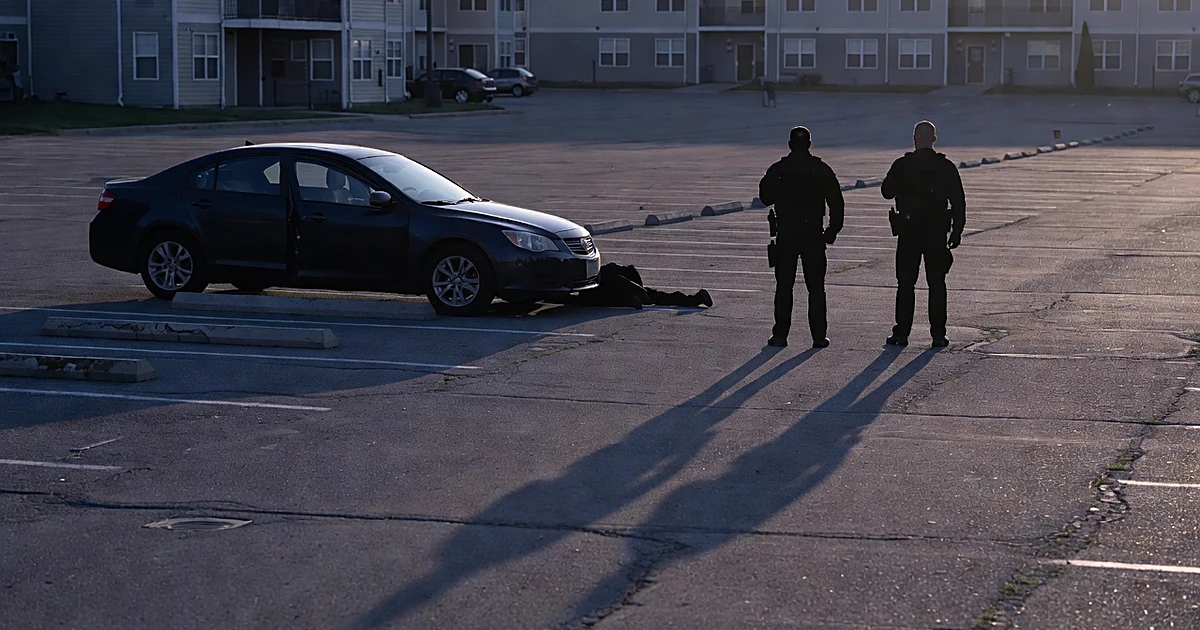
ARLnow reported that the claim targets a morning arrest in the parking lot of an apartment complex at Columbia Pike and S. Courthouse Road, and that his attorneys held a press conference the same morning the paperwork was filed.
The filing is the required first step before any federal lawsuit. DHS and ICE then have six months to answer.
Mejia Hernandez, described by DHS as a 4-foot-11 Mexican national in the country illegally, says he was walking toward a bus stop around 6:15 a.m. when masked plainclothes officers in unmarked vehicles approached. He ran. He now claims a stun gun struck him from behind and that a federal officer’s vehicle hit him while he was fleeing.
He ran. Then the lawyers asked for $35 million
That sequence sits at the center of the case. He was not a bystander. He was not complying. He attempted to evade arrest, and the claim for damages followed the flight.
His attorneys, immigration lawyer Carlos Jurado and civil rights lawyer Denisse Gastélum, cast the encounter as a constitutional disaster and a life-altering injury. Jurado spoke in sweeping terms at the press conference.
"Literally every time we’ve learned something new [about] this case, it’s heartbreaking. At every step, his constitutional rights have been violated."
Gastélum argued that using a stun gun from behind on a man who “poses no threat” crosses a hard line, and she told reporters witnesses heard what sounded like a vehicle striking a person.
"You can’t do that in this country, particularly when that individual poses no threat, and clearly Mr. Mejia did not pose a threat."
The claim also attacks what happened after he was down. Attorneys say bystander video shows water poured over a bleeding face and handlers moving him into a seated position. They call that a breach of basic emergency care for a suspected head or spinal injury and say it made a brain injury worse.
"Any person with basic emergency training knows that a person with a suspected head, neck, or spinal injury must not be moved. That conduct breached both the statutory duty and the duty assumed by the undertaking, and it aggravated the brain injury Mr. Mejia Hernandez had already sustained."
In claim materials, the lawyers says that he now lives with constant fear, recurring headaches, and an inability to return to the work pace he described before, 40 hours a week cleaning commercial buildings and 30 hours a week in office maintenance.
Readers following White House-level politics will recognize the larger fight over immigration enforcement under Vance and Trump’s joint Senate strategy, which keeps pressure on agencies to enforce the law rather than look away.
DHS says the unconscious-hospital story is false
Homeland Security has rejected the wrongdoing narrative. The department said agents used “necessary force to gain control of the situation” when Mejia Hernandez tried to flee.
DHS also pushed back hard on the most dramatic injury framing routed through earlier coverage.
"Allegations that he was unconscious and woke up in a hospital bed are FALSE. According to officers, they rendered aid, asked the individual, who was responsive, if he was okay after evading arrest, and followed their training."
That is not a minor disagreement over paperwork. One side sells a helpless man brutalized into a brain bleed and a hospital floor. The other side says he ran, force was used to stop the evasion, he was responsive, and officers gave aid by the book.
Arlington County Police are investigating the incident. No public findings from that local probe appear in the available account of the claim.
Administration legal fights are hardly new terrain in Washington, including cases that reach Trump-appointed prosecutors in the courts, and this FTCA claim now puts DHS on a formal response clock.
Flight from agents, then a taxpayer-target lawsuit track
Federal tort claims of this type convert street encounters into money demands against agencies funded by the public. The number attached here is not a modest medical bill. It is $35 million.
The claim asks taxpayers to finance alleged brain injuries, emotional trauma, lost work capacity, and the theory that post-arrest first aid made everything worse. It also leans on an attorney’s description of a hospital scene, Mejia Hernandez on the floor bleeding, an ICE agent standing over him, and a hospital employee pushing for a bed and an interpreter. Those hospital details come from the legal team’s account, not from a released official medical file in the reporting.
For audiences who track the daily churn around the president and his circle, from Trump’s recent public appearances to the grind of governing, the enforcement question is simpler than the online noise: when ICE moves on an illegal immigrant and he runs, do officers finish the arrest, or do they freeze for fear of the next eight-figure claim?
Gastélum’s threat theory runs into the plain fact the claim itself puts forward. He fled. Flight is not passive. It is a choice that changes the risk for everyone in the parking lot, officers, bystanders, and the person running.
Jurado’s line that constitutional rights were violated “at every step” will be tested against a different yardstick in any serious review: masked officers in plain clothes are common in fugitive and immigration work precisely because targets bolt, and stun munitions and vehicle control are tools used when a chase starts.
Vice presidential coverage often shows the human strain of life in the arena, including Usha Vance’s account of isolation in the fishbowl, but street-level ICE work is a colder business. Agents either control a fleeing subject or they lose him into the county.
What still is not settled
Open items remain. The full administrative claim text and any docket-style identifier were not laid out beyond the allegations summarized in local coverage. Individual officer names were not published. The Arlington police investigation’s scope and status were not detailed. Primary body-worn or vehicle video was not released in the account of the filing. And the “brain bleed” language sits in the claim’s injury narrative rather than in a quoted hospital diagnosis.
Even the attorneys’ most vivid lines depend on witness characterizations and video descriptions they control or cite. DHS, for its part, has already labeled the unconscious-to-hospital-bed story false and stood behind the officers’ aid and training.
So the public record, as it stands, is a familiar pattern in immigration enforcement fights: an illegal immigrant flees, force follows the flight, activists and retained counsel reframe the takedown as the scandal, and a massive damages number lands on the agencies that still try to make arrests.
DHS now has a six-month window to answer the administrative claim. If the department denies it or the clock runs without settlement, the next step is court. Until then, the dispute is clear enough for any voter who cares about borders and basic order. Running from ICE is not a path to a jackpot, and treating every resisted arrest like a seven-figure civil rights windfall is how enforcement dies by paperwork.