North Carolina Republicans pause gas tax before election, send bill to governor
North Carolina Republicans paused the state gas tax through November after a special session, Democrats called it election politics even as nearly all of them voted yes.
The Republican-led General Assembly in Raleigh convened a one-day special session on Wednesday, October 7, 2026, and moved fast. The House passed a bill titled “Relief at the Pump” by a 111-1 vote that afternoon. A few hours later the Senate cleared it 41-0 and sent it to Democratic Gov. Josh Stein.
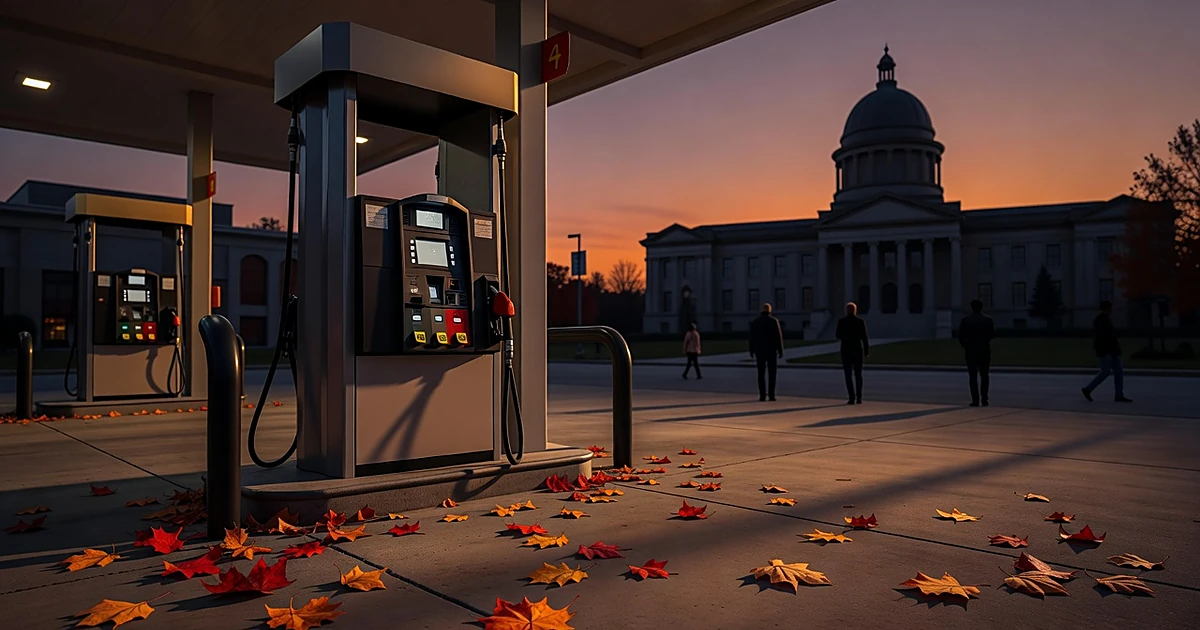
The News & Observer reported the measure would suspend North Carolina’s 41-cent state gas tax through November 30, roughly 45 days of relief timed for harvest season and holiday travel.
Drivers have faced pump prices above $4 a gallon since May. Lawmakers said the pause would ease costs for families, farmers, and anyone on the road before Thanksgiving.
House Majority Leader Brenden Jones of Tabor City opened debate for the bill and used a procedural move, after conferring with legislative rules attorney Reaghan Boerman, that limited further House discussion beyond a speech from the Democratic leader.
That kind of floor management echoes other moments when House leaders steered members past contested votes and kept the schedule tight.
Democratic Rep. Pricey Harrison cast the lone House “no.” Every other member present backed the pause.
House Minority Leader Robert Reives said Democrats would support the relief even while objecting to the process and the short window.
Reives told colleagues the frustration ran deep.
"Are we voting yes? Of course we’re voting yes, because we will take any relief we can get for the people that we serve. But we just, you can’t imagine the frustration of hearing that suddenly, gas prices are high,"
He added that prices were high “because we’ve gone to war,” not because of ordinary market swings, and called the length of the pause “disappointing.”
Farmers, holidays, and a two-page bill
Republican leaders framed the timing around real costs, not calendars. Senate President Pro Tempore Phil Berger pointed to farmers in the middle of harvest. House Speaker Destin Hall stressed travel season and the way fuel costs roll into grocery prices.
Hall told reporters the calendar itself made the cut worthwhile.
"You’re entering a season where it’s holiday time. People are going to be traveling. Farmers are harvesting crops, and so those are costs that end up getting passed along down the road to grocery stores. And so now is sort of the opportune time of the year with the economic factor to go in and create this reduction in gas costs,"
The bill also lets farmers keep using red-dyed diesel, which is tax-free. Hall said that piece gives agriculture and other businesses certainty because the dye stays in motors for a stretch of time, and it overlaps with action Stein took the prior week.
Berger called the legislation “a simple bill” of just two pages. He said the inflationary reserve fund holds about $518 million and that backfilling the lost gas-tax revenue for the pause would cost an estimated $360 million. That money normally supports the Department of Transportation and highway projects.
Whether oil companies pass the full 41 cents through to drivers is not locked in. Berger noted market forces could set the final savings at the pump.
Hall left the door open to stretch the pause further during a November voting session if lawmakers choose.
Democrats vote yes and still cry gimmick
Democrats spent Wednesday morning calling the package “too little, too late” at a news conference, then voted for it anyway. Senate Democrats Joyce Waddell of Mecklenburg County and Natalie Murdock of Durham backed temporary help while pressing for more.
Waddell said “every dollar saved, and every dollar matters” and that “something is better than nothing.” Murdock asked in the Senate Finance Committee why a similar pause never came up earlier when “folks have been struggling at the pump for some years.”
Sen. Buck Newton, a Wilson Republican, answered that timing rarely lines up cleanly.
"But for me personally, you know, I had hopes that our fuel prices would be coming down on their own, and that hasn’t happened,"
Newton said there are “a lot of reasons” prices stayed high, but “now is a time that we can do something” and that “strong support” finally existed. He credited “responsible careful leadership” under Berger for the fiscal room to act.
Senate Minority Leader Sydney Batch said Democrats got little notice before the Saturday announcement of the special session and questioned why the work could not have happened during placeholder sessions the week before. She argued that after 16 years of Republican control “the chickens have come home to roost” on their election outlook and that Republicans arrived last-minute “with a coupon for you.”
Partisan sparring over who owns cost-of-living pain has become routine in statehouses and on the national stage, much like the back-and-forth seen when Cruz and Vance traded shots over 2028 ambitions.
Gov. Josh Stein struck the same split note. He said gas-tax relief “is a good thing,” then immediately framed the special session as self-help for Republicans.
"Clearly their poll numbers are really bad, because they’re coming back right before the election to take this action to help themselves,"
Stein said he hoped “this isn’t just an Election Day gimmick, but rather something that we can trampoline into the new session and really focus on policies that can make a difference in people’s lives.” The governor has 10 days to sign the bill, veto it, or let it become law without a signature.
State Democratic Party Chair Anderson Clayton went further at a press conference, claiming Republicans “have not done a thing for people across North Carolina for the last nine months or the last two years that they’ve had the power that they could.” She said voters should not “buy what Republicans are trying to do right now” until the legislature talks about lowering costs “in a comprehensive way.”
May doubts meet October action
The political reverse is hard to miss. In May, when pump prices first topped $4, Berger dismissed a gas-tax pause as “feel good.” On Wednesday he said it still feels good and that harvest timing made the difference. Hall said he had been open to a pause since May, when the News & Observer first asked him about it.
Democrats tried to widen the fight to other energy costs. They pointed to 2025’s Senate Bill 266, which let Duke Energy charge ratepayers up front for power plants not yet built. Stein vetoed that bill; the legislature overrode him. Clayton also noted that Democratic Attorney General Jeff Jackson refused to sign off on a separate Duke deal that would have raised consumer rates. Stein had previously said the SB 266 approach “not only makes everyone’s utility bills more expensive, but it also shifts the cost of electricity from large industrial users onto the backs of regular people.”
None of that stopped nearly unanimous votes for the gas-tax pause. When Berger was asked about Democratic criticism paired with Democratic “yes” votes, he turned the question around: if they still vote for a two-page relief bill after the attacks, “Who’s playing politics?”
Legislative majorities that want a clean result often compress debate and force the other side to choose between pure messaging and tangible help, a dynamic familiar from high-stakes fights such as the Senate maneuvering around the SAVE America Act.
The special session itself sat 27 days before the election. Republicans said the calendar matched harvest and holiday needs and that the reserve fund finally made the backfill possible. Democrats called the same calendar proof of panic. The roll calls showed which argument carried the floor.
A single dissenting House vote can become its own story in a lopsided chamber, much as cross-party popularity numbers have drawn attention to figures like Fetterman running stronger with Republicans than Democrats in recent polling.
For North Carolina drivers, the immediate question is simpler. If Stein signs the bill or lets it take effect, the 41-cent state tax comes off through November 30. Farmers get clearer rules on red-dyed diesel. The state covers the gap from the inflationary reserve instead of highway accounts. Lawmakers can revisit an extension in November.
Congress has shown how easy it is to leave big cost issues untouched when the calendar gets inconvenient, including when the House packed up early and left debt and other bills sitting.
In Raleigh the opposite happened. Leaders called the session, limited the talk, and passed the pause with only one no vote in the House and none in the Senate.
Taxpayers stuck with high pump prices since May just watched the people who called the relief a gimmick vote to deliver it anyway. That is the record the election will judge.