Supreme Court may clear path for Texas Big Bend border barrier after judge’s halt
The Trump administration has asked the Supreme Court to lift a federal judge’s block on border barrier work in Texas’ Big Bend region, citing security needs and costs above $460,000 a day.
Federal lawyers filed an emergency application on Oct. 21 seeking to suspend a preliminary injunction that stopped construction and related ground work along stretches of the U.S.-Mexico line in far West Texas. The request lands at the high court after U.S. District Judge Kathleen Cardone issued the order on Oct. 2 in a case captioned Mullin v. Friends of the Ruidosa Church.
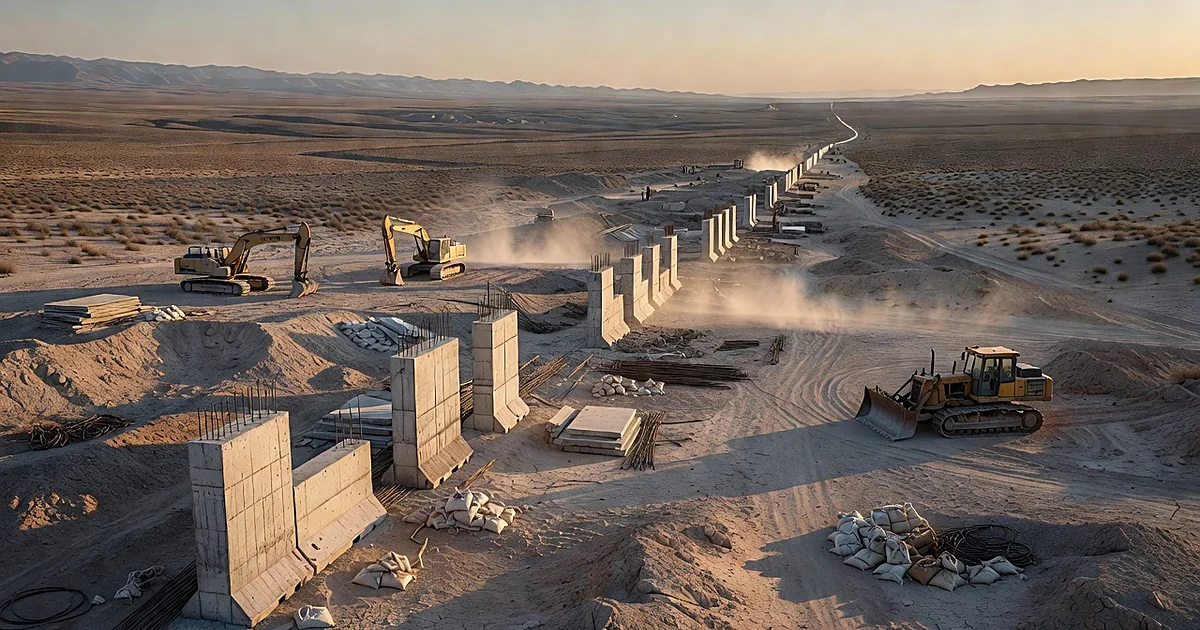
Reporting on the filing describes a project already underway before the halt: about three-quarters of a mile of barrier in place, plus temporary field offices, supply yards, a water-delivery system, and a concrete batch plant. The government says keeping that work frozen costs more than $460,000 each day in leased land, offices, and secured equipment and materials.
Justice Samuel Alito set a 4 p.m. Eastern deadline on Thursday, Oct. 29, for the challengers to answer. As of an Oct. 25 docket check, the Court had not issued an order granting the government’s request, so the lower-court restrictions remained in force.
Waivers, statutes, and a major-questions fight
The administration relies on long-standing waiver authority in the Illegal Immigration Reform and Immigrant Responsibility Act of 1996, as amended by the REAL ID Act of 2005. Those provisions give the secretary of Homeland Security power to set aside certain legal requirements so the government can build border barriers and roads.
Judge Cardone found the challengers likely to succeed under the major questions doctrine, the idea that agencies need clear congressional authorization for decisions of vast economic or political significance. She treated a separation-of-powers argument as enough for the court to hear the case and questioned the breadth of the administration’s claimed authority.
Federal law limits challenges to these waiver decisions to claims that allege violations of the U.S. Constitution. The government argues the major questions doctrine does not itself establish a constitutional violation and has asked the Supreme Court both to stay the injunction and to take the dispute directly, noting that ordinary appeals-court review is unavailable under the applicable statute.
That direct path to the justices fits a broader pattern of high-stakes fights over immigration and Court power, including cases in which Democratic cities asked the Supreme Court to preserve a Biden-era deportation freeze.
What the Big Bend project covers
The Big Bend Sector runs roughly 500 miles of the southern border. Plans described in the dispute include about 17 miles of noncontiguous vehicle barriers inside Big Bend National Park. Thirty-foot steel bollard walls are described for private property; the same 30-foot walls are not planned through Big Bend National Park or Big Bend Ranch State Park.
The injunction covers the affected project area, including portions of the national park, nearby state land, and privately owned land. Construction and ground-disturbing work remain blocked unless the government complies with the laws the district court said still apply.
Congress in 2025 allocated $46.55 billion to U.S. Customs and Border Protection for border infrastructure and wall systems. The administration frames the Texas work as part of that larger effort to deter unauthorized crossings, stop the redirection of traffic and smuggling, and keep daily border-security operations from being disrupted.
Court battles over maps, nominees, and structure keep showing how much national policy now runs through the justices, from Supreme Court orders blocking a Missouri GOP House map to larger debates over the Court’s size and role.
Challengers push environment and low traffic numbers
Opponents include an environmental organization, a church-preservation group tied to Friends of the Ruidosa Church, and a local river guide. They argue the Big Bend region has historically seen relatively low border crossings, point to rugged terrain that already complicates illegal traffic, and favor surveillance towers and drones over physical barriers.
Their suit produced the Oct. 2 injunction that froze the project. The government answers that pausing active construction creates real operational and financial harm while the legal fight continues, and that Congress already gave the Homeland Security secretary wide discretion precisely so barrier work would not stall under layered regulatory challenges.
How the justices handle emergency border and immigration applications has become a recurring pressure point, much like other recent petitions that put Trump back before the Supreme Court on high-profile disputes.
What the Court can do next
The Supreme Court can allow construction to resume on a temporary basis, leave Judge Cardone’s injunction in place, or take another procedural step. The Oct. 29 response deadline is for the challengers’ legal arguments, not a scheduled ruling date.
Until the Court acts, the barrier segments already started, the temporary facilities on site, and the broader Big Bend plans remain subject to the district court’s restrictions. The administration’s filing treats every day of delay as both a security gap and a six-figure bill to taxpayers.
Separate political fights over the Court’s future composition, including calls such as Hillary Clinton’s backing for a larger bench, sit in the background of every major emergency application the justices now face.
Secure borders require finished barriers where Congress funded them, not open-ended courtroom freezes that run up daily costs while crossings and smuggling routes stay in play. The justices should put the statutory waiver power Congress wrote back to work and let the Texas project move.