Supreme Court refuses to hear Florida's case against California over trucker licenses for illegal immigrants — Thomas and Alito dissent
The Supreme Court on Tuesday threw out Florida's lawsuit against California and Washington over commercial driver's licenses issued to illegal immigrants, and did so without a word of explanation. Only Justices Clarence Thomas and Samuel Alito objected, with Thomas authoring a pointed dissent arguing the Court had a constitutional duty to take the case.
The 7-2 decision leaves in place the licensing practices of two blue states that Florida says violated federal safety regulations, practices that, in at least one case, put an unqualified driver behind the wheel of a commercial truck that killed three people on a Florida highway.
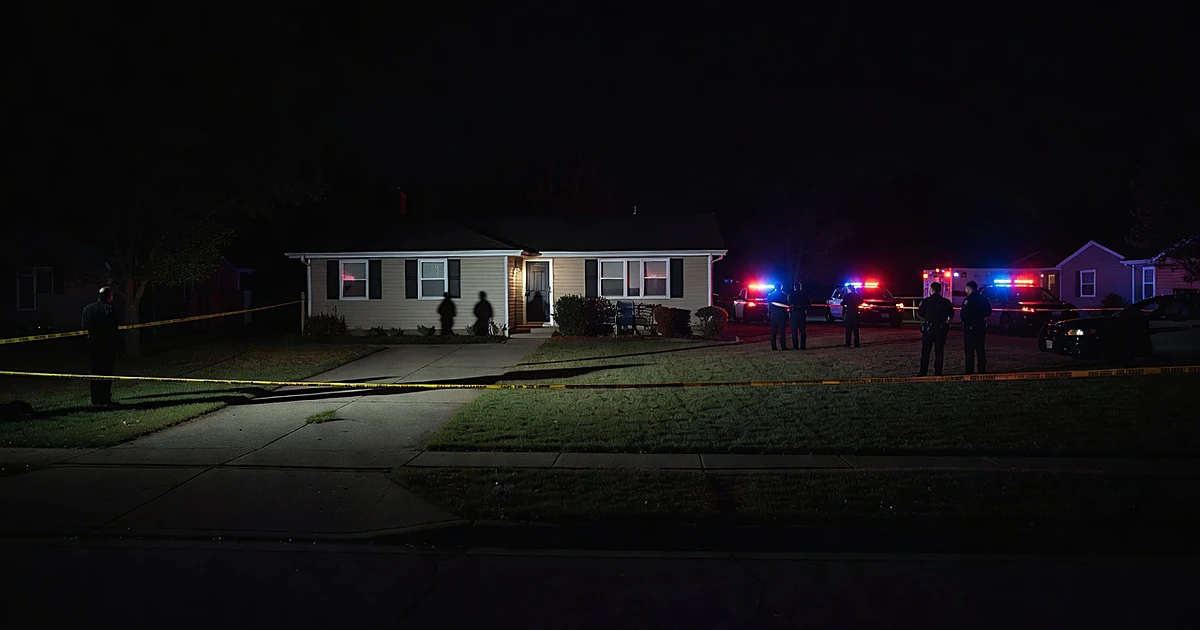
The case centered on Harjinder Singh, an Indian national who allegedly crossed the border illegally, failed federal English proficiency tests in both California and Washington, and still walked away with a commercial driver's license. On August 12, 2025, Newsweek reported, Singh attempted a U-turn across the median of the Florida Turnpike. His trailer struck a minivan. All three passengers inside died. Singh now faces criminal charges of vehicular homicide.
Thomas: Florida has 'nowhere else' to bring its claims
Florida filed what is known as a bill of complaint, the mechanism states use to sue one another directly in the Supreme Court. The state alleged that California and Washington defied federal law by issuing commercial driver's licenses to applicants who lacked legal status and could not pass basic English reading requirements.
The majority declined to grant Florida leave to file. No reasoning was offered. Thomas, joined by Alito, made clear he found that silence unacceptable.
"This Court declines to even hear Florida's claims, even though it has nowhere else to bring them. Because I would allow Florida to file its complaint, I respectfully dissent."
Thomas argued the Court holds "exclusive jurisdiction" over disputes between states and expressed doubt that it has the discretion to simply wave such cases away. He wrote that the Court has adopted a "discretionary approach to its exclusive original jurisdiction" based on policy judgments, a practice he views as constitutionally suspect. The Washington Examiner reported that Thomas's dissent ran five pages and framed the issue as one the Constitution requires the Court to resolve.
The standards the majority apparently applied, considerations of "seriousness and dignity" and the "availability of an alternative forum", struck Thomas as inadequate when no alternative forum exists for a state-versus-state dispute of this kind.
The crash that launched the lawsuit
The facts behind Florida's complaint are grim. Court filings show that Singh "approached a sign prohibiting U-turns but allegedly attempted a U-turn across the median anyway." His trailer collided with a minivan, and three people died.
Federal Motor Carrier Safety Administration records indicate that Singh "was unable to read signs and could not answer most questions" on the agency's English proficiency test. He failed that test in both California and Washington, yet both states issued him a commercial driver's license anyway.
That pattern, Florida argued, was not an isolated failure. Transportation Secretary Sean Duffy has said that at least 17 fatal crashes in 2025 were caused by "non-domiciled drivers", a category that would now be ineligible for licenses under a rule Duffy issued in February.
Duffy did not mince words when announcing that rule:
"For far too long, America has allowed dangerous foreign drivers to abuse our truck licensing systems, wreaking havoc on our roadways. This safety loophole ends today."
He added that "unqualified foreign drivers" would no longer be able to obtain licenses to operate 80,000-pound rigs, and pledged to continue "enforcing English language standards" and "holding fraudulent carriers accountable."
Thomas's willingness to break publicly with the Court's majority is not new. He has consistently shown a readiness to dissent when he believes the Court is ducking its obligations, particularly on questions of constitutional structure and federal-state conflict.
A broader fight over the Court's role
The decision arrives at a moment when the Supreme Court's composition and direction are subjects of intense political debate. The Washington Times noted that Thomas argued the Court had a duty to take up the dispute, framing the refusal as an abdication rather than an exercise of judicial restraint.
Florida's complaint alleged that California and Washington violated federal regulations by issuing commercial licenses to non-domiciled drivers without legal status. The two states' attorneys general offices were contacted for comment by Newsweek, as was the Florida Attorney General's Office. No responses were reported.
The case also raises questions about how many states maintain similar licensing practices, and whether the Transportation Department's February rule will be enough to close the gap that Florida identified. The rule targets foreign drivers who have not undergone consular and interagency screening, but its full scope and implementation timeline remain unclear from available filings.
Breitbart reported that the majority rejected the case without comment, leaving Thomas's dissent as the only public accounting of what the Court considered, and what it chose to ignore.
Meanwhile, the political stakes around the Court continue to intensify. President Trump has signaled his readiness to fill any vacancies should justices like Thomas or Alito step down, a reminder that every decision, and every dissent, carries weight beyond the immediate case.
What the silence leaves behind
The Court's refusal to explain itself is, in some ways, the most telling part of the decision. Seven justices looked at a case involving dead Americans, a driver who could not read road signs, two states that allegedly ignored federal safety standards, and a constitutional mechanism designed precisely for this kind of dispute, and chose to say nothing.
Thomas said what needed saying. The question is whether anyone in the majority was listening.
Critics of the Court's current makeup, including Rep. Jamie Raskin, who has accused the bench of being "gerrymandered" with political appointees, may find it awkward that the supposedly partisan conservative Court just handed California a clean win, without even requiring the state to defend its practices in open argument.
Seventeen fatal crashes. Three dead in a minivan. A driver who failed his English test twice and still got his license. And the highest court in the land decided it wasn't worth a hearing.
If that's judicial discretion, it looks a lot like looking the other way.