Supreme Court will review Civil War-era ban on home spirit distilling
The Supreme Court will weigh a 160-year-old ban on home liquor making after the Trump administration sought to protect billions in tax revenue.
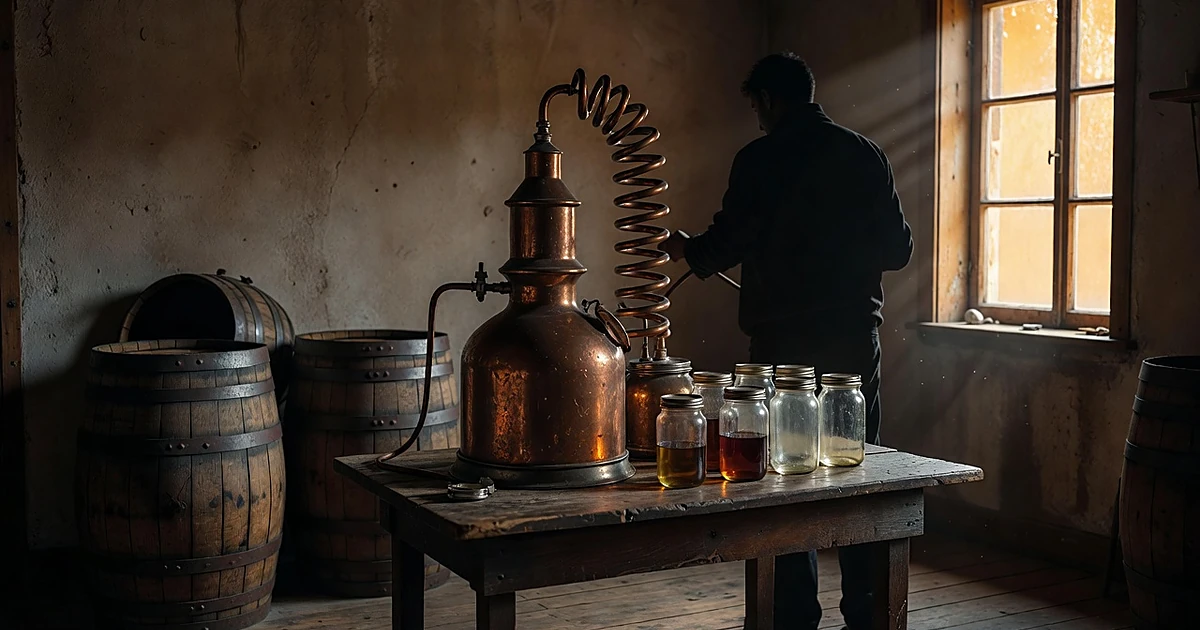
The high court said Monday it will decide whether the federal government can outlaw distilling spirits inside a private home, WKRN reported. A lower panel had already struck down restrictions first written into law in the 1860s.
Solicitor General D. John Sauer pressed the justices to step in. The Trump administration warned that the ruling threatens longstanding federal excise taxes on distilled spirits and the tools needed to collect them.
The fight reaches the Court after the U.S. Court of Appeals for the Fifth Circuit rejected the ban as outside Congress’s “necessary and proper” power tied to taxation. A separate appeals court, hearing a different lawsuit, reached the opposite result. Both sides told the justices the split needed a final answer.
Tax power, not hobby rules, sits at the center
Federal law makes it a felony to produce distilled spirits “in any dwelling house” or in a connected “shed, yard, or inclosure.” A conviction can mean up to five years in prison. The statute is not new. Congress first enacted it in the 1860s, building on excise taxes that date to the country’s founding and once helped pay Revolutionary War debts.
Sauer’s petition put the revenue case in plain terms. He wrote that the government has a duty to protect a major stream of money and to keep stills from vanishing into kitchens and backyards.
In the administration’s filing, Sauer stated:
"The government has a substantial interest in its authority to safeguard a significant source of tax revenue, a source that was used to pay Revolutionary War debts at the Founding and now produce billions of dollars in tax revenue every year,"
He added that the practical problem has not faded with time. A still inside a house makes it easier to hide the operation, mask the strength of the spirit, and dodge the correct tax rate.
Sauer continued:
"Those practical realities have not changed. Today, as at the time of enactment, a distiller can more easily conceal a distilling operation (or conceal a spirit’s strength and avoid the proper tax rate) if a still is located at a dwelling-house or another business,"
The administration also said the lower court took a “blinkered view” of Congress’s authority. That argument tracks a broader pattern of high-stakes fights over federal power, including when the Supreme Court cleared another Trump administration enforcement effort.
Hobby distillers want the homebrewing playbook
On the other side stand the Hobby Distillers Association and four individuals who want to distill spirits at home. They cast the ban as a barrier to a craft revival and asked the Court to settle the law after the conflicting appeals-court outcomes.
In their court filings, the challengers argued:
"Homebrewing revitalized beer culture in the United States; home distilling could do the same for spirits, but for the prohibition,"
They treat the case as a liberty and culture fight. The government treats it as a tax-collection fight. Those two frames rarely meet in the middle, and that is why the justices took the case for this term.
Coverage of the same dispute has already tracked the Reconstruction-era ban challenge and the long shadow of Civil War-period revenue rules. The core question remains whether a dwelling-house ban is a valid tool for enforcing federal taxes or an overreach the Constitution does not allow.
Fifth Circuit drew a hard line on “necessary and proper”
The Fifth Circuit’s panel held that the home-distilling ban does not fall within Congress’s power to adopt measures that are necessary and proper to carry out taxation. That is the ruling Sauer wants reversed. Without Supreme Court action, the government faced a patchwork: one circuit treating the old felony rule as dead, another leaving similar limits intact.
Tax enforcement has always depended on more than the rate printed in the code. It depends on whether officials can find the product, measure its strength, and stop quiet workarounds. A still in a shed attached to a house is harder to police than a licensed commercial distillery. That is the government’s point, and it is the point the Fifth Circuit waved aside.
Readers who watch the Court’s institutional fights will see familiar pressure points. Public trust arguments surface often, as when Justice Jackson takes aim at emergency-docket process. This case is different in form, full briefing and argument on the ordinary docket, but it still tests how far Congress may go when it ties a criminal ban to the taxing power.
Calendar points to arguments next year
The Court set the dispute for the current term. Oral arguments are likely early next year. A decision is expected by summer. Until then, the 1860s felony rule remains under a cloud in the Fifth Circuit’s territory and fully contested nationwide.
Nothing in the filings softens the criminal stakes. Produce distilled spirits in a dwelling house, or in the yard or enclosure tied to it, and the statute still threatens prison time. The challengers want that bar lifted for home hobbyists. The administration wants it kept as a backstop against hidden stills and unpaid taxes.
Other recent Court actions show how quickly high-profile matters can lock in or freeze lower-court results, from election-map fights where the Supreme Court again blocked a state plan to discipline cases the justices left undisturbed. Here the Court chose full review instead of silence, which means the tax-power question will get a clear holding.
Excise taxes on spirits are older than the modern income tax. They helped fund the early republic. They still bring in billions each year. Sauer’s petition ties the dwelling-house ban to that continuous need: if the still is easy to hide, the tax is easy to skip. The Fifth Circuit said that link was not enough. The justices will now say whether that judgment stands.
For lawful taxpayers and for commercial distillers who already play by the rules, the honest question is simple. Should Congress keep a clear line against unlicensed stills in homes, or should the old felony yield to a homebrewing-style free-for-all? The Court has the briefs. It will give the answer.
When the taxing power cannot reach the product, the bill lands on everyone else, and that is no way to run a republic.