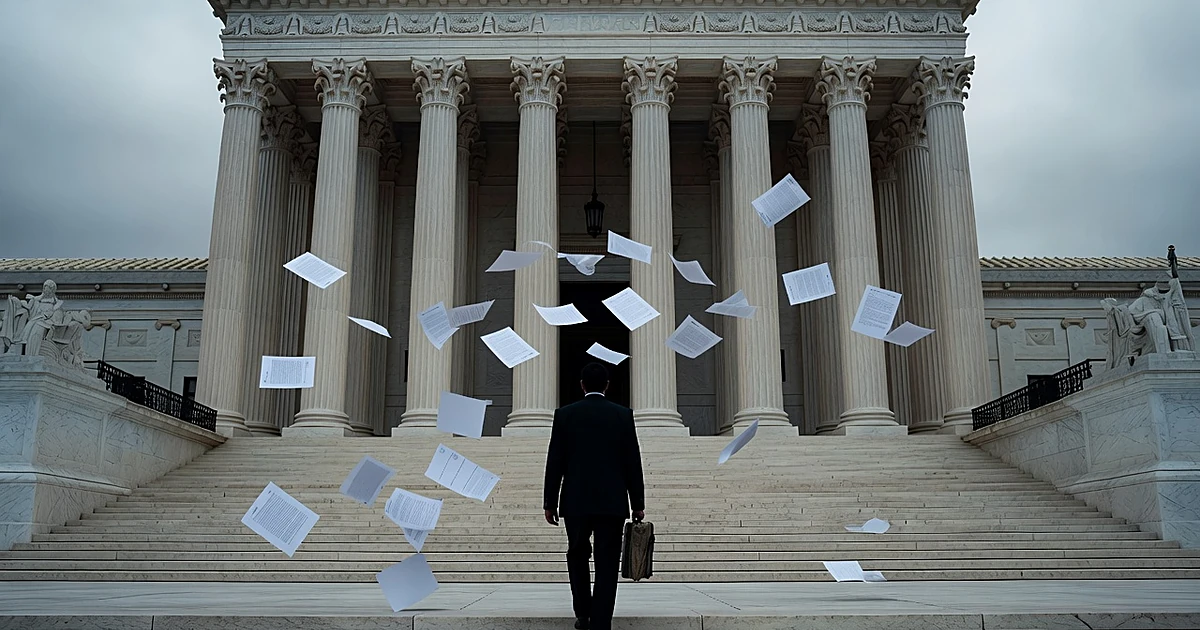
Trump bans CNN, MSNBC, and Politico from White House grounds, enforcing order within hours
President Trump banned three major news outlets from the White House over what he called "fake news" reporting, and within a day, journalists from all three were physically turned away at the gates.
Trump announced the immediate ban of CNN, MSNBC (now rebranded as MS NOW), and Politico in a Truth Social post on Friday, September 18. By Saturday morning, the order was already in force. White House officials had notified top executives at all three outlets that their journalists could no longer set foot on White House grounds, and reporters who showed up anyway were denied entry.
An MSNBC reporter and photographer were turned away Saturday morning upon arrival, the Washington Examiner reported. CNN and Politico journalists faced the same treatment. The speed of enforcement made clear this was not a bluff or a negotiating tactic, it was policy, implemented overnight.
Trump cited years of grievances, and an $8 million Politico contract
In his Truth Social post, Trump framed the ban as a direct response to persistent dishonest coverage. He referenced prior clashes with correspondents from each outlet and singled out what he called an alleged $8 million government subscription to Politico under the Biden administration, describing it as potential corruption. Breitbart reported that Trump also warned additional outlets deemed to be publishing false reporting could face similar bans from the White House campus.
Trump's full post left little ambiguity about his reasoning:
"I am proud to announce that, effective immediately, I am banning Fake News CNN, MSNOW... and Politico... from the White House as a result of their constant reporting FAKE NEWS!"
He followed up with a broader argument about press standards, as Fox News reported:
"Media Outlets shouldn't be able to constantly tell or report FICTION and LIES when they're covering the President of the United States."
When pressed by reporters in the Oval Office, Trump doubled down on the decision rather than walking it back. The Newsmax report on the ban placed the announcement in the context of the administration's broader posture toward outlets it views as hostile.
CNN invoked the Constitution, but past court fights cut both ways
CNN responded with a statement calling the ban unconstitutional. The network cast the move as an attack on press freedom itself.
"Should the ban which President Trump threatened go ahead, it would be an illegal assault on that fundamental and constitutionally-protected right."
But the legal landscape around White House press access has shifted in recent months. Fox News noted that past efforts by the Trump administration to ban outlets and individual journalists have been blocked by federal judges, a history that suggests legal challenges are coming. The question is whether those challenges will succeed under current circumstances.
The administration has already signaled its legal position. In a separate court filing related to the Associated Press, the White House stated plainly that media access to the president is not a constitutional right but a privilege. A judge granted the administration a temporary ruling allowing it to ban the AP from pooled events after the wire service refused to refer to the Gulf of Mexico as the "Gulf of America."
Press pool control stripped from correspondents' group after 111 years
The outlet bans did not happen in isolation. The Trump administration also announced it would take direct control of White House press pool access, ending a 111-year arrangement under which the White House Correspondents' Association managed which journalists participated in pooled coverage of the president.
Press Secretary Karoline Leavitt framed the change as a move to empower media consumers rather than legacy gatekeepers. Leavitt, a central figure in Trump's communications strategy, announced the shift directly:
"Moving forward, the White House press pool will be determined by the White House press team."
WHCA President Eugene Daniels pushed back hard, warning that the government should never choose which reporters cover the president:
"It suggests the government will choose the journalists who cover the president. In a free country, leaders must not be able to choose their own press corps."
Daniels's objection frames the dispute as one of principle. But the WHCA's 111-year grip on pool access was itself a form of gatekeeping, one that favored established legacy outlets and kept smaller, newer, and ideologically diverse media organizations on the margins. The administration's move disrupts that arrangement. Whether the replacement system is more open or more restrictive will depend entirely on how the White House exercises its new authority.
A pattern of confrontation with hostile press
Trump's relationship with the outlets he banned has been adversarial for a decade. CNN's coverage during his first term drew constant criticism from the administration, and the network's ratings have fluctuated sharply in the years since. MSNBC, now operating under the MS NOW brand, has positioned itself as an explicitly progressive voice. Politico, while nominally nonpartisan, has drawn fire from conservatives who view its editorial sensibility as tilted leftward.
The administration's willingness to enforce the ban physically and immediately, not through a slow bureaucratic process but by turning reporters away at the gate the next morning, represents a sharper posture than anything attempted during Trump's first term. Previous confrontations, including the revocation of CNN correspondent Jim Acosta's hard pass in 2018, ended with court orders restoring access.
This time, the administration appears to be building a broader legal and procedural framework first. By taking control of pool access, filing court briefs asserting that press access is a privilege, and securing at least one favorable judicial ruling in the AP dispute, the White House has laid groundwork that previous bans lacked.
The bipartisan support Trump has secured on other fronts, including a recent House vote to make his fraud enforcement division permanent, suggests the administration is operating from a position of political strength, not desperation. That context matters. A president polling well and winning legislative fights has more room to pick confrontations with the press than one on the defensive.
Meanwhile, Congress has left significant legislative work unfinished, which means the media ban story will dominate Washington's attention in the absence of competing policy debates. That vacuum gives both sides, the White House and the banned outlets, incentive to escalate.
Trump's warning that more outlets could face similar treatment hangs over the rest of the press corps. The internal dynamics of Trump's orbit will shape how far the policy extends and how aggressively it is defended in court.
For years, legacy media outlets insisted they were indispensable to democracy. Now they will have to prove it from outside the building.